Florida’s Wonderful Wildflowers
A passion for our native wildflowers is fundamental to everything we do — and we’re committed to sharing knowledge that fosters both appreciation and action.
Narrowleaf sunflower (Helianthus angustifolius) is one of Florida’s most common native sunflowers. In nature, it forms dense colonies, resulting in spectacular swaths of sunshine yellow when in bloom.
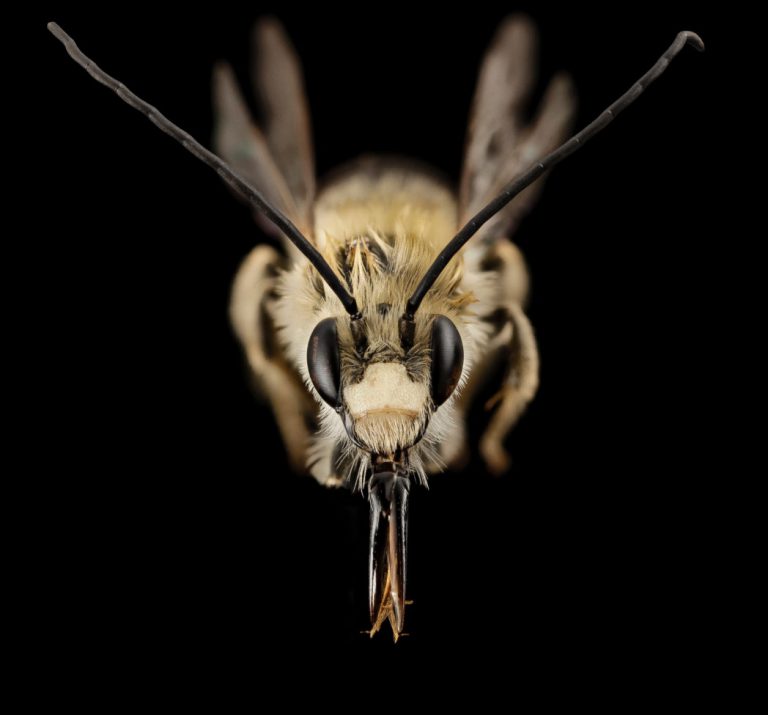
Megachilidae (commonly referred to as leafcutter, mason, orchard or cuckoo bees) are a large family of solitary nesters with distinctive and fascinating behaviors.
“Fall is for planting” has been the unofficial promotional campaign of the nursery industry for many years. This slogan applies to sowing seeds of native wildflowers and grasses as well, at least here in Florida.
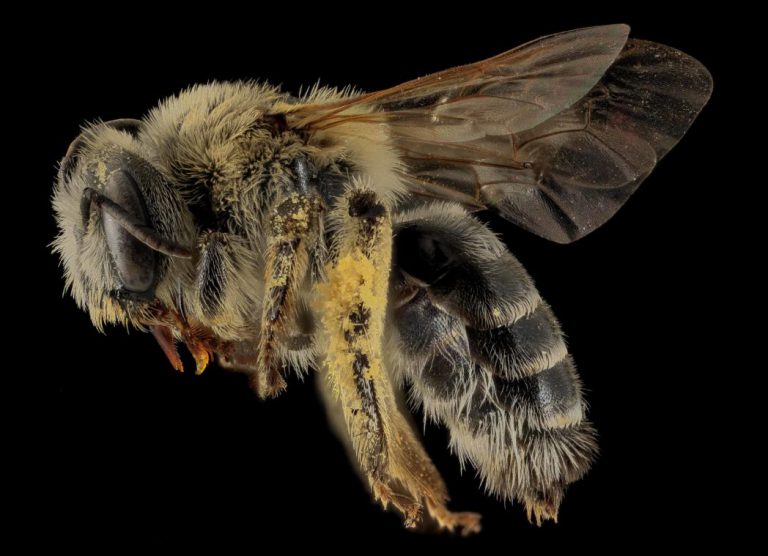
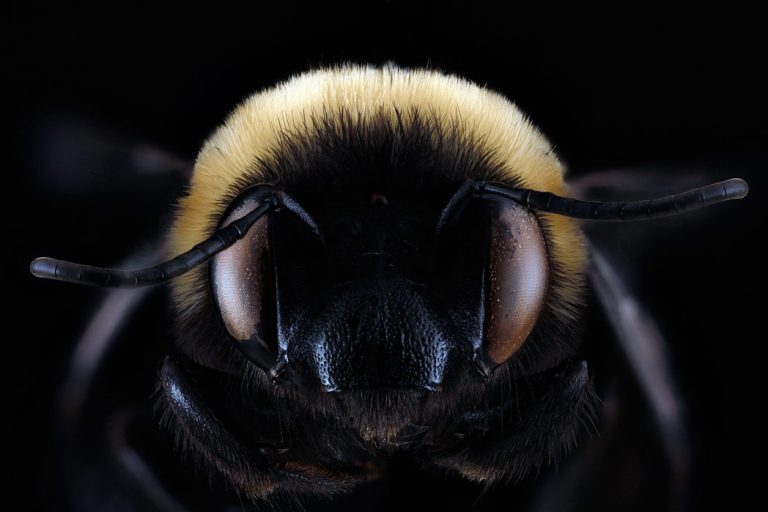
Mining bees (Andrenidae) are a diverse family and some of the first bees to fly come spring. But if you don’t see them in the air, you can usually spot their conspicuous nest entrances on the ground marked by mounds of excavated soil.
Prairie iris (Iris savannarum) is an emergent aquatic with showy flowers that bloom in spring. It has one of America’s largest native iris flowers.
This charming swallowtail butterfly is easily distinguishable by the iridescent blue shimmer glowing from the hindwing when wings are open, and the orange spots and blue background on the hindwing when the wings are closed.
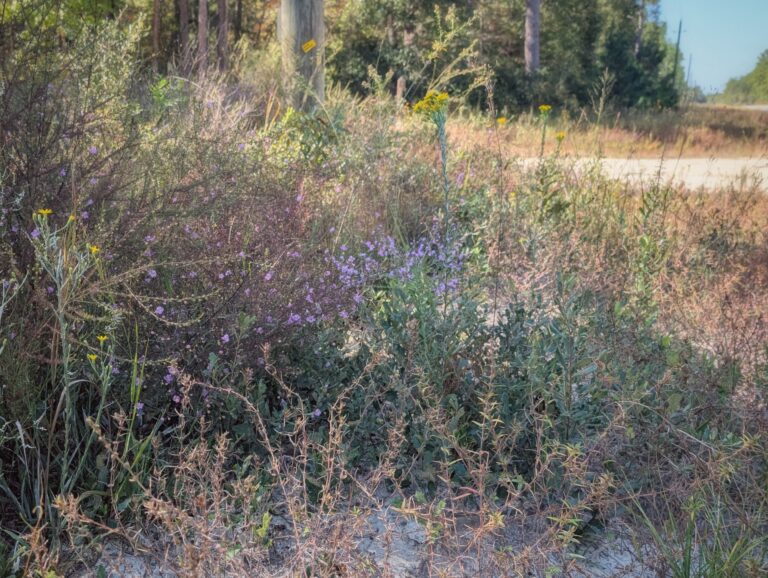
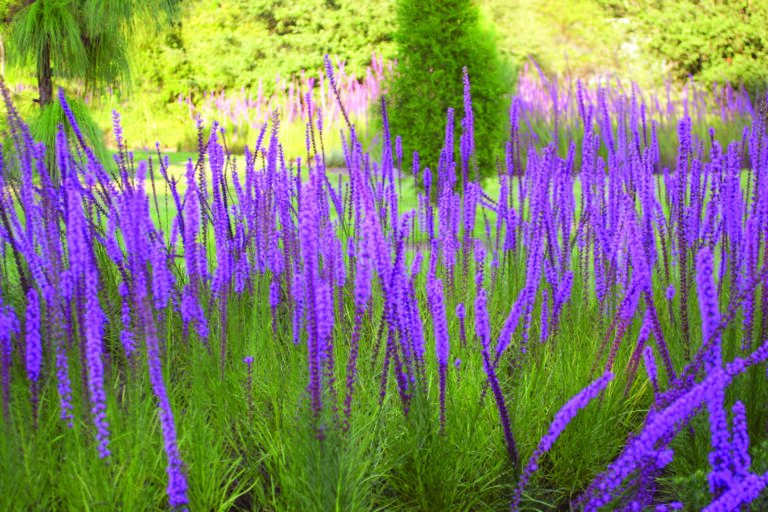
This bloom report is from fall 2020. Fall is a time to look for showy displays of native wildflowers and grasses this fall, such as Blazing star.
In this webinar, Nancy Bissett presents easy-to-grow native wildflowers that attract a variety of butterflies and other pollinators essential to Florida’s natural health.
FWF Executive Director Stacey Matrazzo discusses some of the invasive species commonly used in home landscapes and highlights the native plants to use in their place.
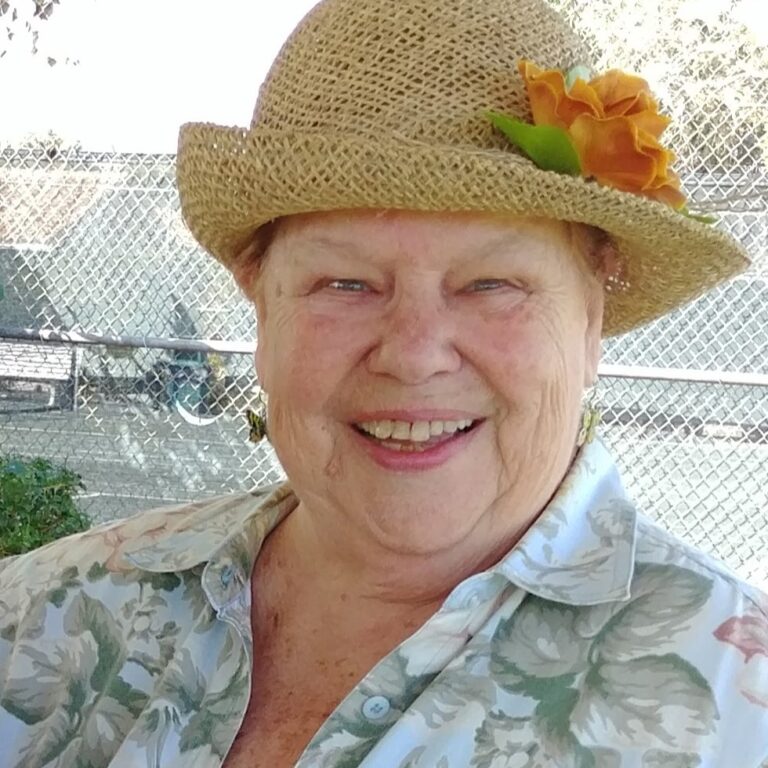
Suzanne supports the Florida Wildflower Foundation because of the excellent job we do in promoting and educating the public on the need to protect and expand native wildflower habitats and because the educational aspect of our program is research-based.
Marina Mertz, the Roadsides and North Florida Programs Coordinator goes over the role roadsides play, how the Florida Wildflower Foundation roadside program works in reducing mowing to protect native wildflower habitat and how you can help.