
Bloom Report: Let’s talk taxonomy!
by Jeff Norcini
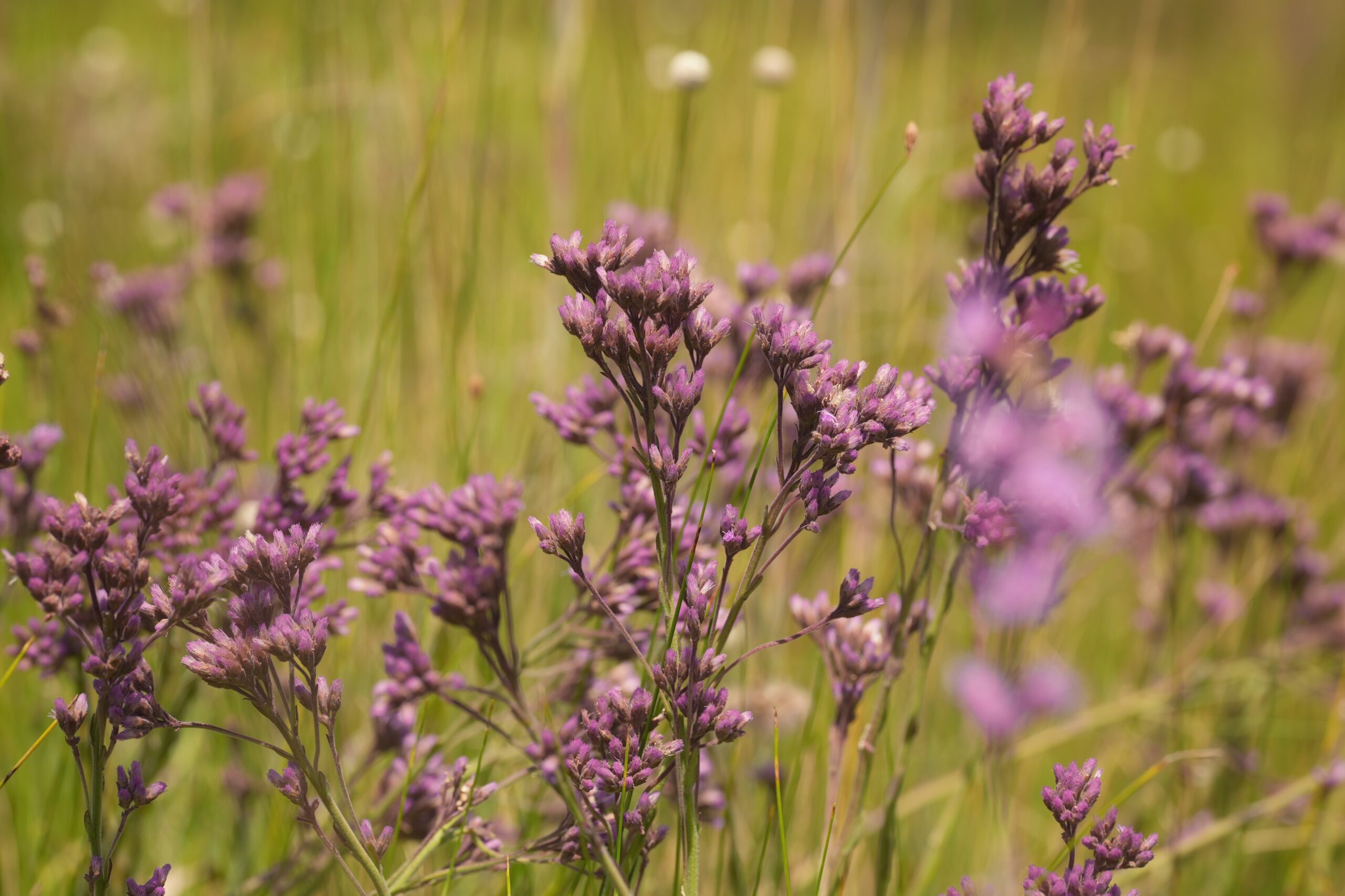
Pictured above: Pineland chaffhead (Litrisa carnosa) at Tosohatchee Wildlife Management Area, Orange County. Photo by Emily Bell
This past summer, we shared recent taxonomic changes for numerous Florida species in the Malvaceae (Mallow) family. That got us thinking about other reclassifications as they relate to fall blooming wildflowers and grasses
Plant reclassification is carried out by taxonomists who study plant relationships and classify species accordingly. Some authorities are “lumpers,” grouping plants by broad similarities, while others are “splitters,” separating them based on smaller differences in physical traits, DNA or geographic range. Earlier systems relied mainly on visible traits such as flowers and leaves. Modern reclassification draws on DNA and evolutionary evidence, and advances in genetics have pushed the field toward tighter monophyletic genera, in which all species descend from a single common ancestor. Keeping up with name changes and navigating disagreement among experts and resources can be frustrating, but this important work helps us understand evolutionary relationships and natural history.
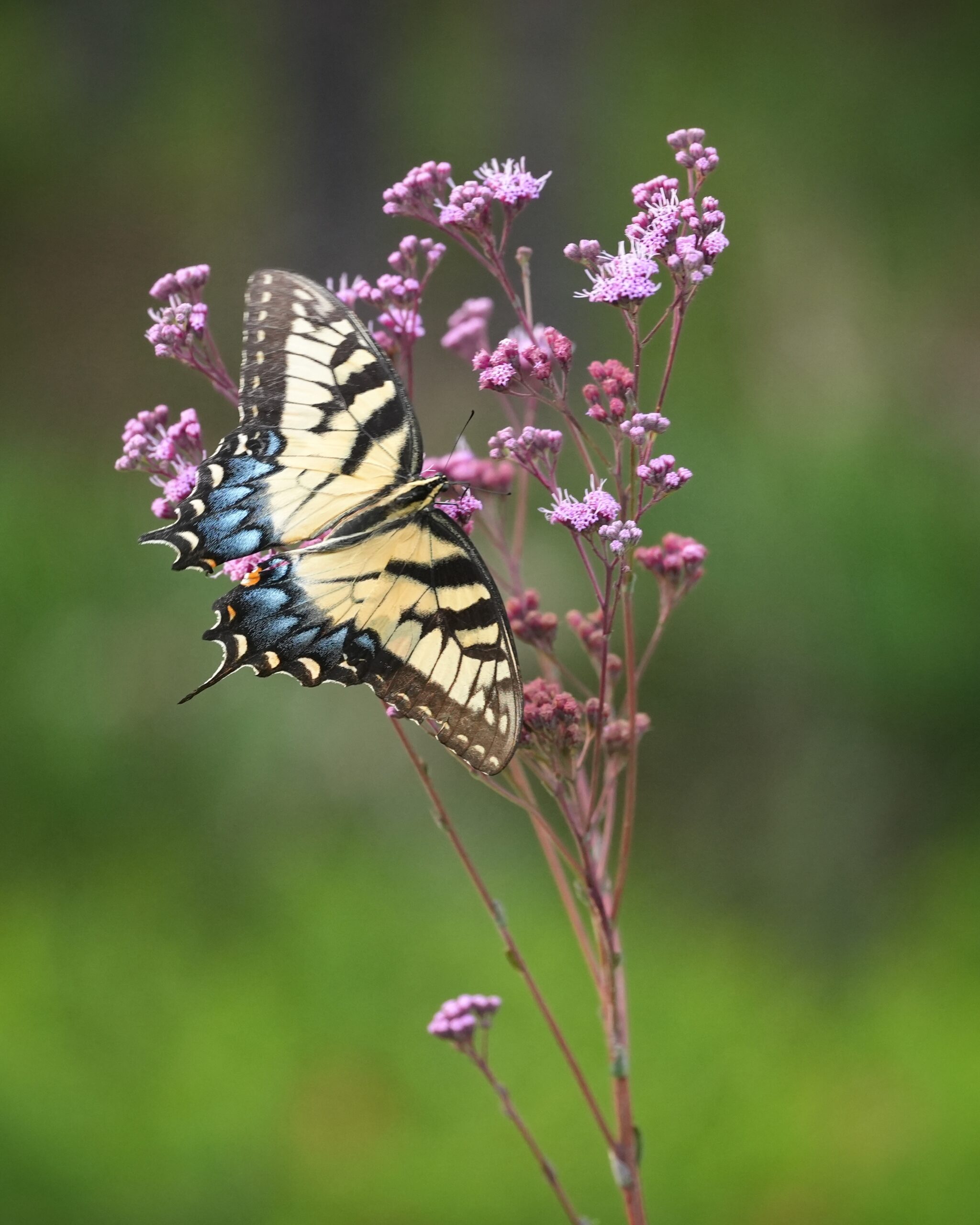
Photo by Emily Bell
There are three primary resources the Foundation refers to for taxonomic information. The Atlas of Florida Plants (Plant Atlas) is a fantastic website built on physical data from Florida’s herbaria. Its plant pages offer a wealth of information, including names (common, scientific and synonyms), geographic ranges based on vouchered specimens, plant keys and more. We also consult the Flora of the Southeastern United States (FSUS), a valuable regional compendium, and the Kew’s Plants of the World Online (POWO).
A prominent example of reclassification among fall blooming flowers is the splitting of the genus Carphephorus into two additional genera, Trilisa and Litrisa. Interestingly, both names are anagrams of Liatris, a genus whose flowers look similar to those of Carphephorus species. Botanists have widely accepted these changes, though there is also general agreement that more genetic analysis is needed before a universally accepted resolution is reached. For example, FSUS currently reflects the more recent naming conventions, while the Plant Atlas takes a more conservative view, keeping Carphephorus whole and noting that revisions are likely warranted but require more evidence. In this case, the Foundation has followed FSUS.
Table of Carphephorus, Trilisa and Litrisa in Florida:
*click on link in common name for FWF profiles
| Common name | Previous scientific name | Current scientific name/notes |
| Pineland chaffhead | Carphephorus carnosus | Litrisa carnosa (accepted by FSUS) See in: Plant Atlas | POWO |
| Florida paintbrush | Carphephorus corymbosus | Unanimously remains as is: Plant Atlas | FSUS | POWO |
| Vanillaleaf | Carphephorus odoratissimus | Trilisa odoratissima (accepted by FSUS and POWO) See in: Plant Atlas |
| False vanillaleaf | Carphephorus odoratissimus var. subtropicanus | Trilisa subtropicana (accepted by FSUS and POWO) See in: Plant Atlas |
| Hairy chaffhead | Carphephorus paniculatus | Trilisa paniculata (accepted by FSUS and POWO) See in: Plant Atlas |
| Bristlelead chaffhead | Carphephorus pseudoliatris | Unanimously remains as is: Plant Atlas | FSUS | POWO |
Beyond the Carphephorus kerfuffle, here are some other taxonomic updates for common fall wildflowers and grasses:
*click on link in common name for FWF profiles
| Common name | Previous scientific name | Current scientific name/notes |
| Joe Pye weed | Eupatorium fistulosum | Eutrochium fistulosum: Plant Atlas | FSUS | POWO |
| Rabbit tobacco | Gnaphalium obtusifolium | Pseudognaphalium obtusifolium: Plant Atlas | FSUS| POWO |
| Beaked panicum | Panicum anceps | Coleataenia anceps: Plant Atlas | FSUS | POWO |
| Redtop panicum | Panicum rigidulum | Coleataenia rigidula: Plant Atlas | FSUS | POWO |
| Climbing aster | Symphyotrichum carolinianum | Ampelaster carolinianus (accepted by FSUS and POWO) See in: Plant Atlas |
Finally, the bluestems, some of Florida’s most iconic grasses, are also facing taxonomic confusion. They have long been held in the genus Andropogon and the Plant Atlas still recognizes them as such, however, the FSUS has largely moved them into the genus Anatherum. This represents another group for which active research is ongoing and more clarification is needed to reach consensus.