
Black swallowtail
by Elora Pfriender
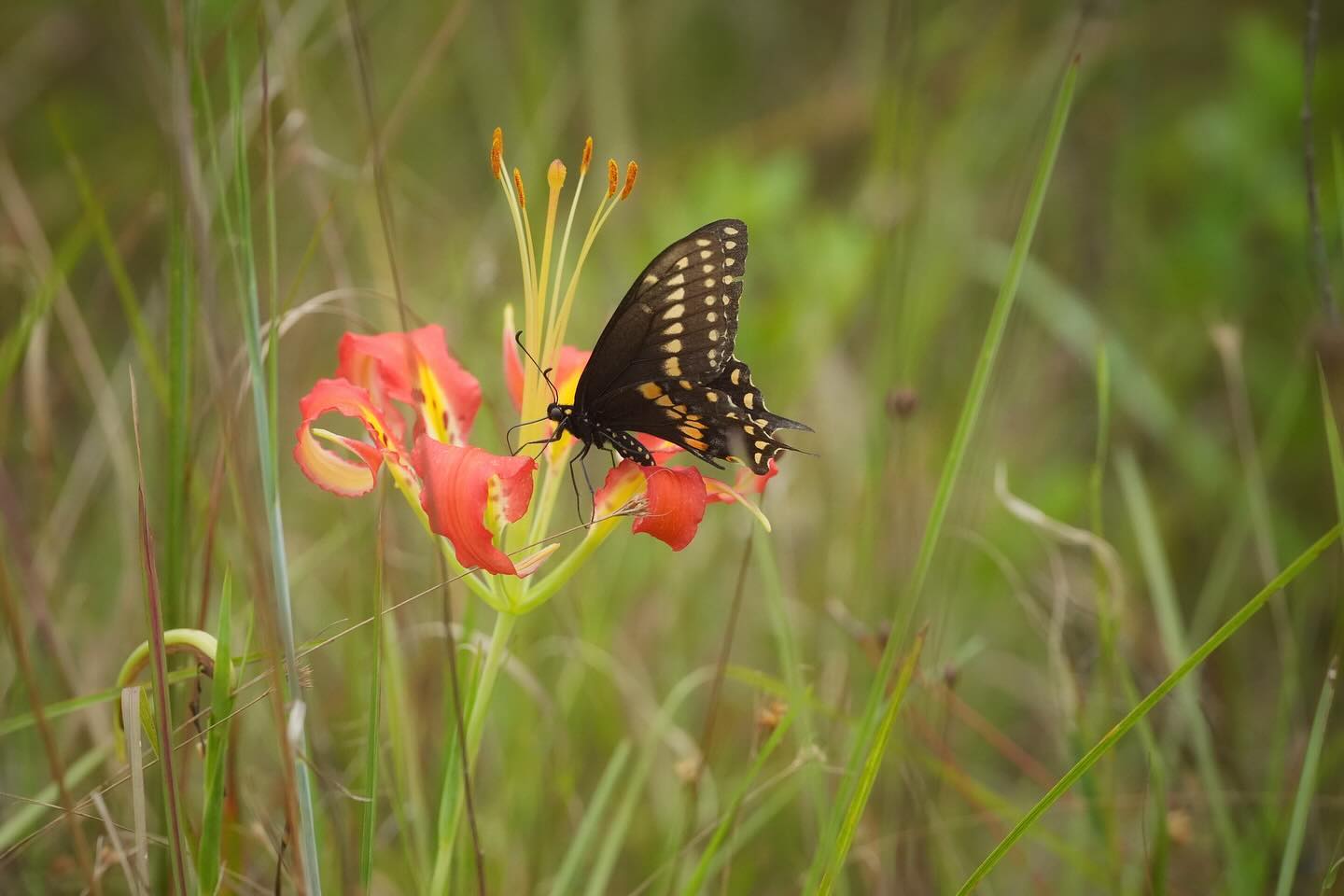
“Know your native pollinators” is a series of articles that will help you identify and appreciate Florida’s varied pollinators, including bees, wasps, butterflies, moths, beetles, flies, birds and bats. Pictured above: Black swallowtail (Papilio polyxenes) on Catesby’s lily (Lilium catesbaei) by Emily Bell.
This beautiful butterfly is sometimes considered a pest for its love of herbaceous crops like carrots, celery and parsley, but it also makes its home among the little white flowers of their many lovely native relatives — and the highly toxic water hemlock!
CLASSIFICATION
Class: Insecta
Order: Lepidoptera
Family: Papilionidae
Genus species: Papilio polyxenes
FUN FACT
Black swallowtail larvae employ a number of self-defense strategies against other insects. When threatened, like other swallowtail larvae, they can extrude a usually inverted organ called the osmeterium, which resembles intimidating horns or the forked tongue of a snake and emits an acidic repellent to fend off foes such as ants.
IDENTIFICATION
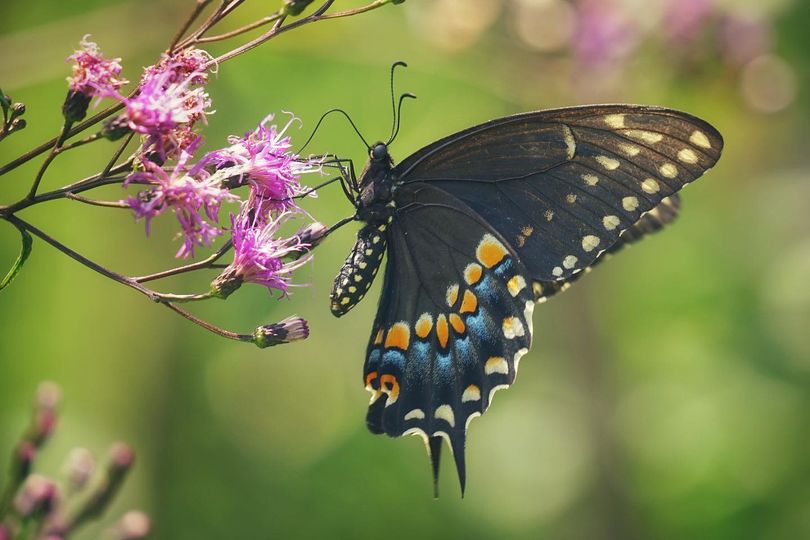
Despite its apt common name, the Black swallowtail can be deceptively tricky to identify among Florida’s other similarly colored and equally widespread swallowtail butterflies, including the Palamedes swallowtail (Papilio palamedes), Giant swallowtail (Papilio cresphontes), and even some female Eastern tiger swallowtails (Papilio glaucus), which can exhibit sexually dimorphic dark coloration.
The Black swallowtail, however, is set apart by a small orange eyespot and patches of pale blue near the tail on the dorsal side of the hindwing. These blue patches are larger in females, while males have thicker yellow banding and more prominent spots along the forewing. Both sexes also have dorsally visible rows of yellow dots along the abdomen. Females are typically larger than males, though both sexes are somewhat smaller than their lookalike species, with a wingspan of 2.5–3.5 inches.
FORAGING PREFERENCES
Black swallowtails use herbaceous plants in the carrot, celery and parsley family (Apiaceae) as host plants. Florida is home to many native flowering species in this family, including Mock bishopsweed (Ptilimnium capillaceum), Water cowbane (Tiedemannia filiformis), Rattlesnakemaster (Eryngium yuccifolium), and even the highly toxic Spotted water hemlock (Cicuta maculata). Adults may nectar on nearby flowers, including native milkweeds and thistles.
HABITAT
The Black swallowtail can be found year-round throughout Florida and much of North America, ranging from southern Canada to northern Mexico and as far west as Arizona. While it is fairly common in peninsular Florida, it may be rarer in the Florida Keys due to a comparative lack of native host plants. These butterflies occur in grassy fields and wetland environments alike, where males patrol open areas in search of mates.
DID YOU KNOW?
Black swallowtail caterpillars face threats from parasitoid insects, including certain species of wasps and tachinid flies. These insects practice a form of parasitism in which they live inside a host insect, ultimately killing it from the inside out. To locate their victims, these parasitoids sniff out chemicals found in frass (caterpillar droppings). Black swallowtail larvae counter this by using their mandibles to fling frass pellets away from the plant, throwing would-be parasites off their scent.
LIFE CYCLE
Females lay spherical yellow eggs singly on the leaves or flowers of their host plants. In Floridian populations, there are typically three generations per year, with larvae in colder months pupating over winter. When larvae first hatch, they are spiny and black with white markings that mimic bird droppings, making them appear unappetizing to predators. As they grow, they develop more orange and white markings and gradually lose their spines, eventually maturing into a smooth, light green form with yellow and black markings that helps them blend into surrounding foliage before pupating.
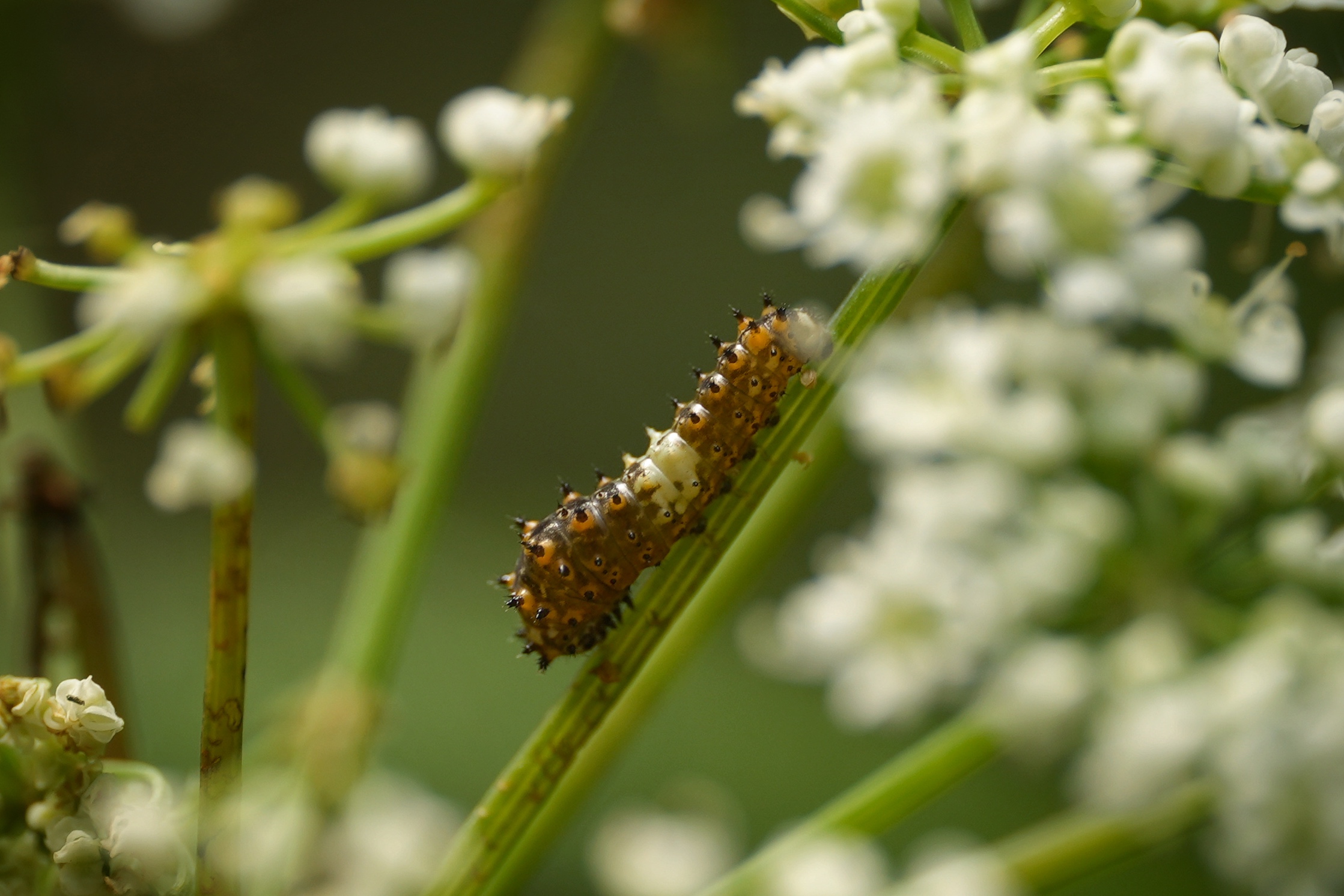
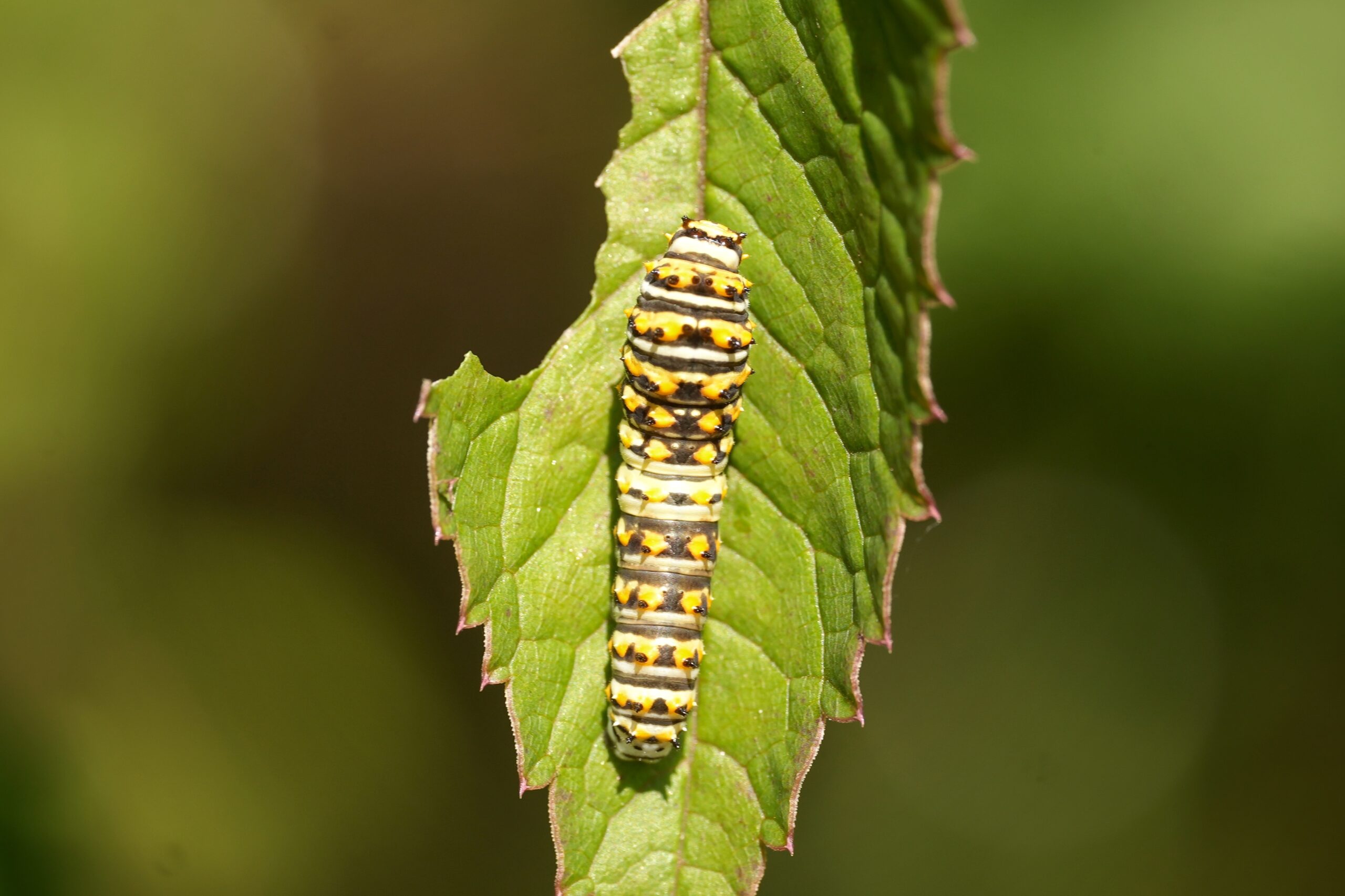
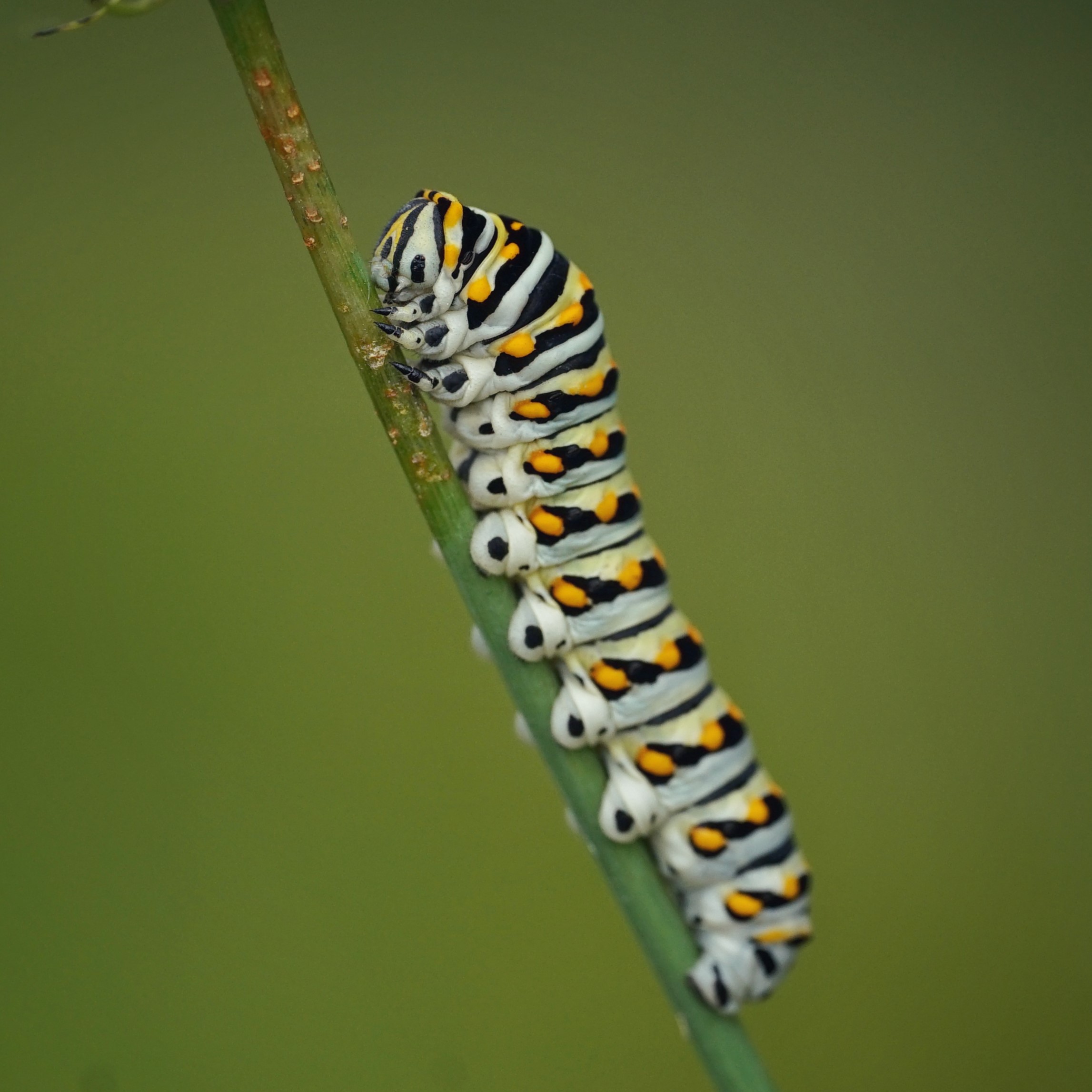
Photo by Emily Bell
References:
- “Black Swallowtail, Eastern.” Florida Museum
- Daniels, Jaret. “Black Swallowtail.” Florida-Friendly Landscaping: Gardens
- Eisner, Thomas and Yvonne C. Meinwald. “Defensive Secretion of a Caterpillar (Papilio).” Science, Dec. 1965
- Hall, Donald W. “Eastern Black Swallowtail: Papilio polyxenes asterius (Stoll) (Insecta: Lepidoptera: Papilionidae).” Ask IFAS, Nov. 2011
- “Herbarium Specimen Search Results. Family: Apiaceae. County: Monroe.” Plant Atlas of Florida
- Institute for Regional Conservation. “Black Swallowtail.” Natives for Your Neighborhood
- Mahr, Susan. “Black swallowtail, Papilio polyxenes.” Wisconsin Horticulture