
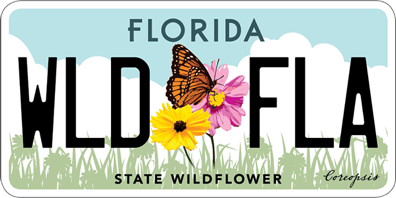
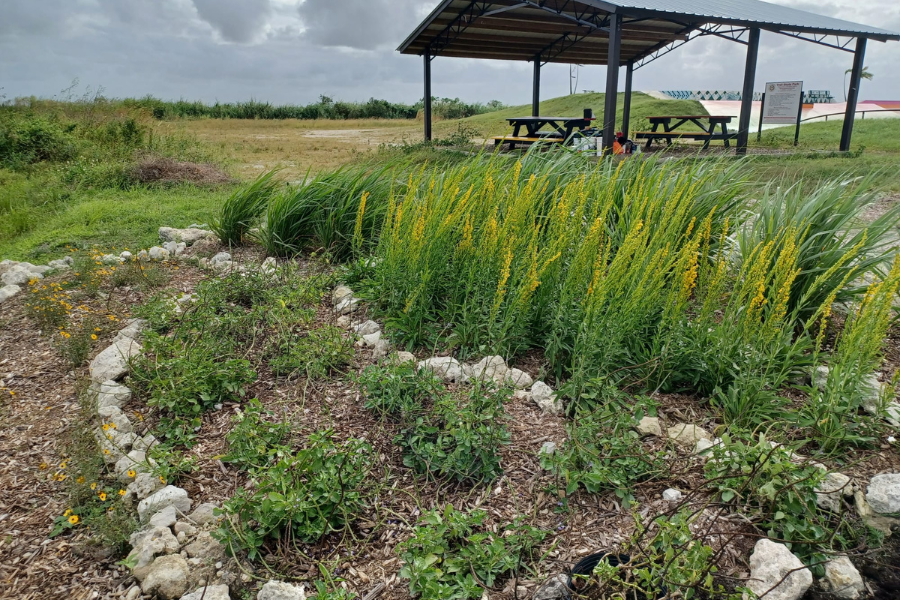
The Miccosukee Wildflower Meadow ”Swampy Meadows Garden”
Welcome to our native wildflower demonstration garden! The purpose of this garden is to promote the use of native plants for creating diverse landscapes which, in turn, promote wildlife diversity and ecological stability. We hope you enjoy learning more about the following Florida native wildflower species and are inspired to create a habitat oasis all your own! Thank you for visiting.
The garden was made possible by a grant from the Florida Wildflower Foundation.
The garden is located at the Miccosukee Tribe of Indians of Florida Reservation, behind the Miccosukee School, 3770 Old Tamiami Trail, Miami, FL 33194 (MAP).
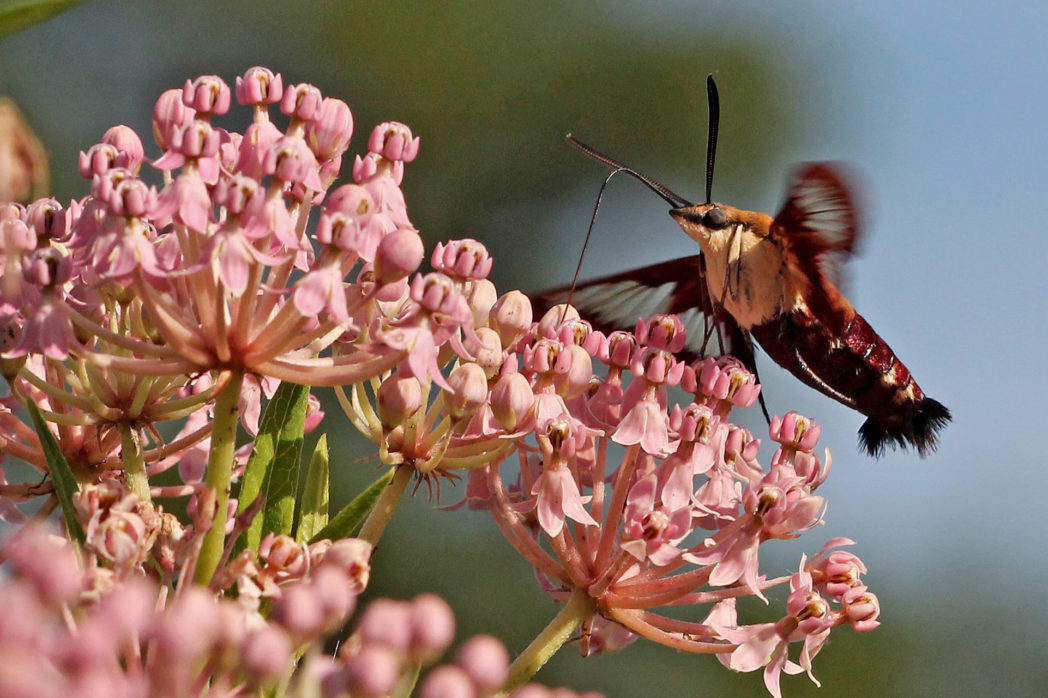
Swamp milkweed
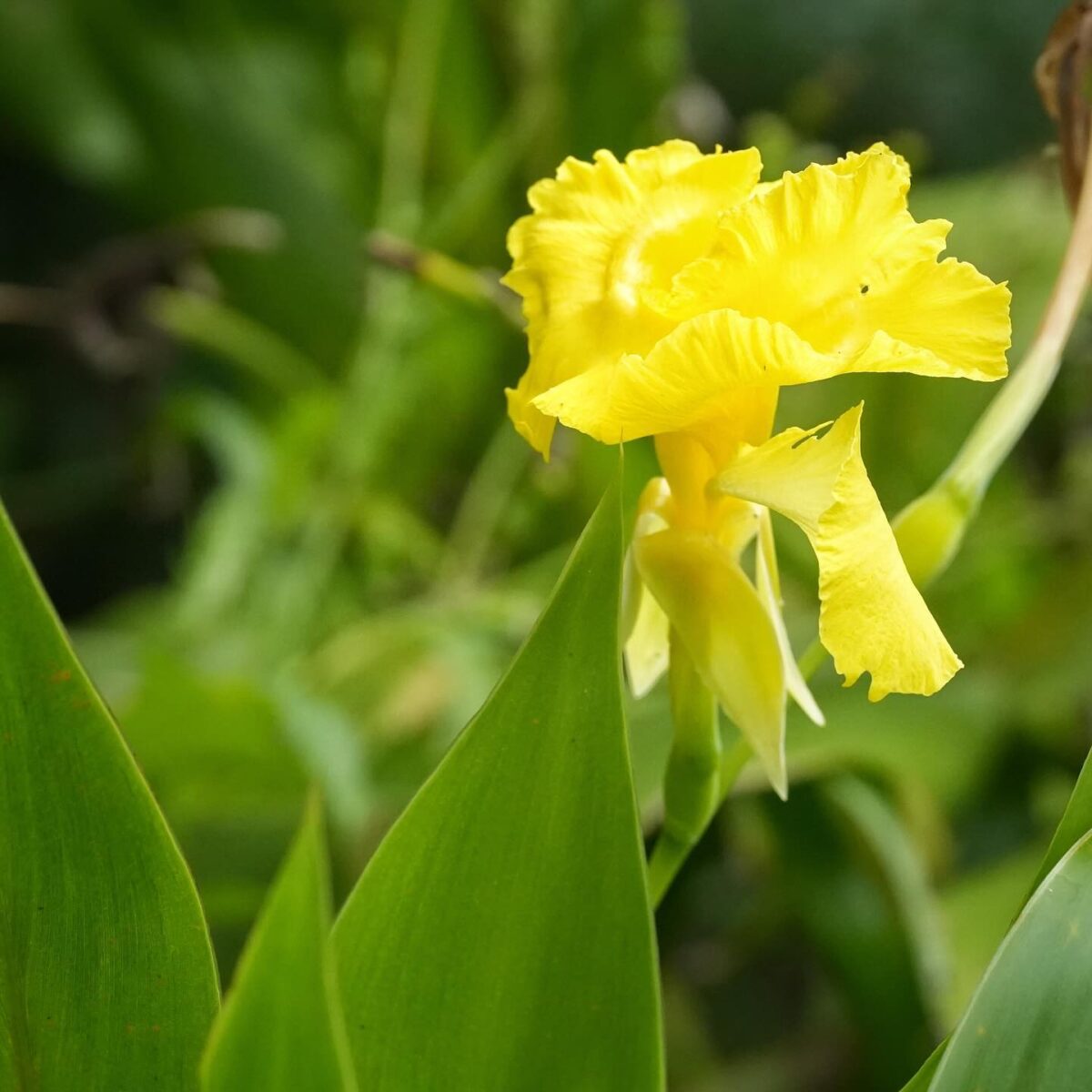
Bandanna-of-the-Everglades
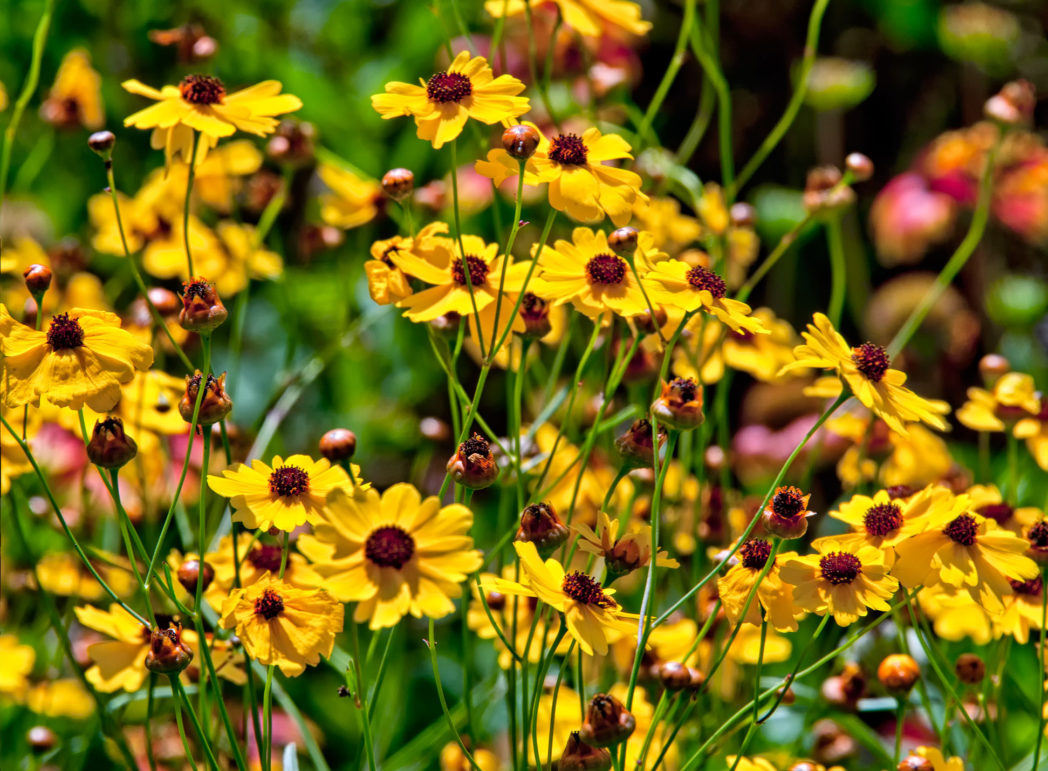
Leavenworth’s tickseed
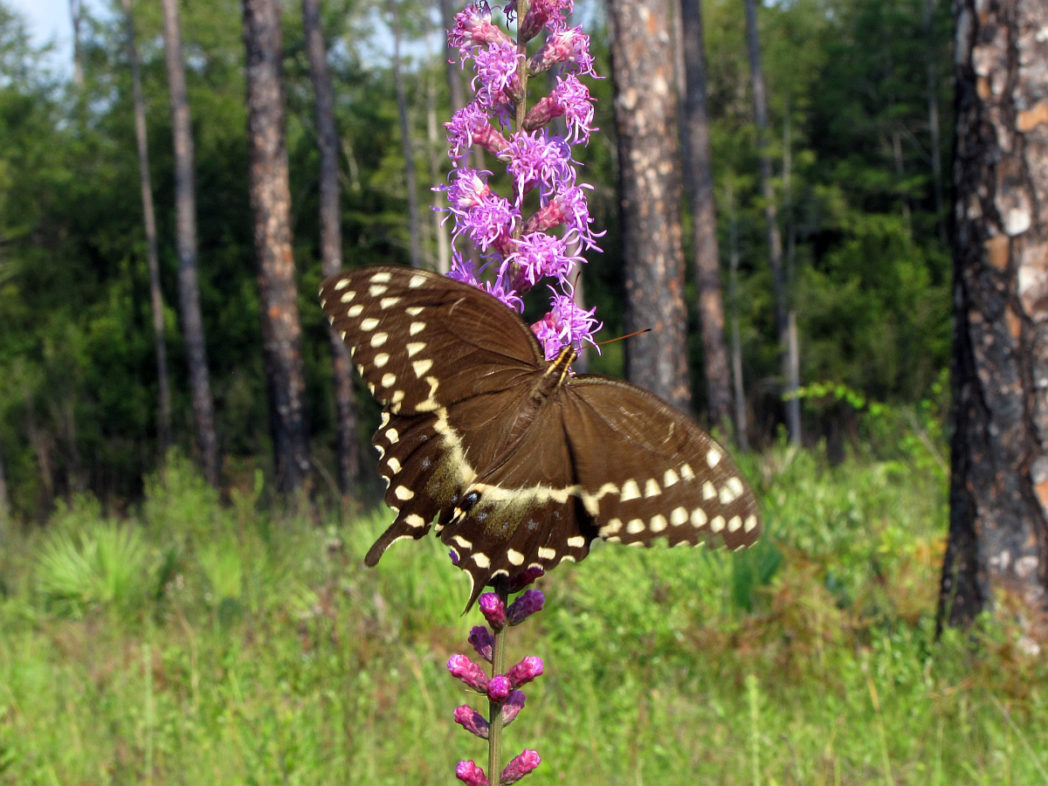
Dense gayfeather
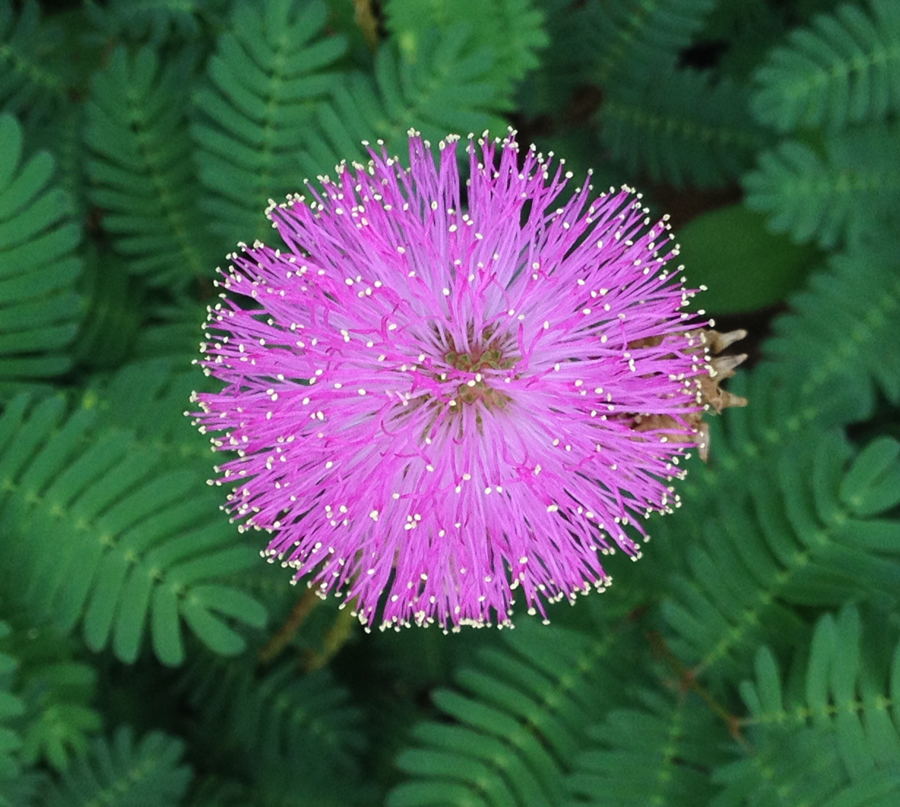
Sunshine mimosa
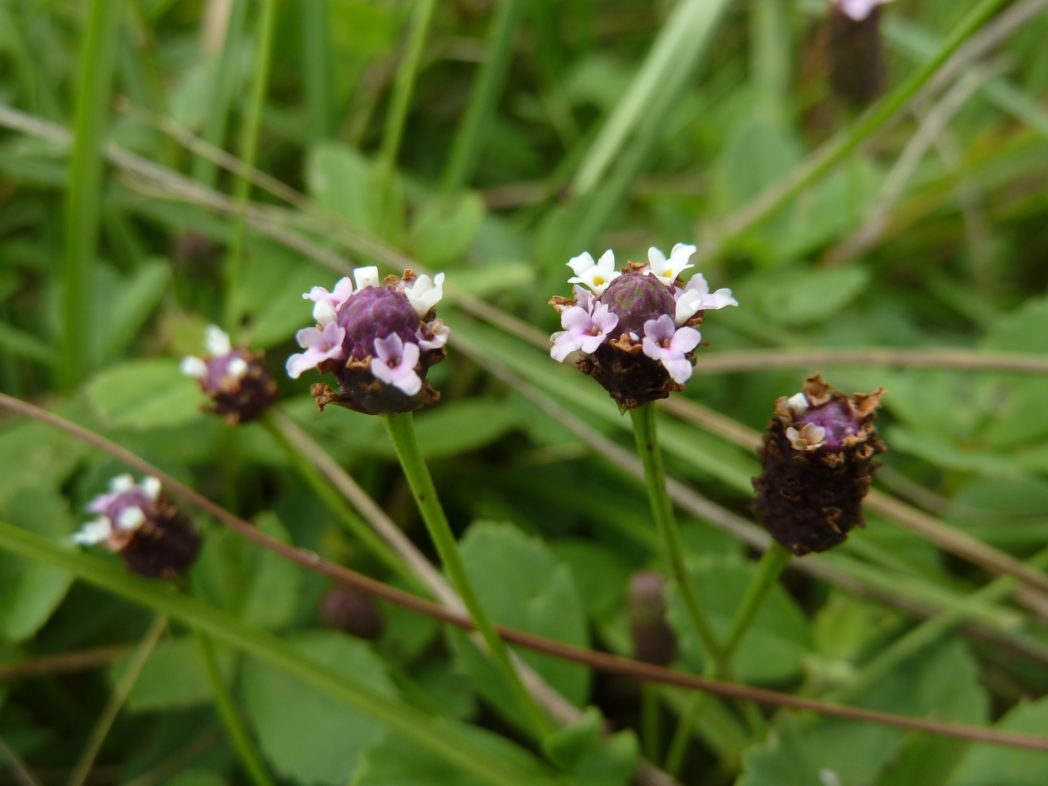
Frogfruit
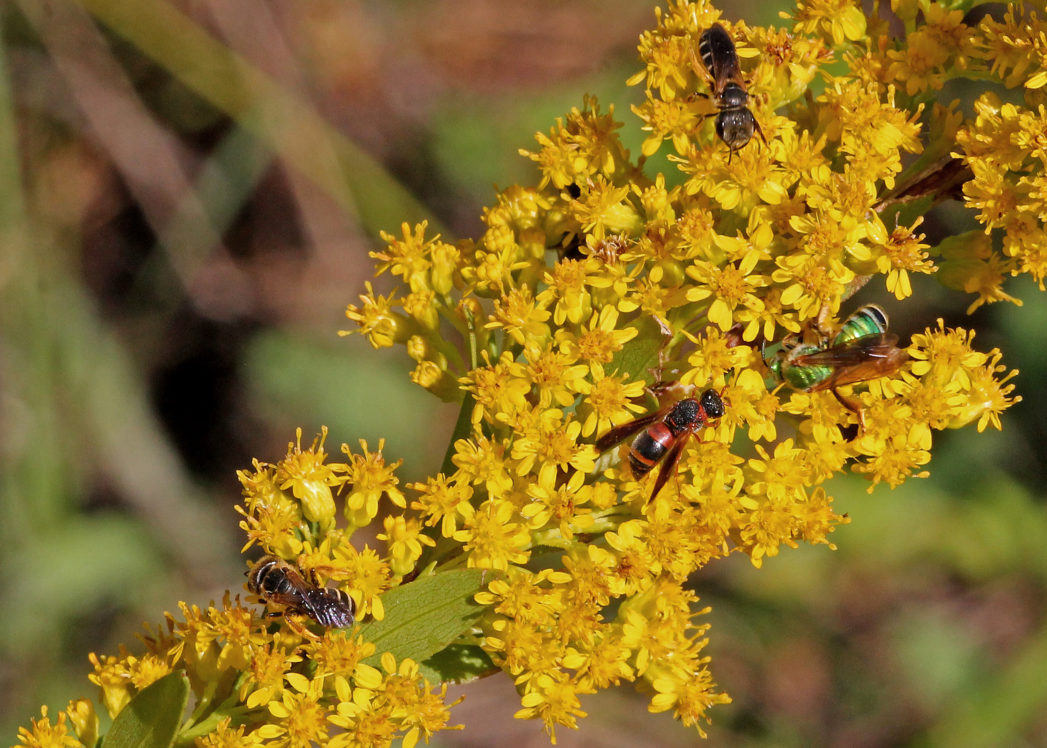
Seaside goldenrod
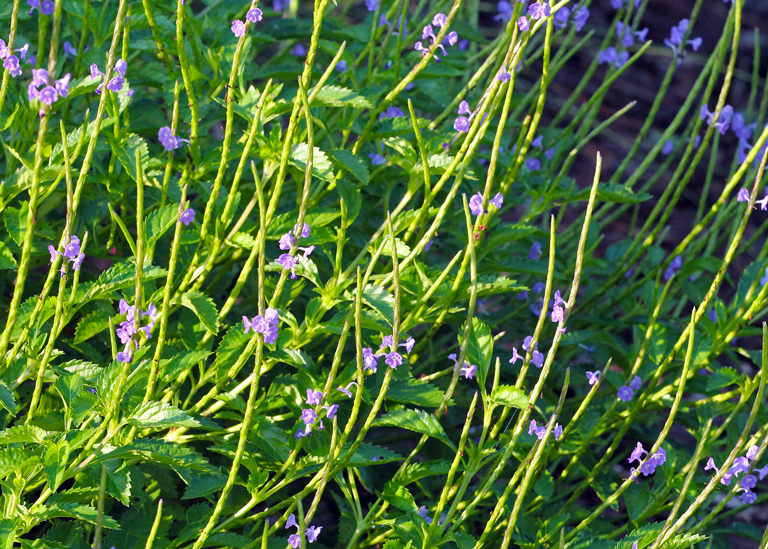
Blue porterweed
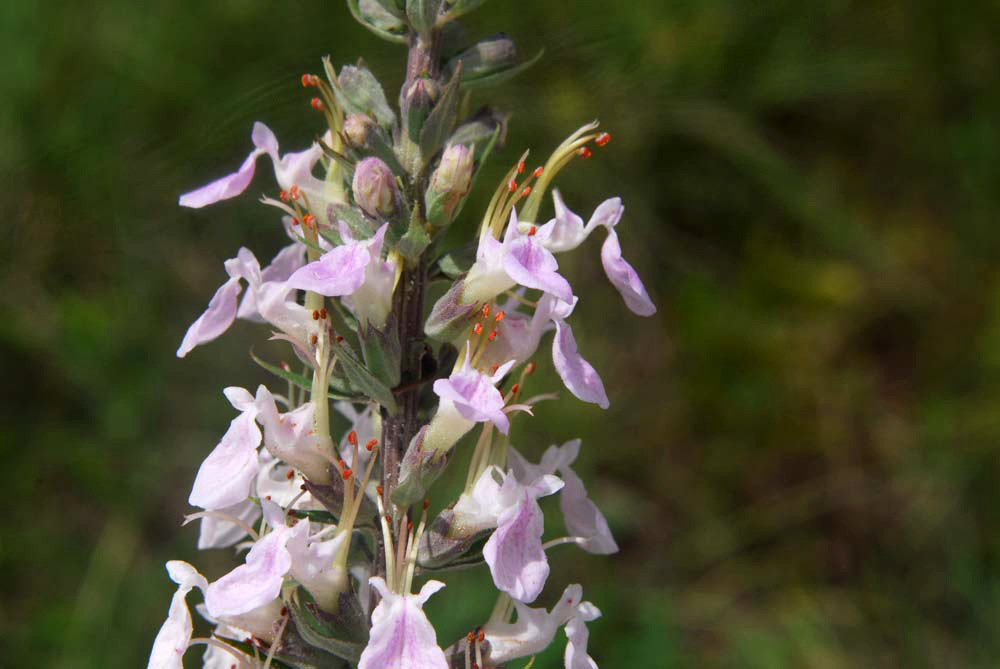
Wood sage
POLLINATORS NEED YOUR HELP!
Help Florida’s wildlife and environment by using native wildflowers and plants in your landscape. Click here to learn more information on planting, selecting and maintaining native plants, or check out these resources:
- 20 Easy-to-Grow Wildflowers
- Guide for Choosing Native Plants
- Attracting Birds with Florida Native Wildflowers
- Attracting Bees and Other Beneficial Insects with Florida Native Wildflowers
- Attracting Butterflies with Florida Native Wildflowers
- Great Wildflowers for Dry Landscapes
- Great Wildflowers for Shade
- Aquatic Wildflowers for Pollinators
- Create a Pollinator Pot