
Bleeding flower moth
by Elora Pfriender
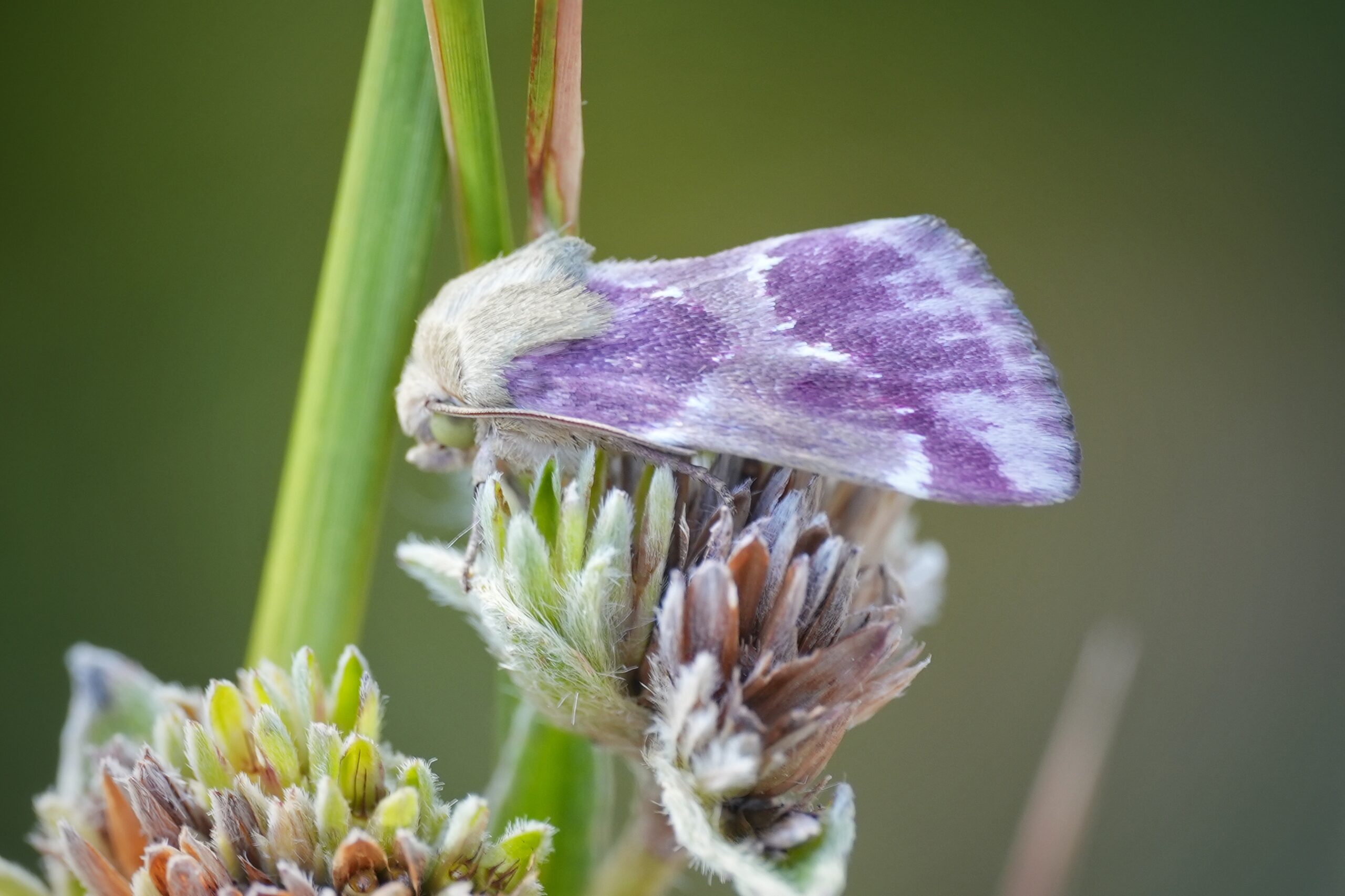
“Know your native pollinators” is a series of articles that will help you identify and appreciate Florida’s varied pollinators, including bees, wasps, butterflies, moths, beetles, flies, birds and bats. Pictured above: Bleeding flower moth (Schinia sanguinea) on Tall elephantsfoot (Elephantopus elatus) by Emily Bell.
While these pollinators are most active at night, keep an eye out during the day for resting Bleeding flower moths, blending right in alongside pink and purple flower petals.
CLASSIFICATION
Class: Insecta
Order: Lepidoptera
Family: Noctuidae
Genus species: Schinia sanguinea
DID YOU KNOW?
Schinia species, including the Bleeding flower moth, are known to be adaptable — capable of establishing populations in new areas or adjusting to host plants and nectar sources that flower irregularly. Yet adults still tend to stay close to home, especially in rarer species like this one. Additionally, Bleeding flower moth larvae seem to develop a preference for whichever Liatris species they were raised on: in one study, they resisted switching to other Liatris plants, sometimes even choosing to feed on non-Liatris plants instead.
IDENTIFICATION
The Bleeding flower moth gets its name from the distinctive pink markings on its forewings, which resemble a stained flower petal. Its scientific name, Schinia sanguinea, is similarly derived — the Latin sanguis means “blood.” Wingspans average around 25 mm and can reach up to 35 mm. Both sexes share pale yellow to beige hindwings, abdomens and median forewing markings, along with a single soft dark spot within each forewing’s yellow markings.
FORAGING PREFERENCES
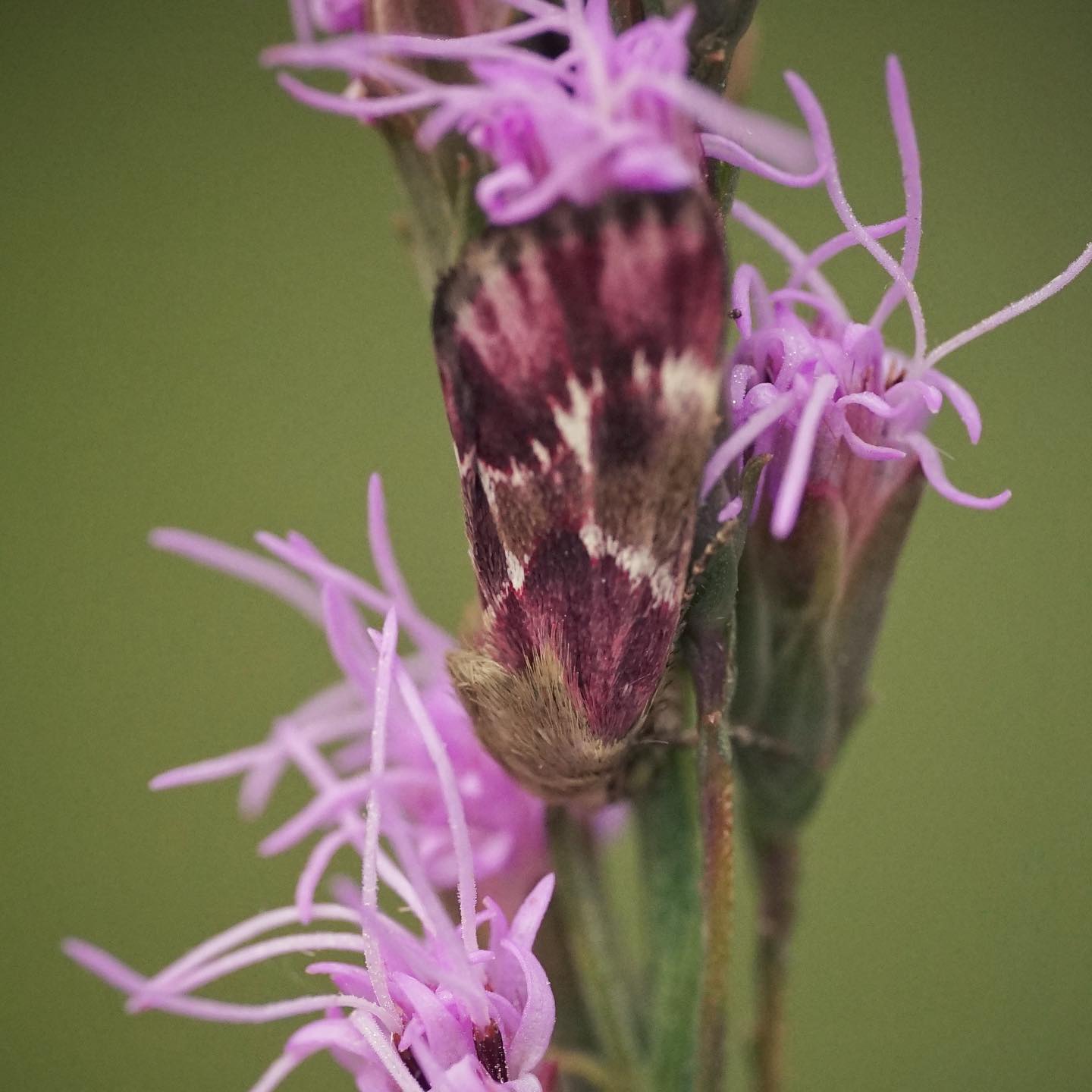
Photo by Emily Bell
Most Bleeding flower moth populations rely exclusively on blazing stars (Liatris spp., also known as gayfeathers), as larval host plants, though some Florida populations may use other hosts as well. However, it is difficult to confirm, as closely related Florida species like Schinia carminosa can only be reliably distinguished in the larval stage. Verified native host plants include the Pinkscale blazing star (L. elegans), Slender blazing star (L. gracilis), Dense blazing star (L. spicata) and Shortleaf blazing star (L. tenuifolia).
Adults nectar on flowers in woodlands, prairies and other open areas — often on their own larval host plants, as well as other nearby wildflowers. Adults tend not to wander far from where they hatched.
HABITAT
Native throughout the eastern and central United States and Canada, the Bleeding flower moth is found most common in Florida and neighboring southern states, although it remains somewhat rare overall. It is considered imperiled in a few states and Canadian provinces, while holding secure status elsewhere, including in Florida. Like most other owlet moths (family Noctuidae), the bleeding flower moth is primarily nocturnal, flying at night and resting on flowers during the day. Adults are active in early autumn.
LIFE CYCLE
Adult females lay large, semi-translucent white eggs inside the closed or newly opening flowerheads of host plants. Newly hatched larvae start out white, gradually turning slightly pink, then finally reddish-purple or brown with white spotting as they mature. The species produces a single brood each year: larvae pass through several stages before pupating into orange-brown pupae and emerging as adults in September or October.
References:
- Hardwick, D. F., and K. Stead. “The life history of Schinia sanguinea (Geyer) (Noctuidae:Heliothentinae) with a report on a survey for Heterocera in southwestern Ontario.” Journal of the Lepidopterists’ Society, vol. 52, no. 4, 1998
- “Noctuid Moths.” Missouri Department of Conservation
- “Schinia sanguinea (Geyer, 1832) – Bleeding Flower Moth.” North American Moth Photographers Group at the Mississippi Entomological Museum at Mississippi State University
- “Schinia sanguinea.” NatureServe Explorer, Sep. 2026
- “Species Schinia sanguinea – Bleeding Flower Moth – Hodges#11173.” BugGuide, Iowa State University