
Foundation awards 2026 Viva Florida grants
The Florida Wildflower Foundation’s 2026 Viva Florida Landscape Demonstration Garden grants have been awarded to the following 13 projects:
Beluthahatchee Park, Fruit Cove
The Beluthahatchee Chapter of the Florida Native Plant Society is excited to add a native demonstration garden to this four-acre park in northwest St. Johns County in December 2026. The garden will be adjacent to the historic home of author, journalist and activist Stetson Kennedy. Beluthahatchee Park attracts visitors for frequent folk music concerts, and historically, Woody Guthrie found inspiration there, writing 80 songs on the premises. Zora Neale Hurston also stayed at Beluthahatchee, calling it “a place where all unpleasantness is forgiven and forgotten.”
Blue Spring State Park, Orange City
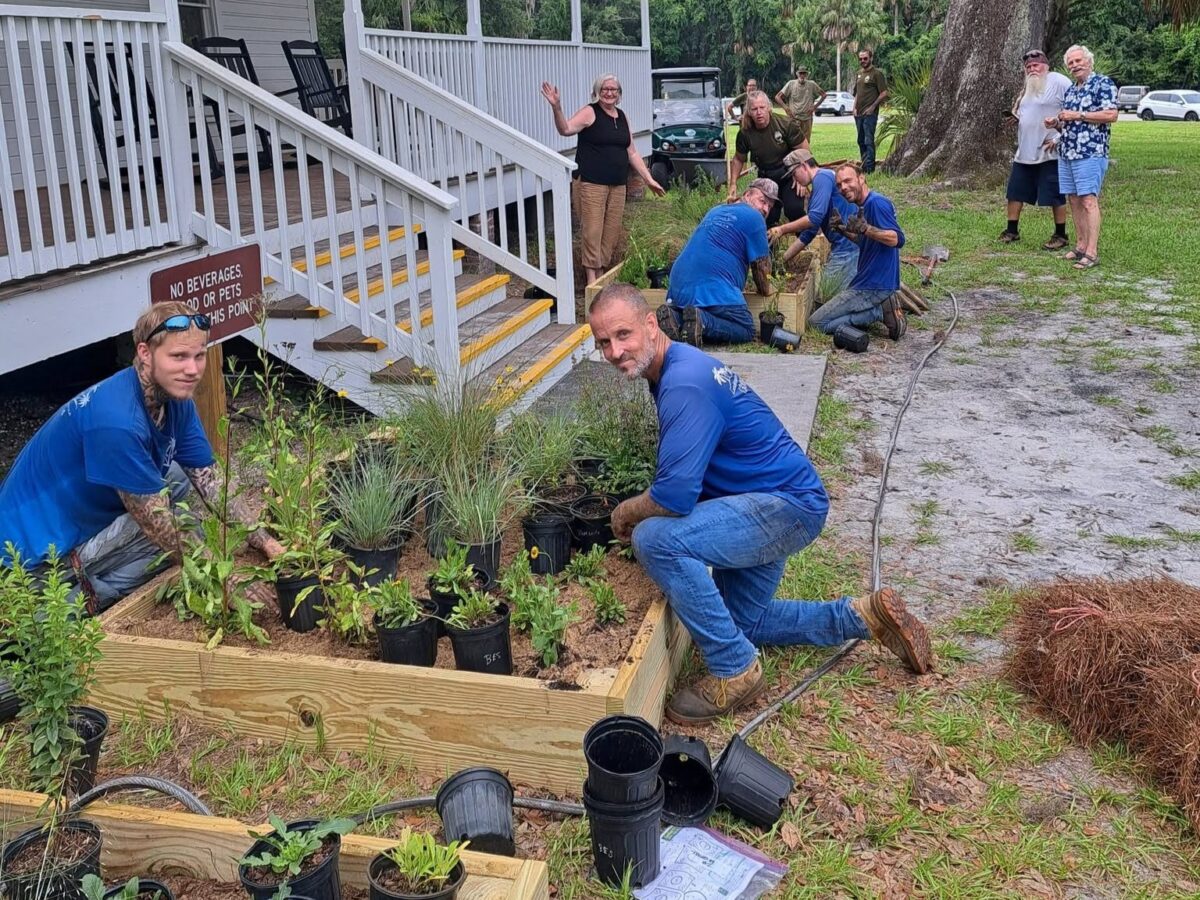
The Village Improvement Association of Orange City already has experience with a Viva garden, having been awarded one in 2024 outside of Albertus Cottage. They are now managing a demonstration garden at Blue Spring State Park, which sees heavy visitation in front of the historic Thursby House. Since the area is an artifact zone where no digging is permitted, the garden is planted in four raised beds. This garden was installed in June and is available to visit.
Bonnet Springs Park, Lakeland
Bonnet Springs Park is installing its second Viva garden, following its first in 2024. The park hopes to eventually create a corridor of six pocket gardens throughout the main park and nearby area. Bonnet Springs Park is a 168-acre urban-nature park with trails and playgrounds, offering many options for educational programming. Millions of visitors attend their public events, and schools and homeschools will take trips to visit the garden, with options for self-guided tours.
Moccasin Lake Nature Park, Clearwater
The City of Clearwater will rehabilitate and expand its native pollinator garden around the Turtle Pond, adjacent to the Garden Lodge, a meeting spot for local groups. Seven plant species will be added to the existing garden, including Cutleaf coneflower (Rudbeckia laciniata), Cooley’s justicia (Justicia pringlei) and Tall elephantsfoot (Elephantopus elatus). The city is looking forward to shining a spotlight on its “Pollinator Power” initiative, encouraging the community to take action in support of pollinator habitats and populations. Planting at Moccasin Lake Nature Park will be completed in October 2026.
Scott Springs Park, Ocala
This native garden will be planted at the trailhead at Scott Springs Park by the City of Ocala. The upper ridge of the drainage retention area will be filled with upland species such as Black-eyed Susans(Rudbeckia hirta) and Giant ironweed (Vernonia gigantea). The location is highly visible for anyone visiting the park, and the kiosk at the trailhead will offer an opportunity for educational signage. The City of Ocala looks forward to partnering with master gardeners and the Marion Audubon Society to create educational programming for this garden.
Palm Bay City Hall
The Conradina Chapter of the Florida Native Plant Society is thrilled to be installing the Viva Florida demonstration garden outside of Palm Bay City Hall. The city estimates they have 40,000 visitors to the location annually. Plant species in the demonstration garden include Coontie (Zamia pumila), Dotted horsemint (Monarda punctata) and Pineland heliotrope (Euploca polyphylla). The Conradina Chapter will also install a water feature nearby with native aquatic plants.
Tomoka State Park, Ormond Beach
The garden site is directly adjacent to a trailhead in a heavily trafficked area between the park’s recreation hall and the concessionaire. Originally planted in 2017, this garden will be refurbished and divided into the following zones: Lush & Local: Landscaping with Natives; Serenity Spot: Meditation & Edible Garden; Buzz & Flutter: Pollinator Paradise; Back to the Wild: Native Habitat; Handle with Care: Danger Zone; and The Grass is Greener: Florida’s Native Grasses. Friends of Tomoka Basin State Parks will complete the planting by January 2027.
Terry Park, Fort Myers
The Master Gardeners of Lee County are installing a native plant garden to complement their edible landscape garden at Terry Park Ballfield. They know that their edible plants need pollinators in order to thrive, and that the pollinators will be drawn in by the native wildflower garden. UF/IFAS Lee County has a long list of educational programming and outreach planned, including press releases during construction and establishment, invitations for pollinator census groups to use the garden as a training site, and workshops on soil prep, sowing seeds, maintenance and creating a pollinator pot. This garden planting will be completed at the end of December.
UF/IFAS Extension Marion County, Ocala
This Viva planting will enhance the garden at the entrance to Marion County’s UF/IFAS Extension Office. Native plants will be selected to provide blooms throughout the year: Muhlygrass (Muhlenbergia capillaris) and Elliott’s love grass (Eragrostis elliotti) for fall; Blue-eyed grass (Sisyrinchium angustifolium) for winter and spring; and Swamp twinflower (Dyschoriste humistrata) for spring and summer.
Patriot Park, Crestview
Okaloosa County is looking forward to adding this native demonstration garden to a community park currently being developed in southeast Crestview. The garden will sit right next to the park’s main entrance. Park attractions will include boardwalks overlooking the Shoal River, a jogging path, a playground and a dog park. A handout available for the garden will describe bloom season and color, as well as value to natural systems and wildlife. The County hopes this garden will inspire visitors to plant native wildflowers in their own gardens.
Ridge Audubon Society, Babson Park
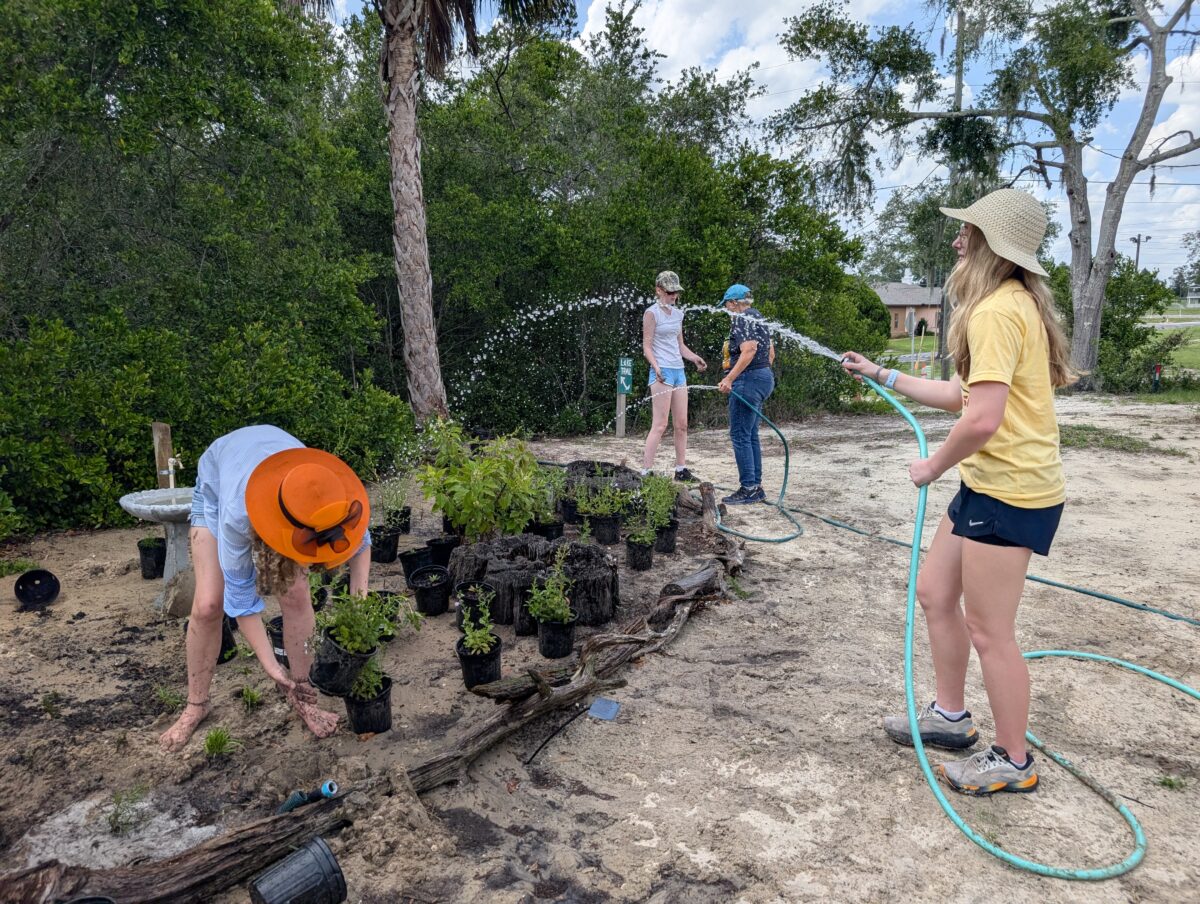
This garden is planted at the trailhead of Ridge Audubon’s educational nature center, in a half-oval shape with a border and a tiny fairy garden atop a tree stump. A small path winds through the middle of the garden. Ridge Audubon plans to share updates about the garden through blog posts on their website. Native wildflowers in the garden include Butterflyweed (Asclepias tuberosa), Skullcap (Scutellaria spp.) and Sandhill wireweed (Polygonum nesomii). This garden was planted in June and is available to visit.
University of North Florida, Jacksonville
University of North Florida is transforming a 2,600 square foot area next to the Biology Department into a native rain garden, with plants selected for their ability to capture and filter stormwater, reduce localized flooding and enhance surrounding ecosystems. The site is surrounded by recreated native ecosystems, including beach dune and tropical coastal hammock. One UNF fraternity has offered to adopt the rain garden for ongoing care, and is interested in propagating native violets like the Common blue violet (Viola sororia) and Bog white violet (Viola lanceolata).
Green Mountain Scenic Overlook and Trailhead, Minneola
Green Mountain Scenic Byway was awarded with a Viva Florida grant in 2024 and, after a successful grant year, has now been given the opportunity to expand its garden. Recently, Lake County cut back vegetation behind the Viva garden to remove invasive and nuisance vines such as Greenbrier (Smilax spp.), Rosary pea (Abrus precatorius), and Muscadine grape (Vitis rotundifolia). Green Mountain plans to reconstruct the natural visual border behind the current garden with native plants like Florida greeneyes (Berlanderia subucaulis) and Walter’s viburnum (Viburnum obovatum).
Would you like to see more demonstration gardens across the state?
Consider making a donation today in support of our Viva Florida grant program.
You never know who you might inspire through a garden you helped fund.
All Viva Florida gardens must be in highly visible and publicly accessible areas with frequent pedestrian traffic. Plants grown as part of the project must be native to Florida. Projects must have strong educational components. Viva Florida educates the public about the importance of native plants in providing food and habitat for wildlife, as well as other ecological benefits. Applications for the 2027-28 Viva Florida grant period will be accepted between Dec. 1, 2026 and Feb. 15, 2027. If you are interested in applying, click here to review project guidelines.
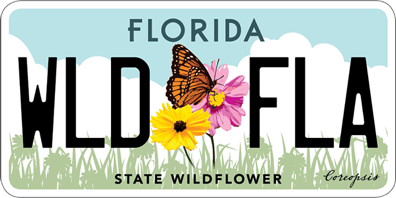
The Florida Wildflower Foundation provides these grants with help from sales of the Florida State Wildflower license plate. Get yours today!