
Bloom Report: Thistles — Spiny but Spectacular
by Jeff Norcini
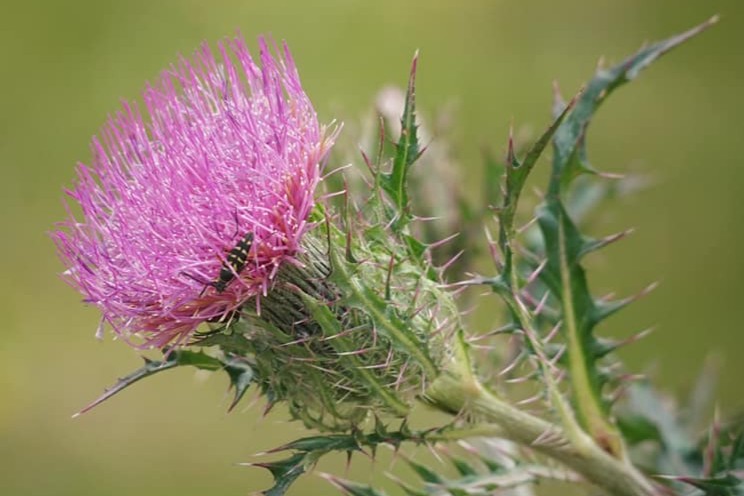
Pictured above: Purple thistle (Cirsium horridulum). Photo by Emily Bell
Thistles (Cirsium spp.) make a bold statement in the landscape. From their low rosettes of spiny leaves to their striking flowers perched atop stems that can reach 3 feet or more, these plants are hard to miss. While some people dismiss thistles because of their prickly nature — or write them off as mere “weeds” — many others appreciate their rugged beauty and surprising ecological value. Pollinators, in particular, absolutely love them.
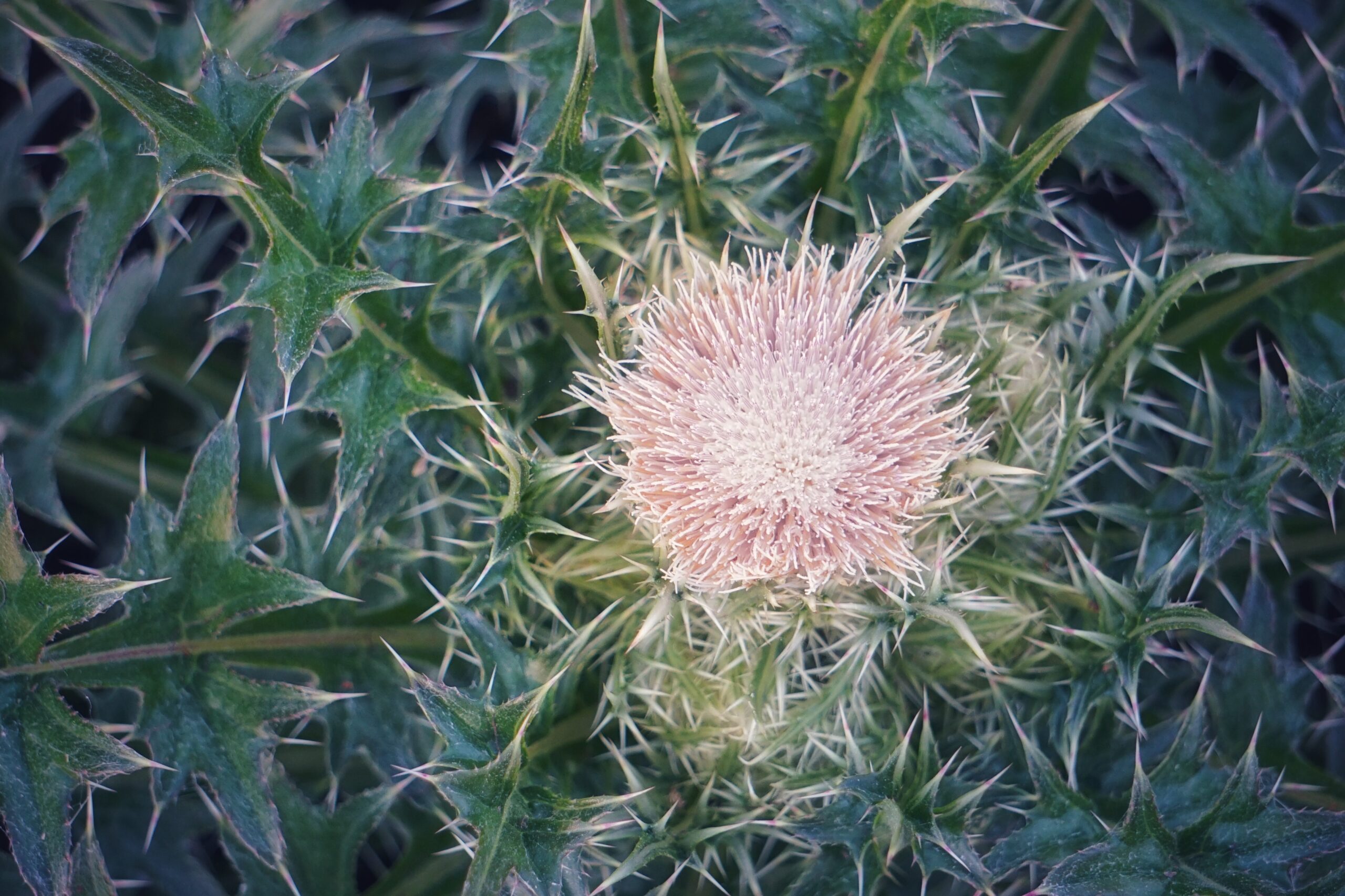
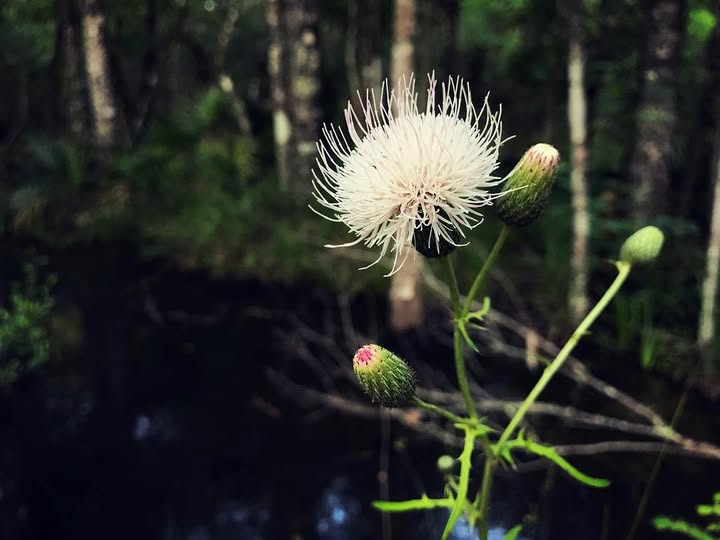
Although thistles belong to the same family as sunflowers (Asteraceae), their flowerheads look quite different from the typical sunflower. Instead of having both ray and disc florets, thistles have only disc florets that are usually pinkish-purple and tightly packed together, forming a striking, brush-like cluster that gives thistle flowers their soft, showy appearance. It’s a look that manages to feel both wild and refined at the same time.
Thistles are sometimes called Plume thistles, and for good reason. Each fruit (called an achene) is attached to a feathery tuft known as a pappus. Much like the familiar seeds of a Dandelion (Taraxacum officinale), these silky plumes catch the breeze and carry the seeds aloft, sometimes traveling remarkable distances. Even in winter, thistles persist in the landscape as basal rosettes of spiny leaves, quietly biding their time until the next growing season.
Florida is home to seven species of thistles, six of which are native. Of those seven, three bloom in spring: Purple thistle (Cirsium horridulum), Nuttall’s thistle (Cirsium nuttallii), and the rare non-native Bull thistle (Cirsium vulgare), which has only been documented in Wakulla County.
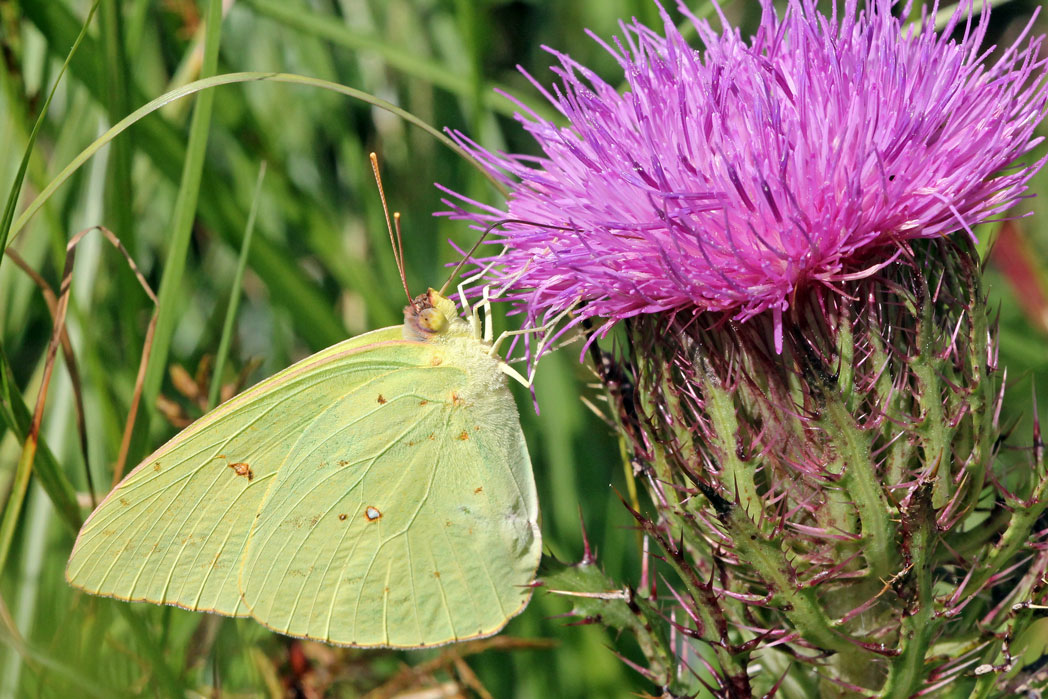
Photo by Mary Keim
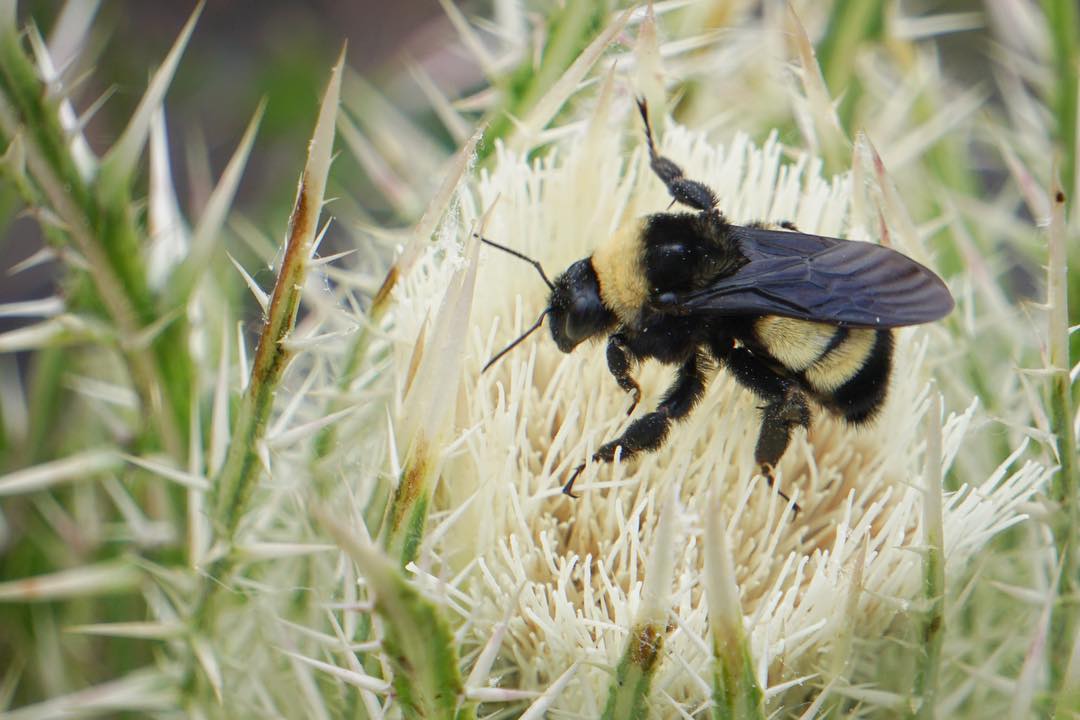
Photo by Emily Bell
Purple thistle and Nuttall’s thistle are commonly found along roadsides, in open fields and in other disturbed areas. Purple thistle is the more widespread of the two, occurring in nearly every county in the state. Nuttall’s thistle, by contrast, is mostly found in the Eastern Panhandle and throughout much of the Florida peninsula.
Fortunately, these two species are fairly easy to tell apart once you know what to look for. Purple thistle — which sometimes produces yellowish flowers despite its name — is fiercely spiny from top to bottom. Nuttall’s thistle has a more decorative quality: the green bracts beneath its flowerheads appear etched with short overlapping white lines, almost as if someone had carefully painted them on. When you look closely, the effect is surprisingly ornamental.
Beyond their striking appearance, thistles play an important role in supporting local wildlife. Their flowers attract a wide variety of pollinators — butterflies, bees, moths and even hummingbirds — making them one of spring’s most valuable wildlife resources. Some of the visitors you might spot on a thistle bloom include:
For more information about thistles, see:
As you explore and enjoy Florida’s spring beauty, remember this: Wildflowers are best left where they grow. Many of our native wildflowers reproduce only by seed, so picking flowers reduces their ability to sustain future generations. Instead of picking wildflowers, take a picture — it will last longer! If you’d like to bring wildflowers into your own space, consider planting some in your yard or in containers on your patio or porch.
Native wildflower seed packets are available from the Florida Wildflower Growers Cooperative. Click here to check availability and place an order. You can also find native wildflower plants (and sometimes seeds) at nurseries or garden centers that specialize in native species. Visit the Florida Association of Native Nurseries’ website to find a native garden center near you.