Spanish stopper
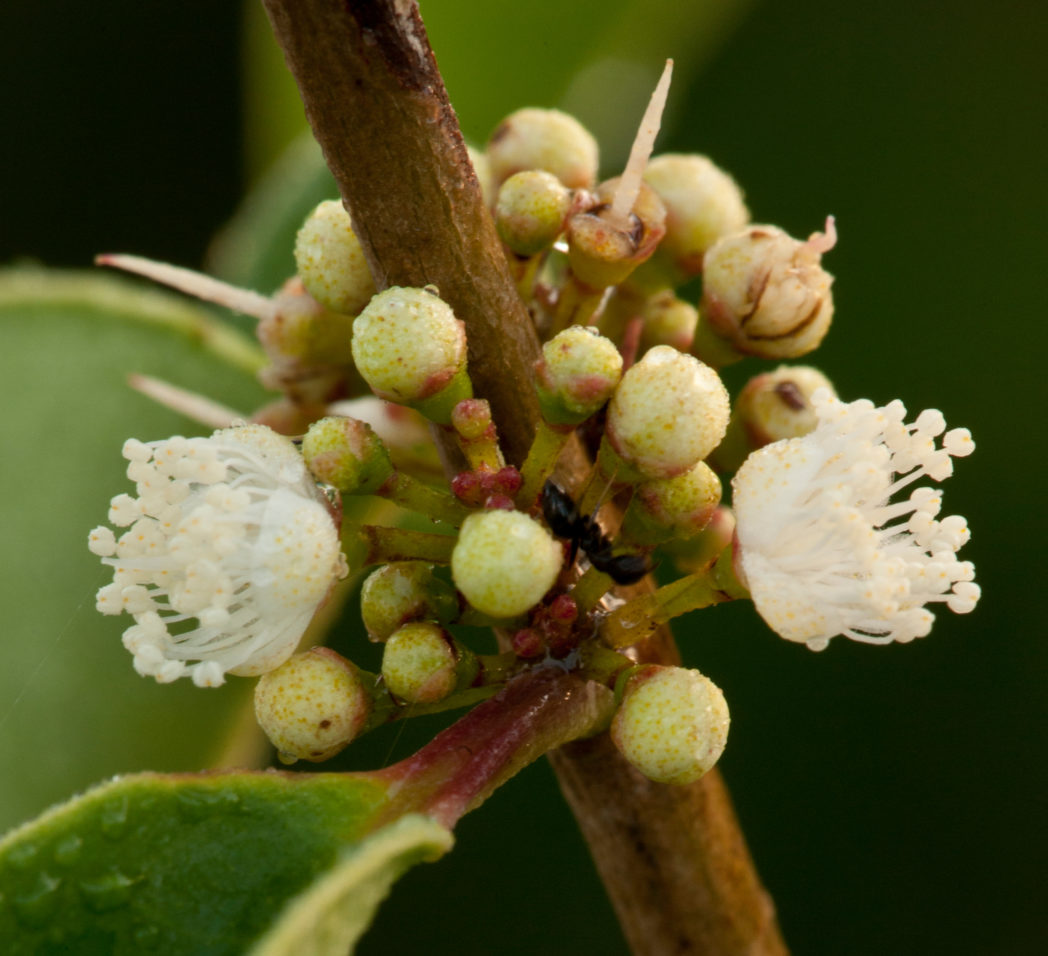
Pictured above: Spanish stopper (Eugenia foetida) by swamphiker (CC BY-NC). Click on terms for botanical definitions. View post as a PDF.
Spanish stopper (Eugenia foetida) is an evergreen shrub or small tree native to coastal hardwood hammocks and thickets in Central and South Florida. Its semi-showy flowers bloom year-round, with peak blooming in spring and summer, attracting many types of pollinators. Its dense foliage provides cover, and its abundant fruit provides food for birds and other small animals.
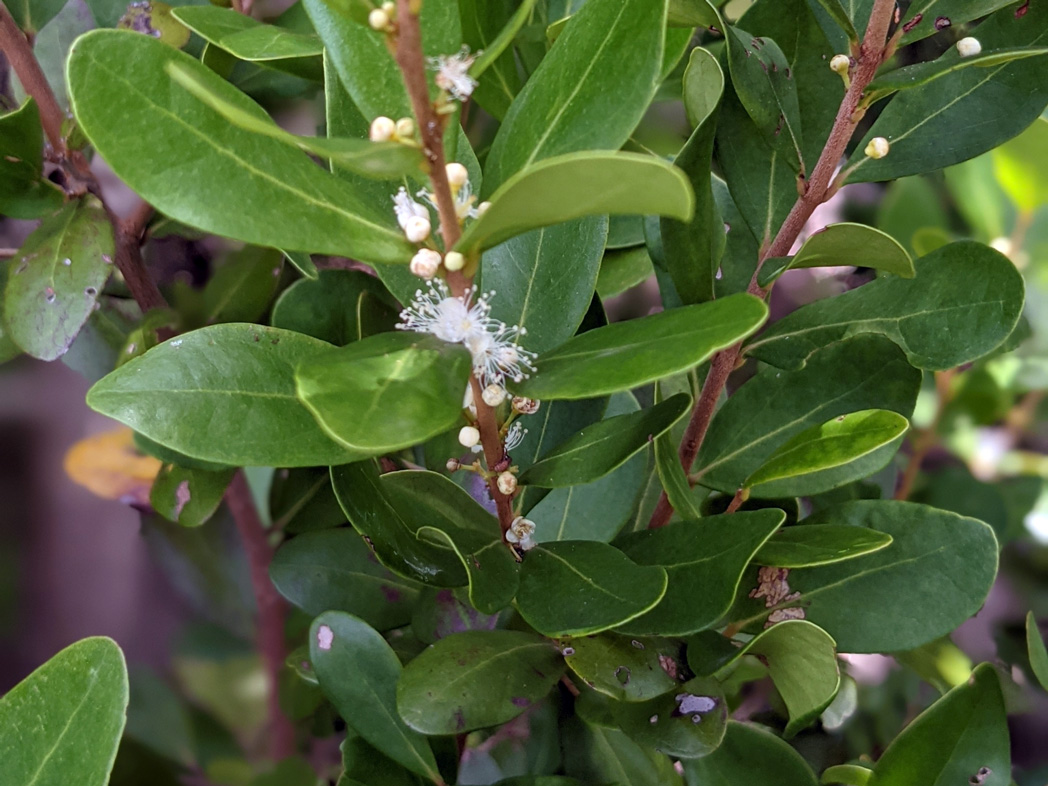
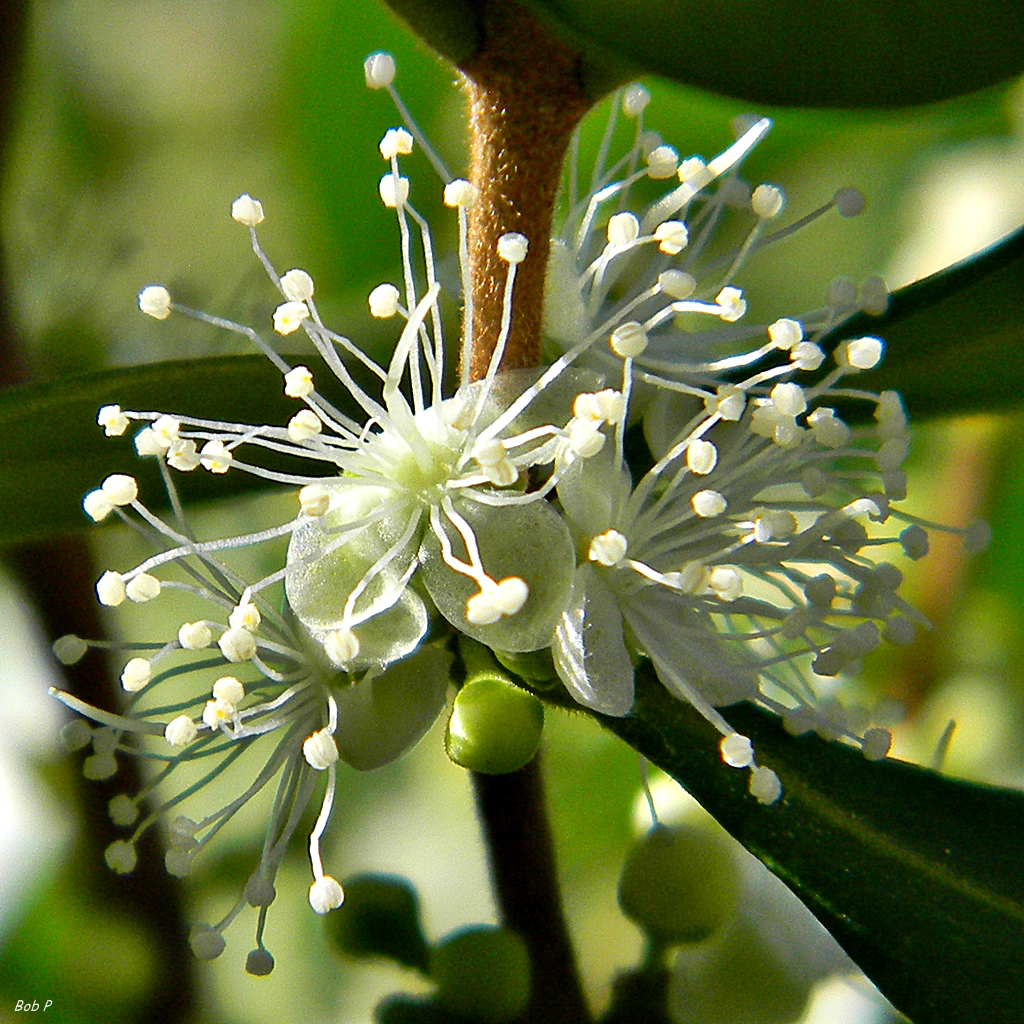
Spanish stopper’s four-petaled flowers are white with many obvious stamens, giving the flower a frilly appearance. They are born in axillary clusters. Leaves are simple, leathery, ovate and dark green with yellowish undersides. The petioles are reddish. Leaf apices are rounded, visually separating the plant from other stoppers. Margins are entire and appear yellow. Leaf arrangement is opposite. Crown is relatively narrow. Bark is smooth and brownish-gray; it may be scaly in older specimens. Fruits are small (about ¼-inch in diameter), round fleshy berries that are reddish in color, turning purplish-black when mature.
The species epithet foetida is the female form of the Latin word foetidus, meaning “bad smelling.” It refers to the foul smell emitted by the flowers and leaves, particularly in the summer. The common name “stopper” alludes to the plant’s historical use as a treatment for diarrhea.
Family: Myrtaceae (Myrtle or eucalyptus family)
Native range: Coastal counties from Brevard south to the Keys and Manatee south to Monroe mainland counties
To see where natural populations of Spanish stopper have been vouchered, visit florida.plantatlas.usf.edu.
Lifespan: Perennial
Soil: Moist to dry, well-drained calcareous, loamy or sandy soils
Exposure: Full sun to partial shade
Growth habit: 8–15′ tall
Propagation: Seed
Florida regions of landscape suitability: Central, South
Garden tips: Spanish stopper’s dense foliage and ability to be pruned into any desired shape make it a good option for a screen or buffer, as well as an accent or specimen plant. Its slender form make it especially suited for narrow spaces. It is moderately drought tolerant and can withstand hurricane and salt winds, making it ideal for coastal areas.
Spanish stopper is occasionally available from nurseries that specialize in Florida native plants. Visit www.PlantRealFlorida.org to find a nursery in your area.
Learn more about Spanish stopper from the Florida Native Plant Society and the Institute for Regional Conservation.
For information on other Eugenia species, see: