
Groundnut
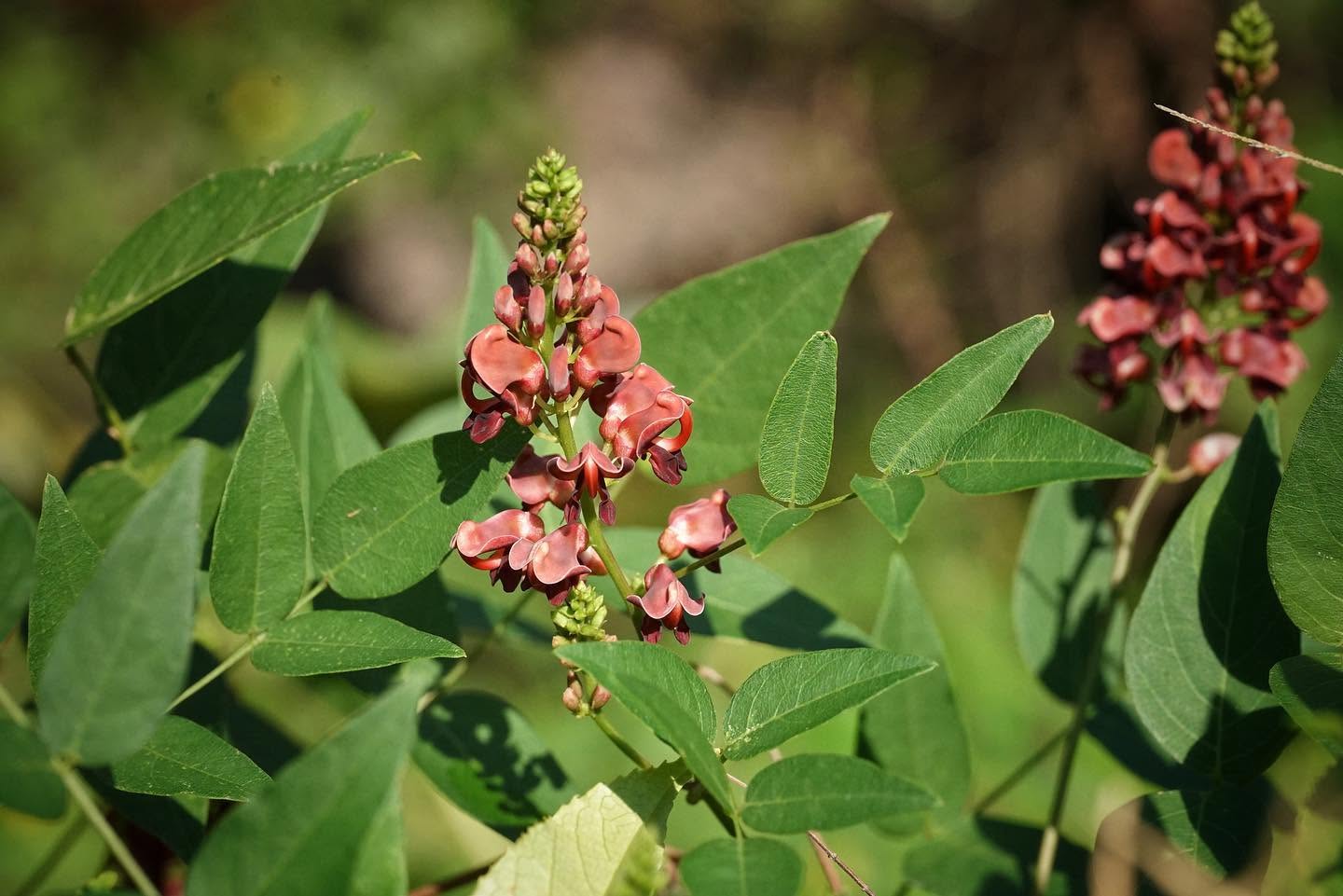
Pictured above: Groundnut (Apios americana) by Emily Bell. Click on terms for botanical definitions. View post as a PDF.
Groundnut (Apios americana) is an herbaceous vine found along the edges of floodplain forests, wet hammocks, lakes or streams, and in wet, disturbed areas throughout much of the state. Blooming late spring through fall, the fragrant flowers are primarily pollinated by mason or leafcutter bees (Megachilidae family), although some suggest they are also fly-pollinated. The plant is a larval host for the Silver-spotted skipper.
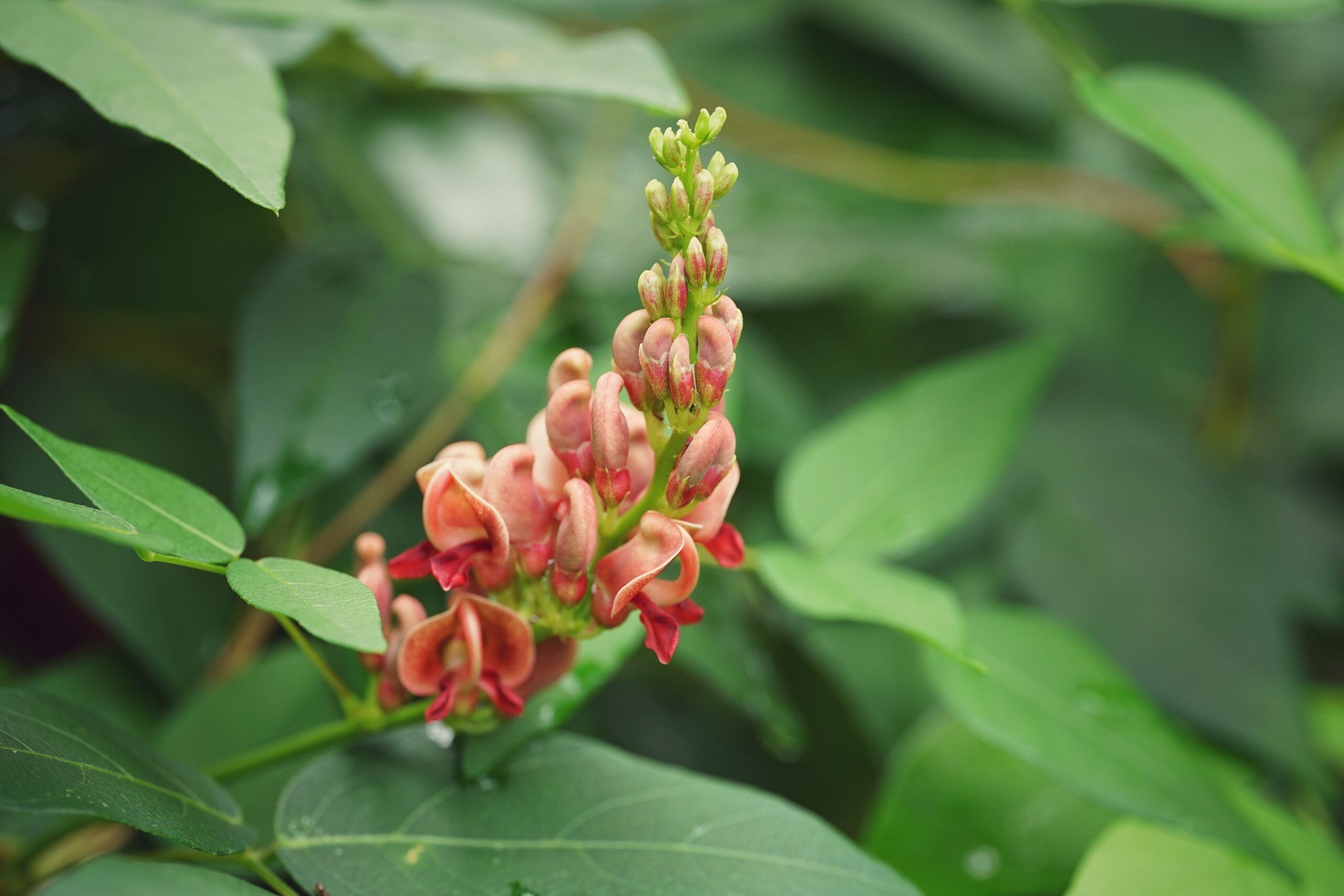
Groundnut’s flowers are quite unique. The petals are pale pink on the outside, and vary from red to purple to brown inside. Upper petals are fused into a hoodlike structure. Lateral petals are small and winglike. The lower petal is keeled and curves in under the “hood.” Flowers are born in dense terminal spike-like racemes. Leaves are pinnately compound with five to seven lance-shaped leaflets. Leaf arrangement is alternate. The stem is smooth. Fruits are inconspicuous flattened pods with many seeds.
Pollination in Apios americana is unusual — the anthers are essentially spring-loaded. When a pollinator of a certain size or weight lands on the flower, the “spring” is released, flinging pollen onto the insect.
Most of the plant is edible. Flowers may be eaten raw or cooked. Seeds can be cooked but should be shelled first. The potato-like tubers contain a bitter latex and should be peeled and cooked before eating. Green Dean of EatTheWeeds.com recommends boiling them first to eliminate the latex. They can then be fried, added to soups or stews, or dried and ground into a flour. The cooked tubers have a pleasant nutty flavor and dry texture. Groundnut was a staple among North American indigenous peoples. The plant is relatively high in protein.
The genus name Apios is from the Greek word for “pear” and may allude to the shape of the tubers. The plant is also known commonly as Hopniss, Indian potato and Potato bean, referencing its edible parts.
Family: Fabaceae (Legume, pea or bean family)
Native range: Nearly throughout
To see where natural populations of Groundnut have been vouchered, visit florida.plantatlas.usf.edu.
Lifespan: Perennial
Soil: Moist to wet organic soils
Exposure: Partial shade
Growth habit: 8+ feet long
Propagation: Seed, division of tubers
Florida regions of landscape suitability: North, Central, South
Garden tips: Groundnut’s twining, clambering tendency is best suited for naturalistic landscapes or restorations where it can roam freely. It is not recommended for small areas. The plant is a nitrogen-fixer, so it may improve and enrich soils, allowing for the introduction of more demanding plants into your landscape. It does not tolerate drought or salt exposure.
Groundnut is occasionally available from nurseries that specialize in Florida native plants. Visit www.PlantRealFlorida.org to find a nursery in your area.
Learn more about Groundnut from the Institute for Regional Conservation.