
25 Years of Conservation
Part of our $25 for 25 Anniversary Series — explore more stories here.
As we head down the road toward the next 25 years, we envision communities and roadsides in flush with wildflowers, and we’d love for you to travel it with us. Your gift to our $25 for 25 campaign helps keep our roadsides in bloom.
Over the course of 2026, we’ve been sharing the stories of our past 25 years to celebrate how far we’ve come and the abundant flowering future we envision. At the heart of everything we do is an ethos of conservation — ensuring Florida’s native wildflowers always have spaces in which to thrive, supporting wildlife and communities alike.
Our education programs and resources foster an appreciation of native plants and teach Floridians how to incorporate them into their daily lives. These efforts are supported by our planting programs, which fund native plant demonstration gardens and school wildflower gardens in communities throughout the state. And we’ve built longstanding productive partnerships with numerous organizations to greatly expand our impact.
We have also been dedicated to supporting and conducting research on the value of wildflowers to wildlife and agriculture, and on increasing local ecotypic seed availability for restoration and landscaping needs. We reached an exciting new horizon in our work on native seed production with the formalization of the Florida Native Seed Partnership in 2025.
Another major component of our conservation story is our work to conserve roadside wildflowers. Because roadsides are managed as open landscapes, they are quite conducive to wildflower diversity, and across Florida’s thousands of miles of roadsides there are naturally occurring populations of hundreds of species, from very rare to common. These wildflowers beautify the landscape, create pollinator corridors and, when managed for their bloom seasons, significantly reduce maintenance costs while increasing ecological resilience. FWF’s work focuses not on planting along roadsides, but on identifying these areas of naturally occurring wildflowers and preserving them by supporting grassroots community efforts and providing management guidance to transportation authorities.
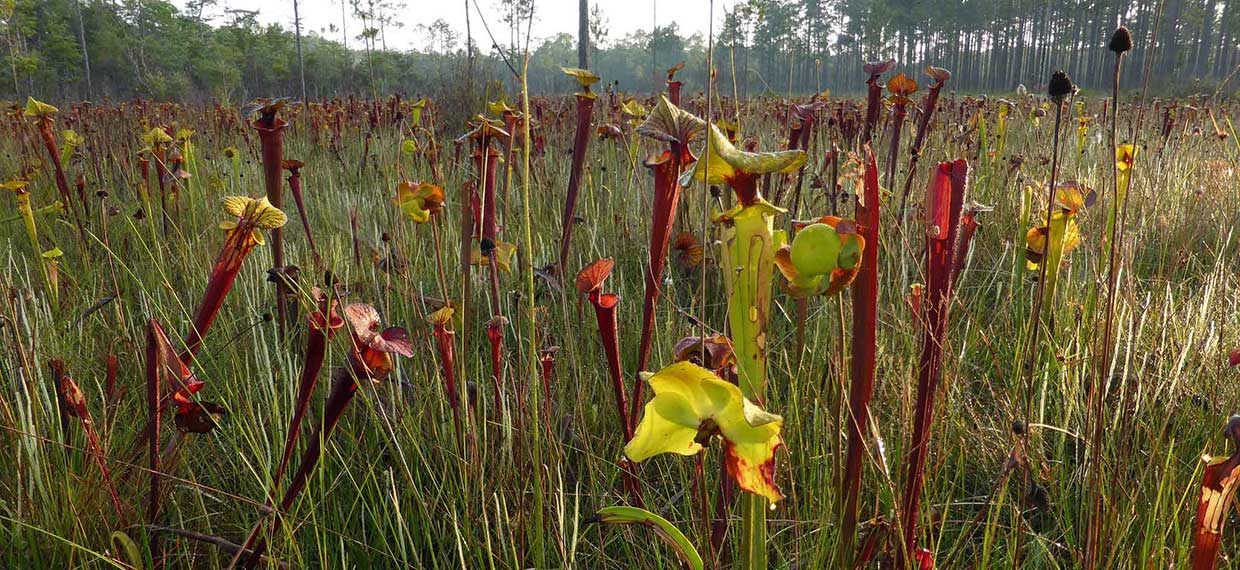
In addition to our longstanding partnership with the Florida Department of Transportation’s Wildflower Program, some of our earliest work was to survey roadside wildflower populations. In 2009–2010, FWF contractor Dr. Jeff Norcini and Florida native plant expert Dr. Gil Nelson performed three-season surveys of roadside wildflowers in the Big Bend, Central Florida (St. Johns River to the Sea Loop), and Corkscrew Swamp (Southwest Florida) vicinities. The Loop route and Big Bend area were re-surveyed (and in the Big Bend case, expanded) in 2020.
Around the same time, in 2010, the Foundation received a grant from Visit Florida to create a marketing plan for wildflower tourism in the Panhandle. One result of this plan was the hiring of Eleanor Dietrich in 2013 to serve as liaison to FDOT while establishing a group of “wildflower watcher” volunteers, to be known as the Florida Panhandle Wildflower Alliance. The goal of this work was to protect the incredible and unique stands of wildflowers occurring on roadsides throughout areas like the Apalachicola National Forest through responsible management practices, primarily reducing and adjusting mowing times. In her four years with this program, Eleanor made a lasting impact. She was known for her ability to raise support for the cause across broad audiences, from local and state government to residents, and she built a coalition of hundreds of people working in 16 counties to preserve wildflowers.
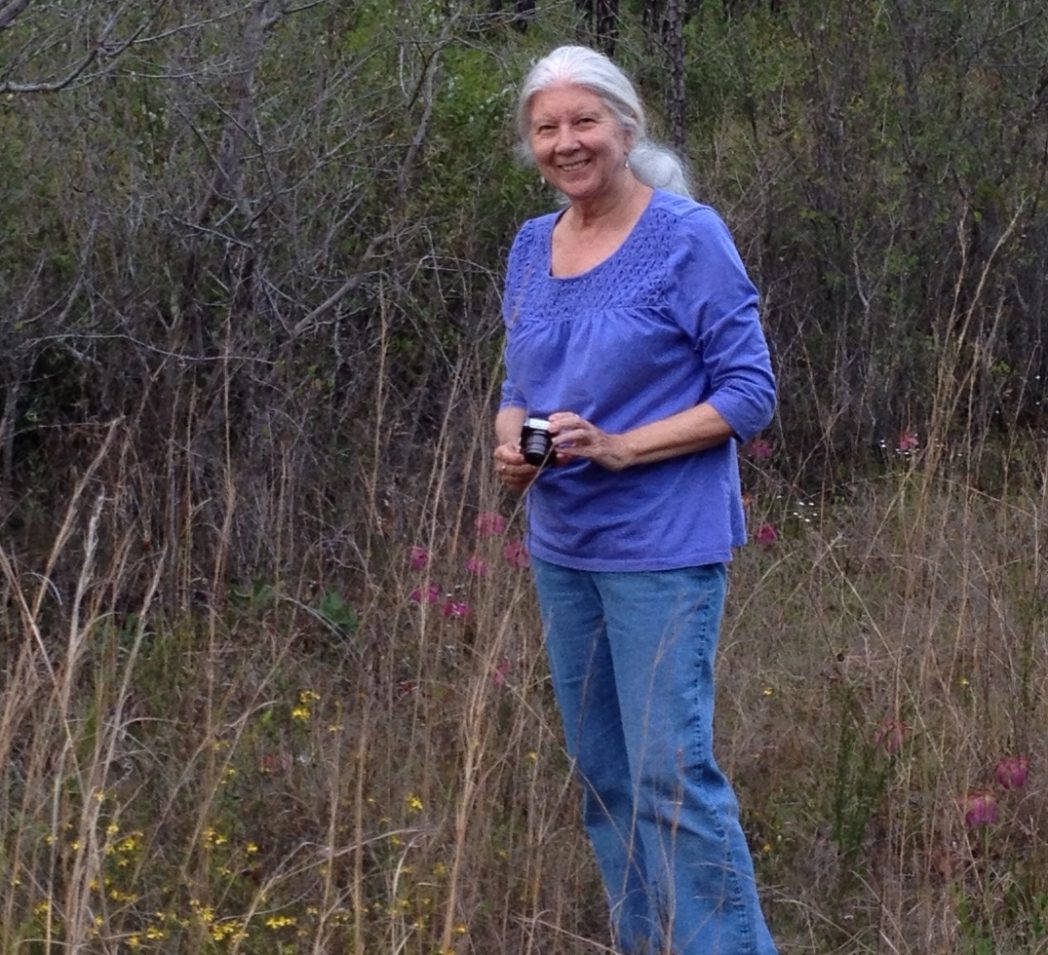
Eleanor was also the architect of a roadside wildflower conservation roadmap for local communities that we still follow today, utilizing the Foundation’s model Wildflower Resolutions as a first step. She worked with local communities and governments to adopt these resolutions, which were recognized by FDOT and local transportation departments as a commitment to support wildflower conservation efforts. With a resolution in place, FWF could work with local volunteers to survey and identify appropriate wildflower areas, then with transportation authorities to amend their management plans, and finally train volunteers to help monitor the wildflowers. Wakulla, Gadsden, Leon, Lake, Marion, Brevard, and Volusia counties were some of the earliest to adopt resolutions and today 37 counties and four municipalities have them in place.
Eleanor retired in 2017 and was succeeded by Liz Sparks, who continued this work until her retirement in 2022. Liz’s extensive regional knowledge and community building skills allowed her sustain and grow these vital efforts. When Marina Mertz joined FWF in 2023 as the lead for our roadsides program, the landscape had shifted due to the global pandemic. Marina did an incredible job revitalizing waning Panhandle programs while expanding into new counties, including Citrus and Alachua. She also reengaged existing wildflower watcher volunteers and recruited new ones. Although Marina was with FWF only a short time (2023–2026), she left an indelible mark the conservation of wildflowers along Florida’s roadsides. Our newest program coordinator, Molly Phillips, has jumped right in to carry on the legacy of these remarkable women.
As we head down the road toward the next 25 years, we envision communities and roadsides in flush with wildflowers, and we’d love for you to travel it with us. Your gift to our $25 for 25 campaign helps keep our roadsides in bloom.