
Wildflower Resolutions
Wildflower resolutions are a powerful tool for conserving Florida’s native roadside wildflowers and pollinator habitat. Here you’ll find everything you need to advocate for one in your community.
What is a Wildflower Resolution?
A Wildflower Resolution is a formal pledge by counties and cities to conserve roadside wildflowers through management strategies such as reduced mowing. These resolutions recognize the historical, environmental and cultural significance of Florida’s native wildflowers and commit local governments to protecting them.
By adopting a Wildflower Resolution, a city or county affirms its support for native roadside wildflowers and pollinator habitat. This helps guide local decision-making, encourages coordination with the Florida Department of Transportation on state roads within the county, reduces maintenance costs, preserves the natural beauty of Florida’s roadsides and serves as a first step toward future designation of local roads as wildflower habitat.
In 2009, a model county Wildflower Resolution was developed by Florida Wildflower Foundation members Eleanor Dietrich and Jeff Caster. Wakulla County was the first to enact a Wildflower Resolution, followed by Gadsden, Leon, Lake, Marion, Brevard and Volusia counties. Today, 37 counties and three municipalities have adopted Wildflower Resolutions.
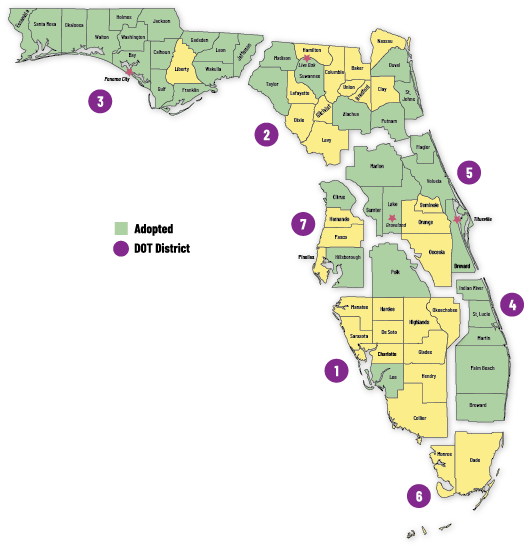
Has your community adopted a resolution? Check the district maps below to find out whether your county or city has a Wildflower Resolution in place.
Ready to take action? Whether your community needs a new resolution or you want to update an existing one, the Wildflower Resolution Advocacy Kit below provides step-by-step guidance, templates and tools to help you succeed.
Before you begin
This advocacy kit is designed to support residents, community groups and organizations interested in encouraging their city or county to adopt a wildflower resolution. While the overall process is straightforward, timelines and procedures can vary by community.
Before starting, we recommend that you:
- Reach out to our Roadsides Program Coordinator for guidance and support
- Identify the appropriate governing body (city council or county commission)
- Be prepared to work collaboratively with elected officials, staff and community partners
Who this kit is for
This kit can be used by individual residents, informal groups or organized partners working together to advance roadside wildflower conservation at the local level.
What a Wildflower Resolution does
A Wildflower Resolution expresses a city or county’s support for conserving native roadside wildflowers and pollinator habitat. It can help guide local decision-making, encourage coordination with the Florida Department of Transportation, and serve as a first step toward future designation of city or county roads as wildflower habitat.
What a Wildflower Resolution does not do
A resolution does not change state law, override FDOT policies or automatically alter mowing schedules. Instead, it serves as an important policy statement that can inform future decisions, partnerships and actions.
Timeline expectations
The process of adopting a resolution may take several weeks to several months, depending on local procedures, meeting schedules and the level of community support. Flexibility and persistence are key — and many successful resolutions began with just one or two committed residents.
Advocacy steps
Step 1. Gather information and draft your resolution.
- Select your district tab on the map below.
- Counties shown in greens on the district map have already adopted wildflower resolutions. Cities with resolutions are shown with pink stars. Click on its name to see how the resolution was adopted.
- If your county or city has a wildflower resolution in place but it is outdated, you can follow these same steps and use these tools to update and re-pass a resolution.
- Reach out to our Roadsides Program Coordinator to learn about any past or current efforts in your community.
- Review successful resolutions from other cities and counties to help draft one or download and adapt the model county resolution (city or county, as appropriate).
Step 2. Build local support.
- Team up with residents and organizations that have ties to county commissioners or city council members who support environmental initiatives.
- Organize a group effort by inviting help from Florida Wildflower Foundation members, local Florida Native Plant Society chapters, Audubon and Sierra Club chapters, garden clubs, civic organizations and homeowners associations.
- Ask supporters to write letters of support or sign on to the sample petition.
Step 3. Pass the Resolution.
A wildflower resolution must be formally introduced by a county commissioner or city council member. To move the resolution forward:
- Identify commissioners or council members who are likely to support the resolution.
- Meet with a commissioner or council member to request sponsorship of the resolution.
- Use the sample email and sample phone script to request the meeting.
- Ask the sponsoring official for guidance on the best way to proceed, including final wording of the resolution, scheduling a presentation and securing a vote.
- Call or visit other members who may need additional information or encouragement before the vote.
- Ask supporters who pledged their help to attend the meeting on the day of the vote; if needed, have a few key supporters prepared to provide brief public testimony.
Step 4. Follow Up and Support Implementation.
After the resolutions is adopted:
- Send thank you emails or letters to elected officials, staff and community partners who supported the effort. This sample thank-you email/letter to a commissioner can be adapted for your community and recipients.
- Confirm that the adopted resolution has been entered into the official city or county record.
- Request that the resolution be shared with relevant county departments (e.g., public works, transportation or natural resources).
- Share news of the adopted resolution with local media, partners, organizations and residents.
- Stay engaged by monitoring roadside management practices and maintaining relationships with county staff and elected officials.
Implementation may be gradual and often begins with improved coordination rather than immediate changes to mowing schedules.
District map
District 1
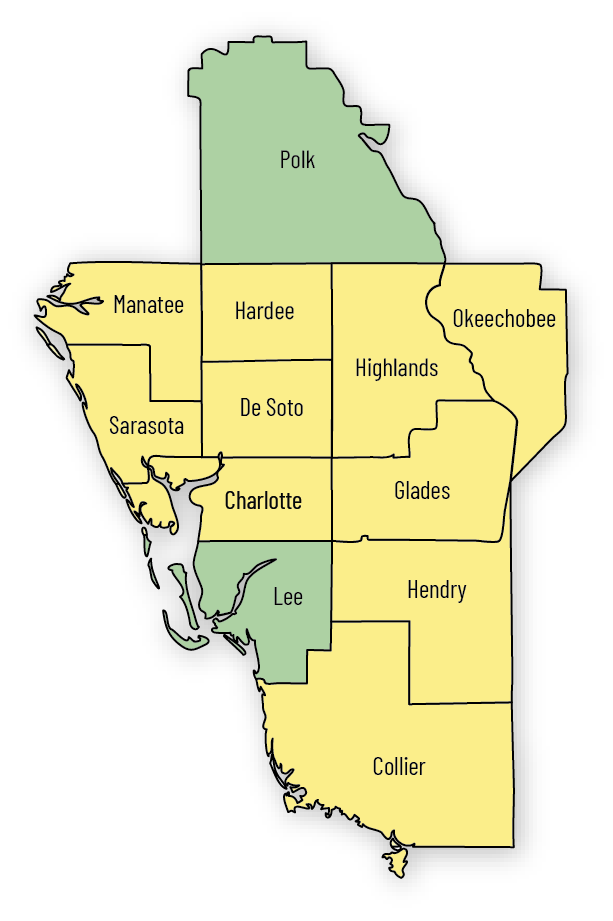
Click on the county name to view contacts and a copy of the resolution.
District 2
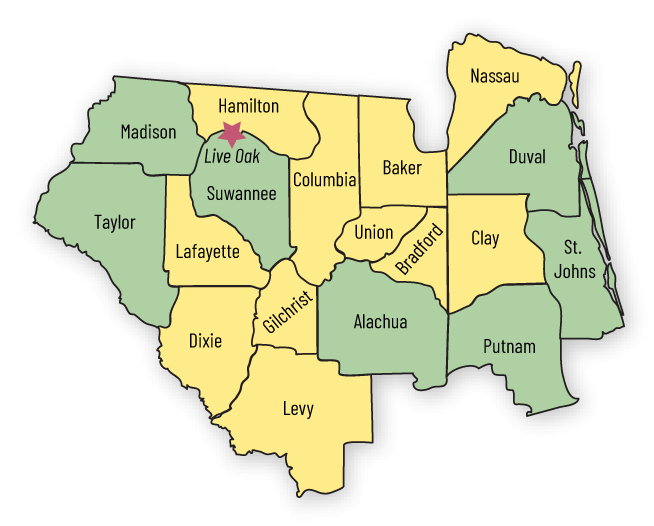
Click on the county name to view contacts and a copy of the resolution.
District 3
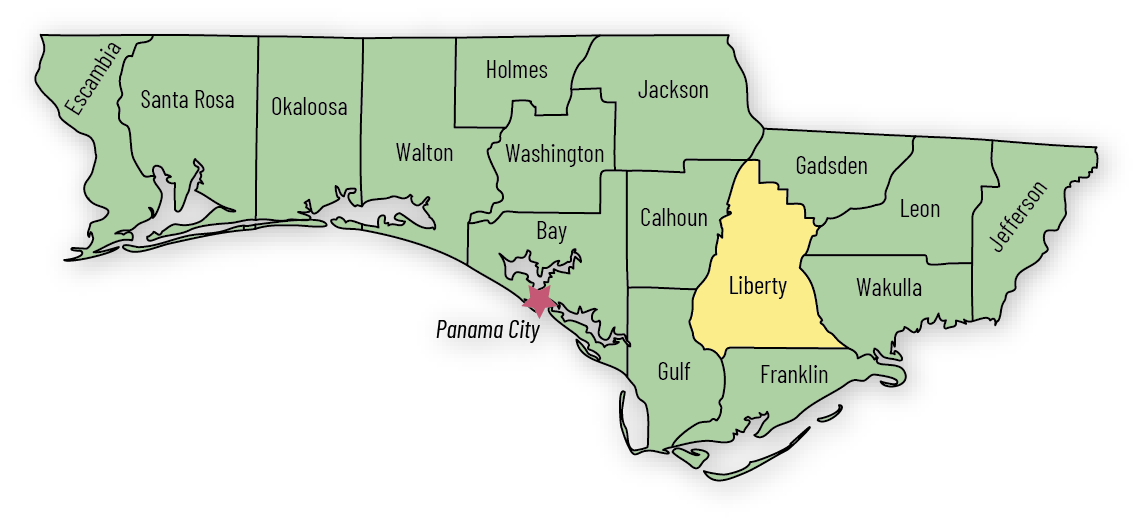
Click on the county name to view contacts and a copy of the resolution.
District 4
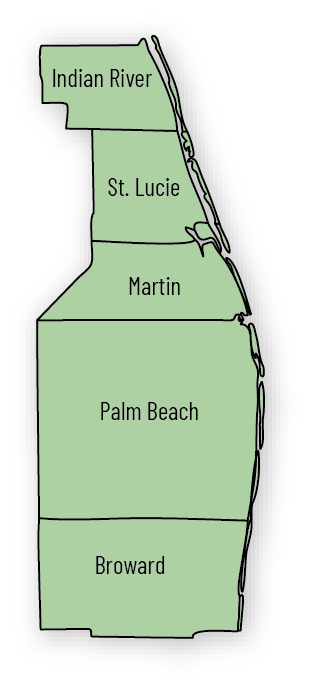
Click on the county name to view contacts and a copy of the resolution.
District 5
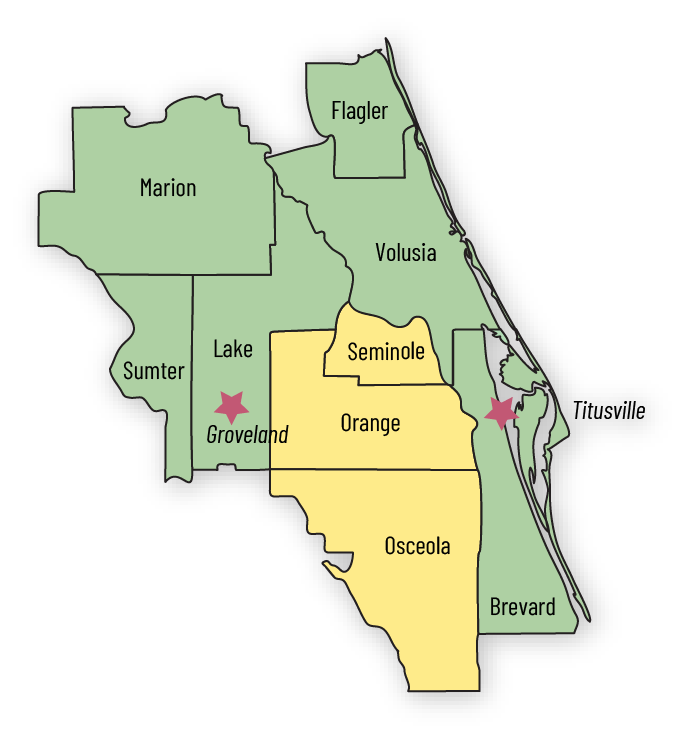
Click on the county name to view contacts and a copy of the resolution.
District 6
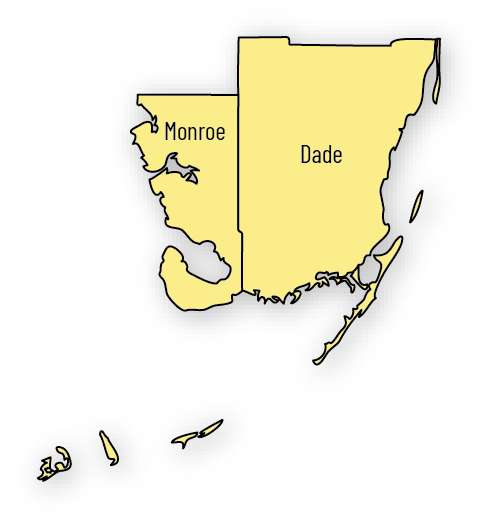
District 6 currently has no Wildflower Resolutions in place.
District 7
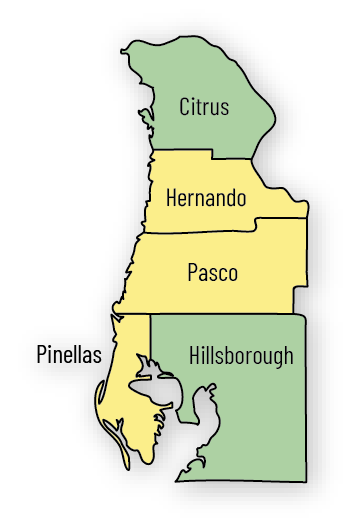
Click on the county name to view contacts and a copy of the resolution.