Bog white violet
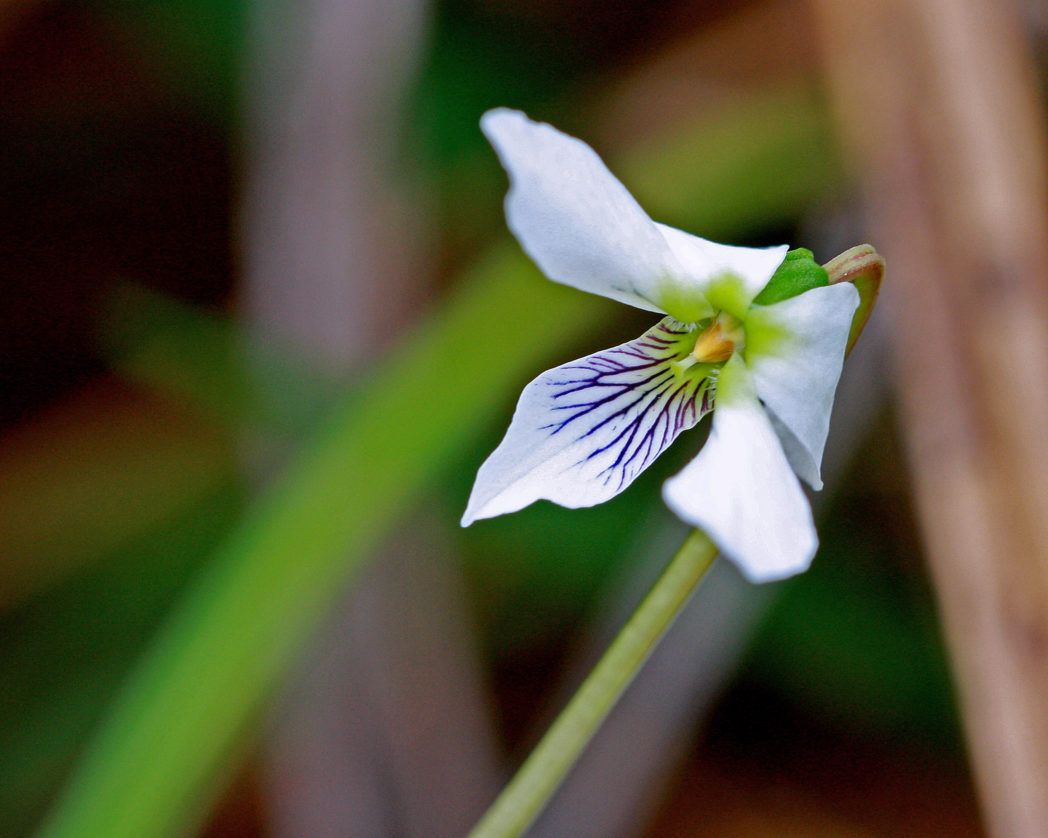
Pictured above: Bog white violet (Viola lanceolata) by Mary Keim. Click on terms for botanical definitions. View post as a PDF.
Also known as Lanceleaf violet, Bog white violet is a diminutive perennial wildflower that occurs naturally in bogs and along the edges of ponds, marshes and other wetlands. It blooms in early winter through summer, but may bloom year-round. Its sweetly scented flowers attract bees and butterflies, while its seeds are enjoyed by various birds and small mammals.
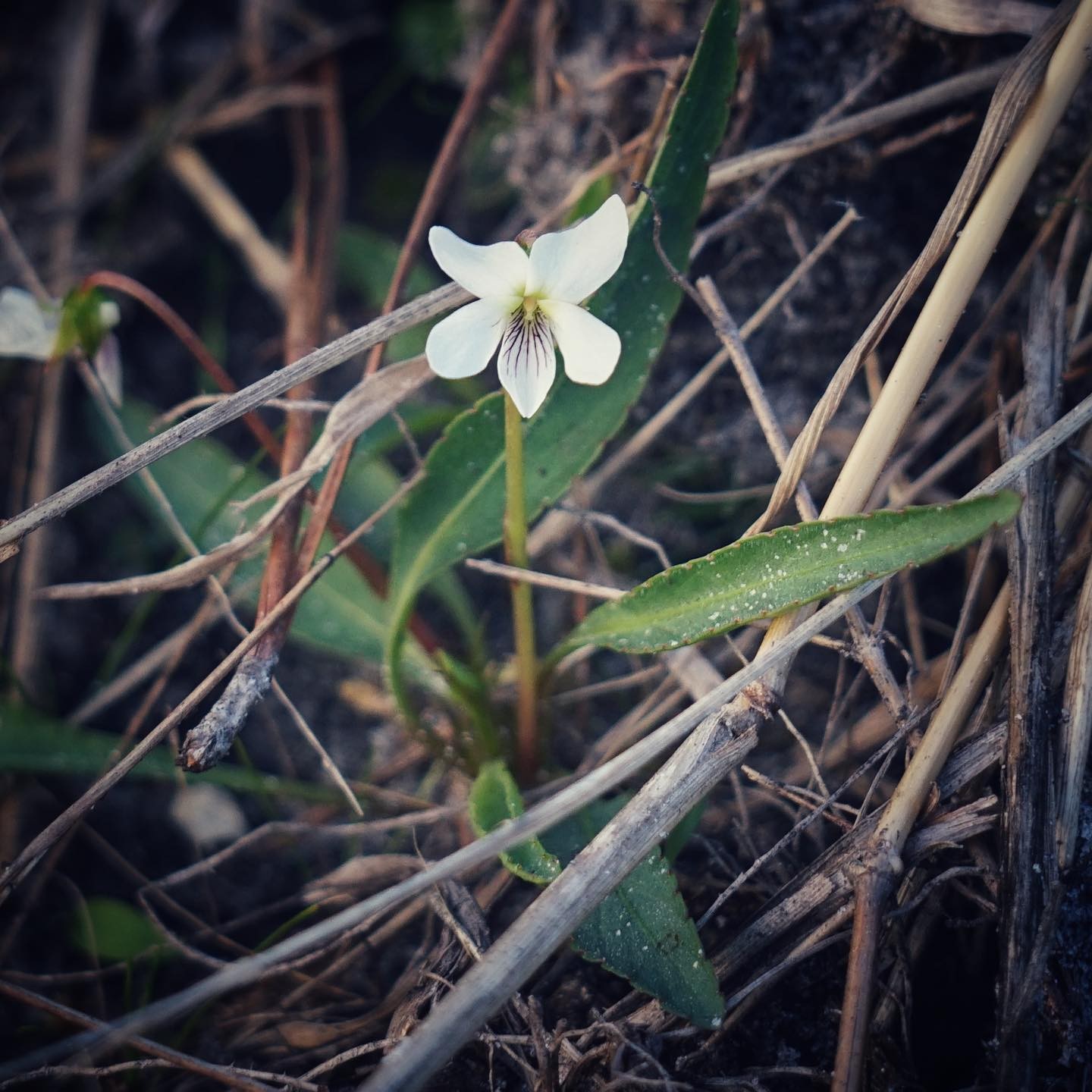
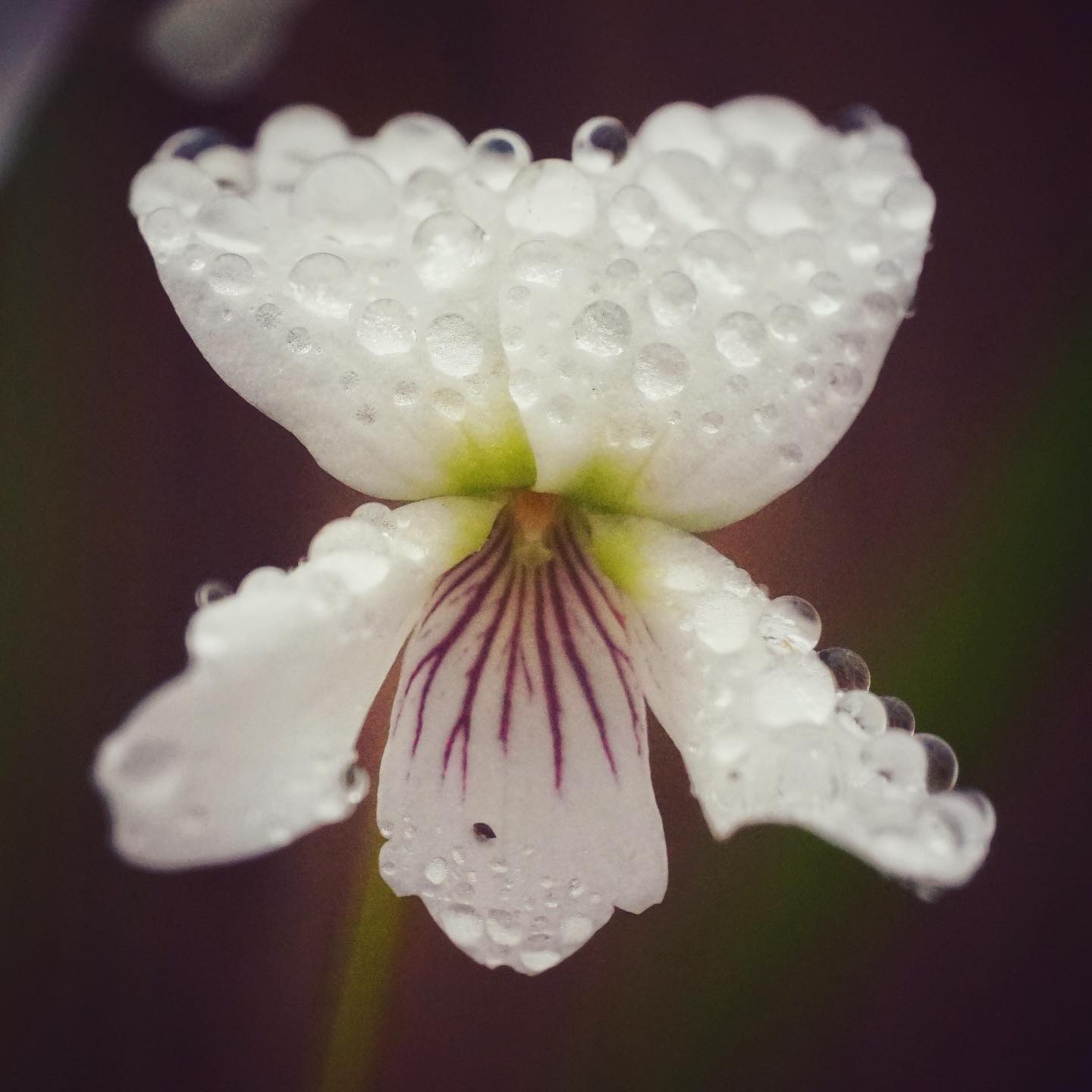
Bog white violet’s solitary flowers are borne on delicate green to reddish-purple pedicels and are often nodding. Each bloom is five-petaled and bright white with obvious purple, vein-like streaks on the lowermost petal. These “veins” act as nectar guides for pollinators. Lower lateral petals may or may not have light purple streaking. Sepals are light green. Leaves are relatively long (up to 6”) and linear to lanceolate (hence the scientific epithet), resembling blades of grass. Fruits are green, elliptical capsules that bear many tiny brown seeds. The plant spreads by underground rhizomes.
Family: Violaceae (Violet family)
Native range: Nearly throughout
To see where natural populations of Bog white violet have been vouchered, visit florida.plantatlas.usf.edu.
Lifespan: Perennial
Soil: Moist to wet, acidic soils
Exposure: Full sun to full shade
Growth habit: 2–6” tall
Propagation: Seed, division
Florida regions of landscape suitability: North, Central, South
Garden tips: Bog white violets require consistently moist to wet soils. They are best suited to wet wildflower gardens and natural landscapes.
Bog white violets are occasionally available from nurseries that specialize in Florida native plants. Visit www.PlantRealFlorida.org to find a nursery in your area.
Learn more about Bog white violets from the Florida Native Plant Society and the Institute for Regional Conservation.
For more information on other Viola species, see these resources: