Pinebarren goldenrod
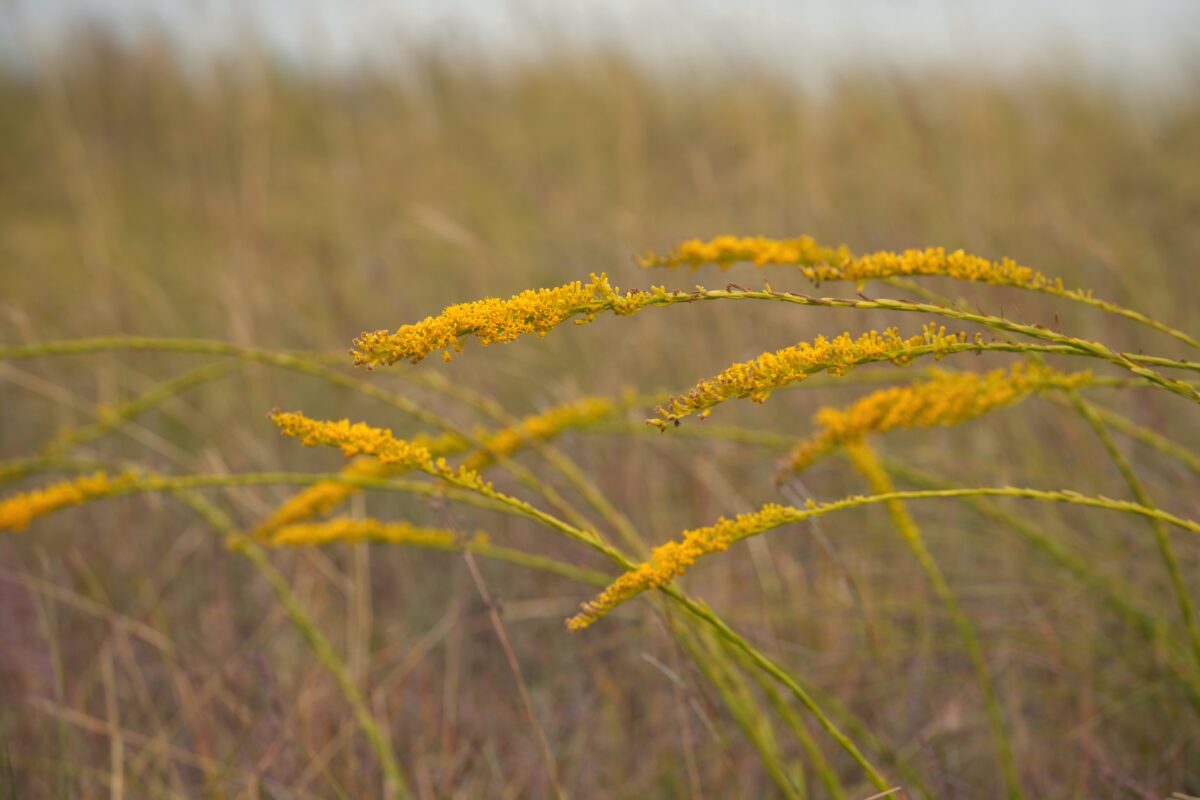
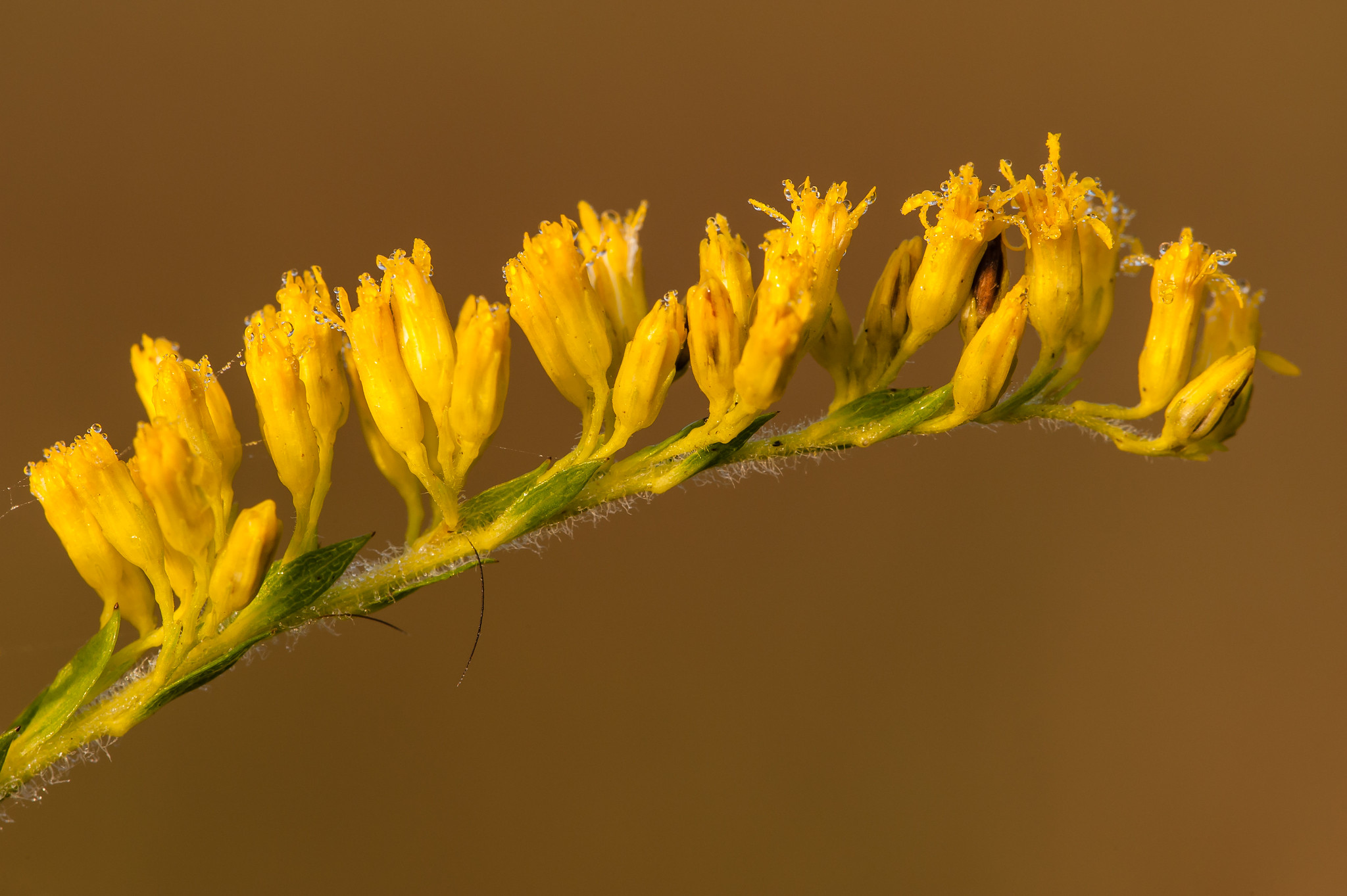
Pictured above: Pinebarren goldenrod (Solidago fistulosa) by Keith Bradley. Click on terms for botanical definitions. View post as a PDF.
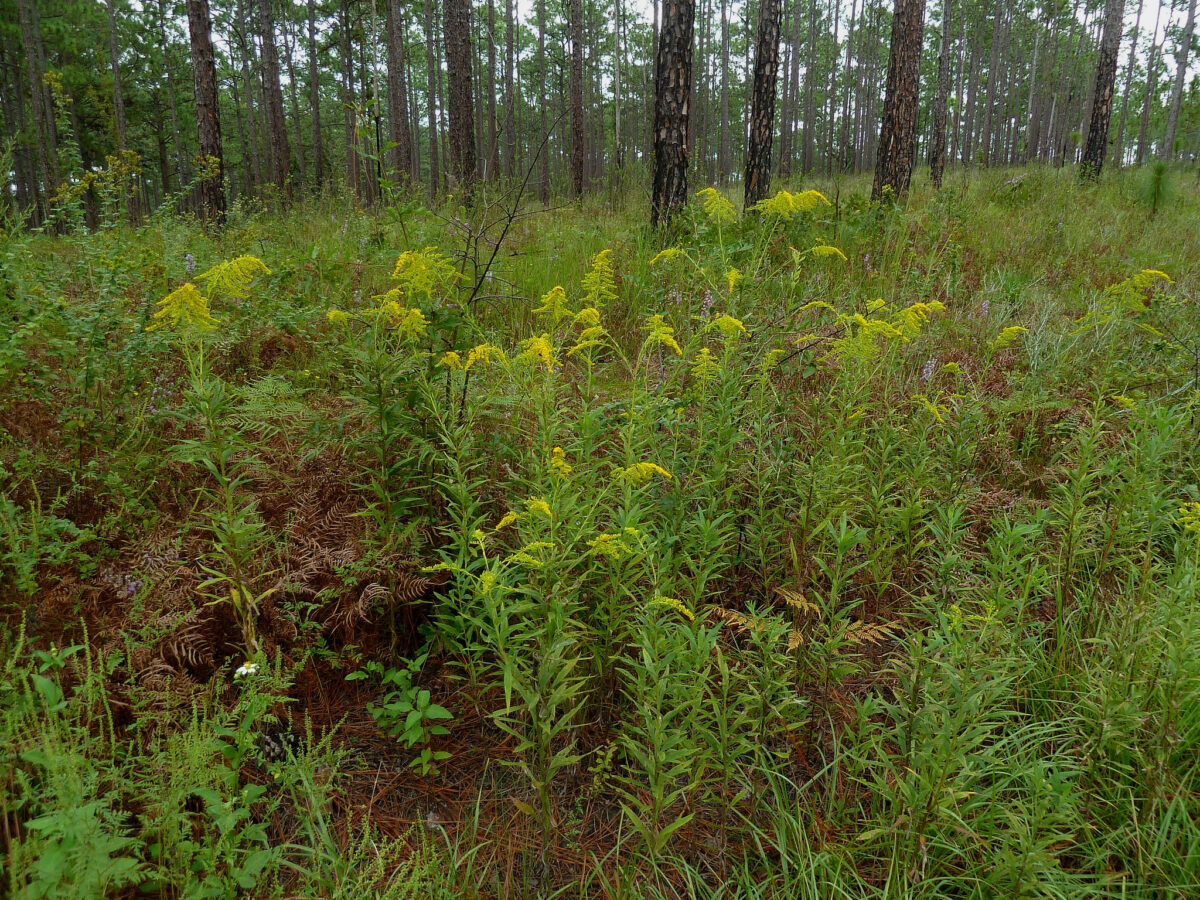
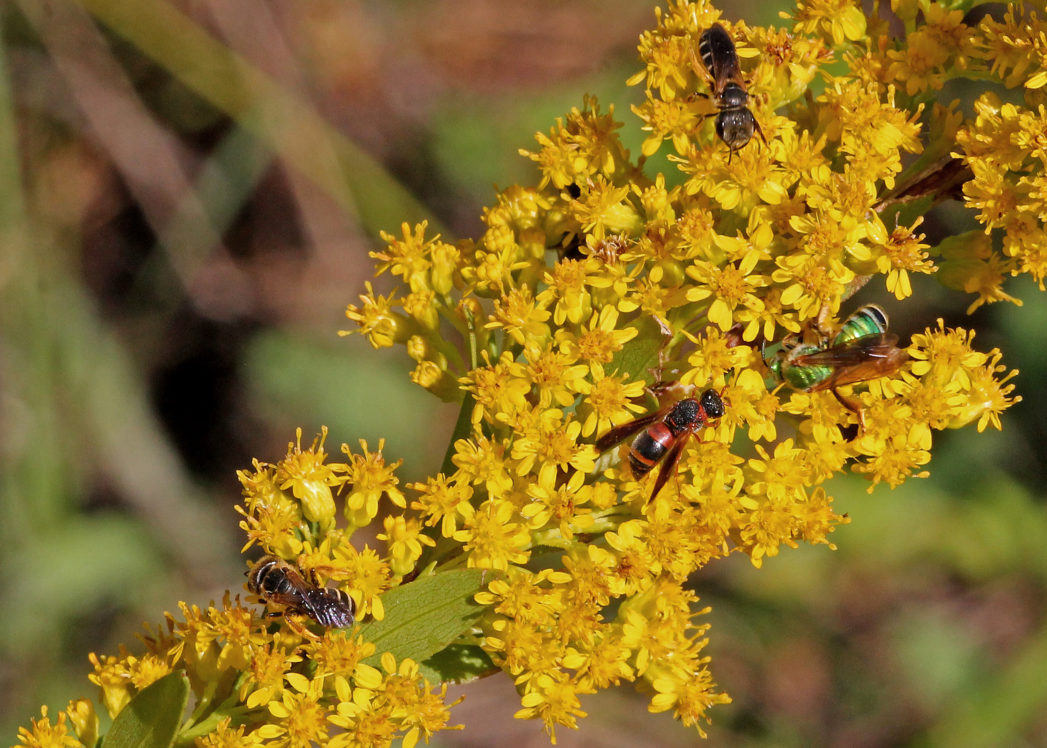
Pinebarren goldenrod (Solidago fistulosa) is Florida’s most common goldenrod species, found throughout the state. Its abundance is likely due to its ability to thrive in a wide range of conditions — from dry to moist or seasonally wet pine flatwoods to other mesic and upland habitats and disturbed sites. In late summer through fall, it puts on a stunning bright yellow display that supports a high diversity of pollinators.
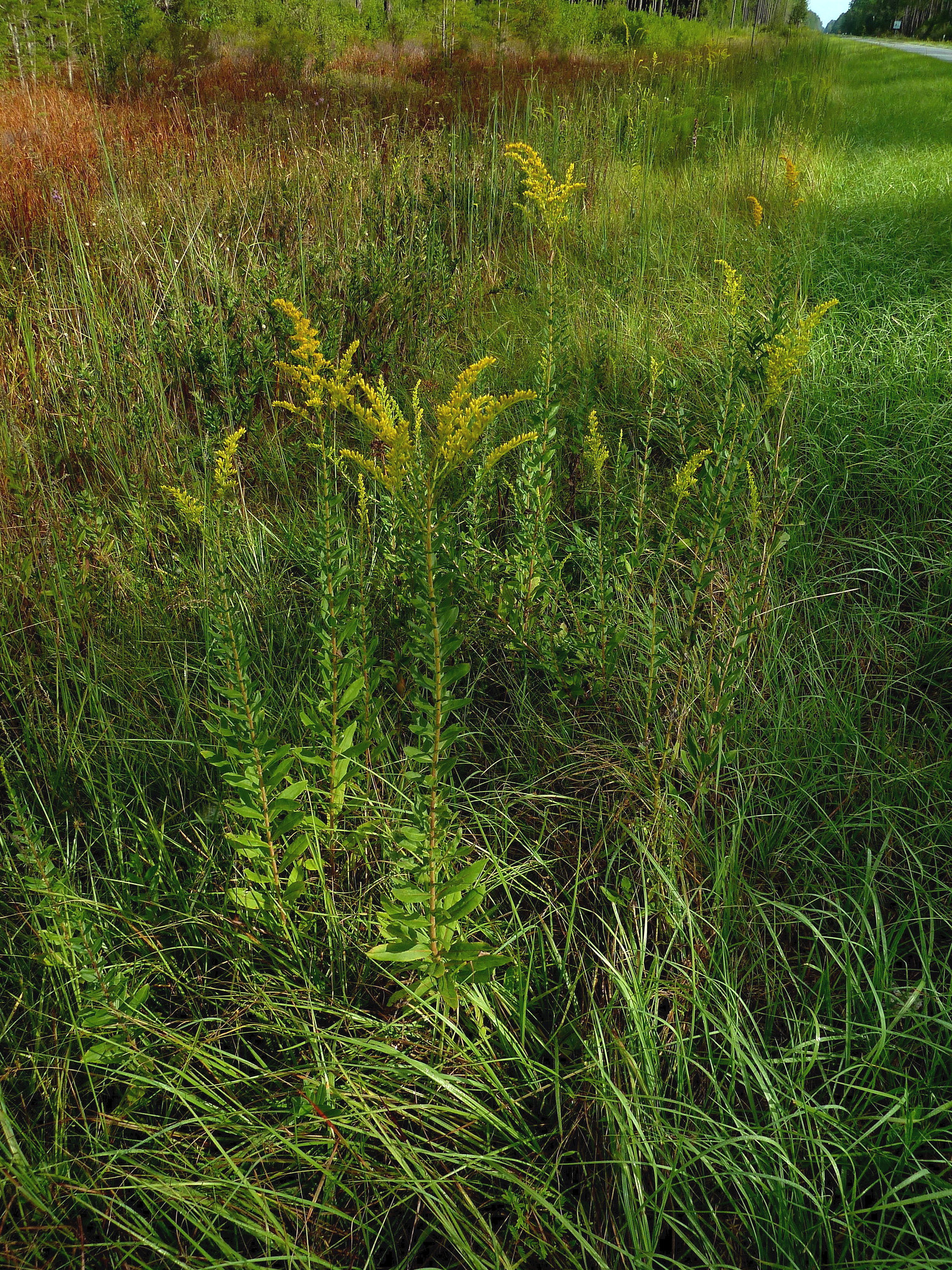
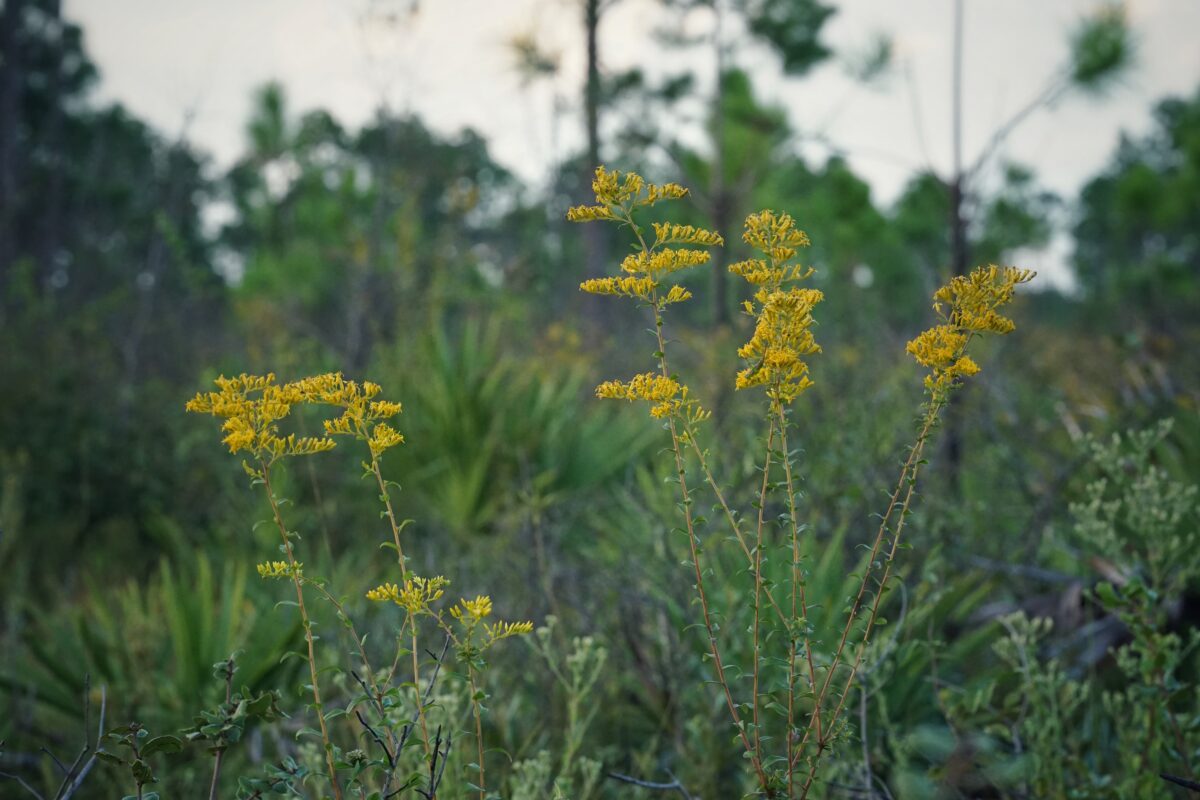
Pinebarren goldenrod has erect, pubescent stems and hairy leaves that are rough on the surface. The leaves are alternate, sessile and narrowly elliptic. They are fairly densely packed and remain quite long (up to 4 inches) well up the stems, becoming reduced near the terminal inflorescence. Leaf margins are entire to slightly toothed. The impressive golden floral displays are born on terminal panicles, where densely packed, small yellow flowerheads are arranged along one side of numerous arching branches.
The genus name Solidago is derived from the Latin solidus, meaning “to make whole,” and is thought to reference cultural medicinal uses of goldenrod species. The species epithet fistulosa comes from the Latin fistula, meaning “pipe-like” or “hollow” — a nod to the plant’s hollow stems, which are especially valuable as nesting areas for overwintering bees and other insects.
Family: Malvaceae (Mallow family)
Native range: Asteraceae (Aster, composite or daisy family)
To see where natural populations of Pinebarren goldenrod have been vouchered, visit florida.plantatlas.usf.edu.
Lifespan: Perennial
Soil: Seasonally wet, moist to dry sandy soils
Exposure: Full sun
Growth habit: 3-5” tall
Propagation: Seed
Florida regions of landscape suitability: North, Central, South
Garden tips: Pinebarren goldenrod spreads by rhizomes and can create dense stands. It is best suited to large open naturalistic landscapes or in restorations. It can also be used as a screen planting. It is widely adaptable to dry to wet soils, but may not withstand periods of extended drought.
Pinebarren goldenrod is available from nurseries that specialize in Florida native plants. Visit www.PlantRealFlorida.org to find a nursery in your area.
Learn more about Pinebarren goldenrod from the Institute for Regional Conservation.
For information on other Solidago species, see: