
Blue-eyed grass
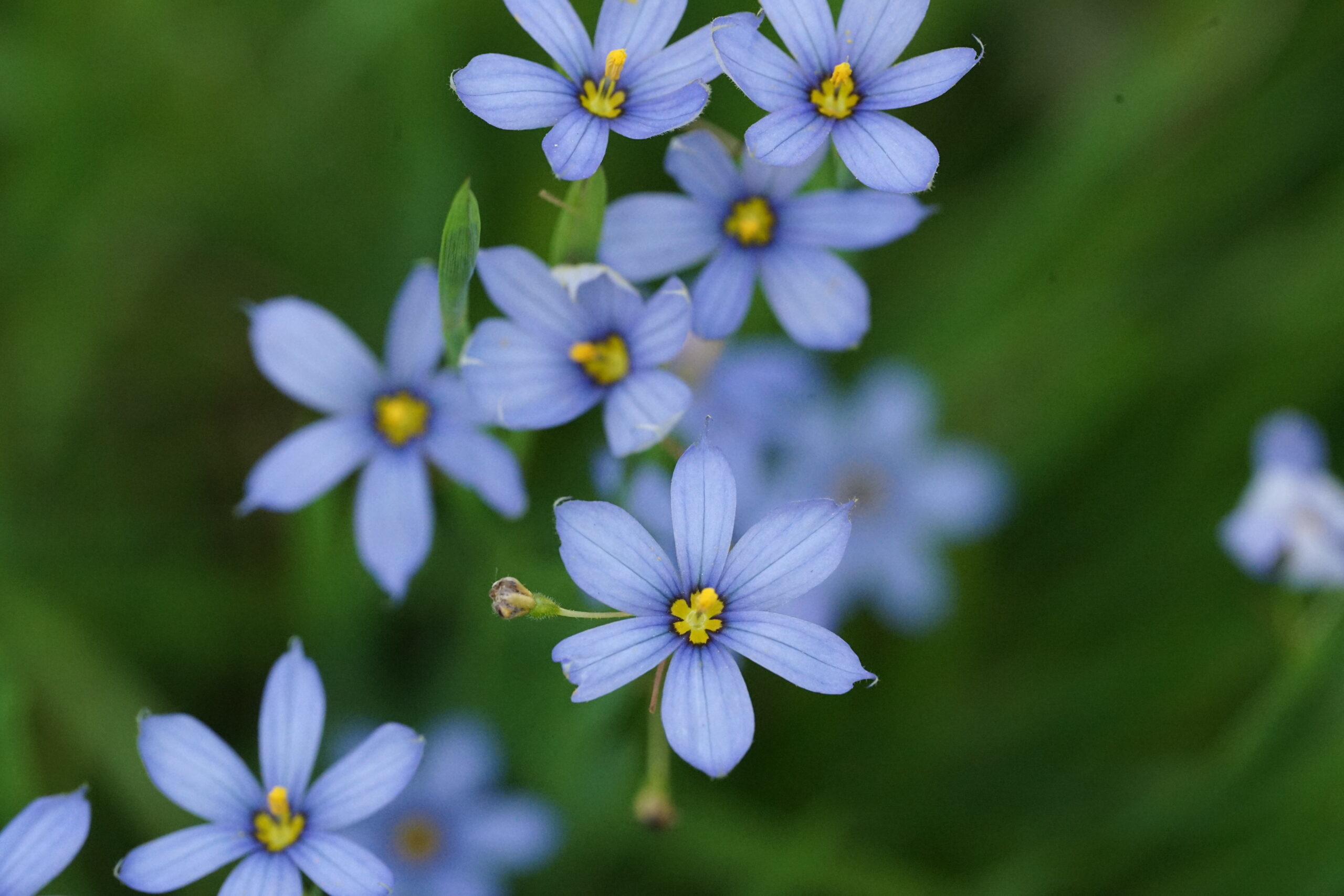
Pictured above: Blue-eyed grass (Sisyrinchium angustifolium) by Emily Bell. Click on terms for botanical definitions. View post as a PDF.
Blue-eyed grass (Sisyrinchium angustifolium) is an evergreen, clump-forming wildflower. It occurs naturally in wet flatwoods, wet prairies and moist open habitats throughout Florida. Its dainty, star-shaped flowers bloom winter through summer. The flowers attract a variety of pollinators, including bumblebees, sweat bees, and other native bees and flies. Birds eat the seeds.
Blue-eyed grass flowers are born atop flat, grasslike stems. Tepals are blue but may appear purple or lavender, especially in photos. They darken as they near the center of the flower, which is bright yellow. They have obvious venation, are tipped with sharp points, and arch back toward the stem as the flower opens. Flowers generally open around noon in sunny conditions and close at the end of the day. Leaves are long, linear and basal. Seeds develop in capsules that wrinkle and turn dark brown as they mature.
The grasslike appearance of both stems and leaves give Blue-eyed grass its common name. However, it is in no way related to the grass family.
Family: Iridaceae (Iris family)
Native range: Throughout Florida
To see where natural populations of blue-eyed grass have been vouchered, visit florida.plantatlas.usf.edu.
Lifespan: Perennial
Soil: Moist to moderately dry, sandy to calcareous soils
Exposure: Full sun
Growth habit: 6–12” tall
Propagation: Seed, division
Florida regions of landscape suitability: North, Central, South
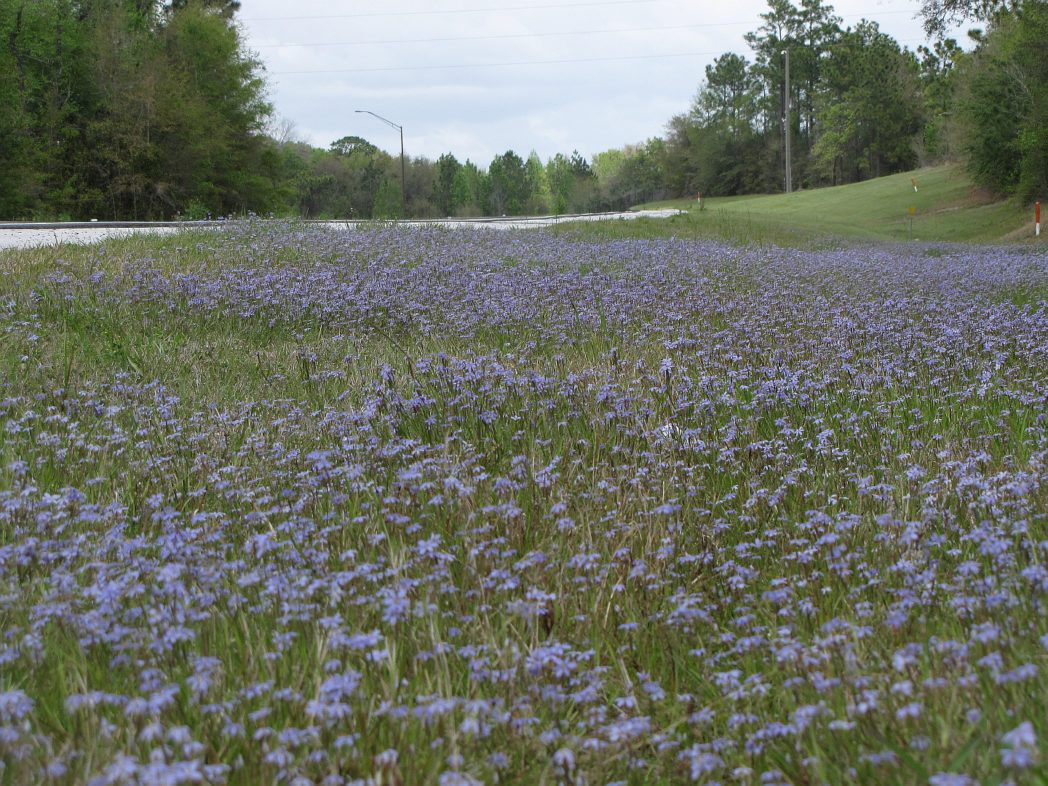
Garden tips: The low profile of Blue-eyed grass makes it an excellent groundcover that will provide a carpet of green throughout the year and masses of blue flowers in spring. Planting in full sun and moist sandy soil will result in denser foliage and more flowers, but it is somewhat adaptable to drier and shadier conditions. It also will spread by underground rhizomes to create fuller stands, but is not an aggressive spreader. Blue-eyed grass does not transplant well in full summer heat, so plants should be installed in fall or winter to ensure that they are well established before summer.
Blue-eyed grass plants are often available from nurseries that specialize in Florida native plants. Visit www.PlantRealFlorida.org to find a nursery in your area.
Learn more about Blue-eyed grass from the Florida Native Plant Society and the Institute for Regional Conservation.