Scarlet hibiscus
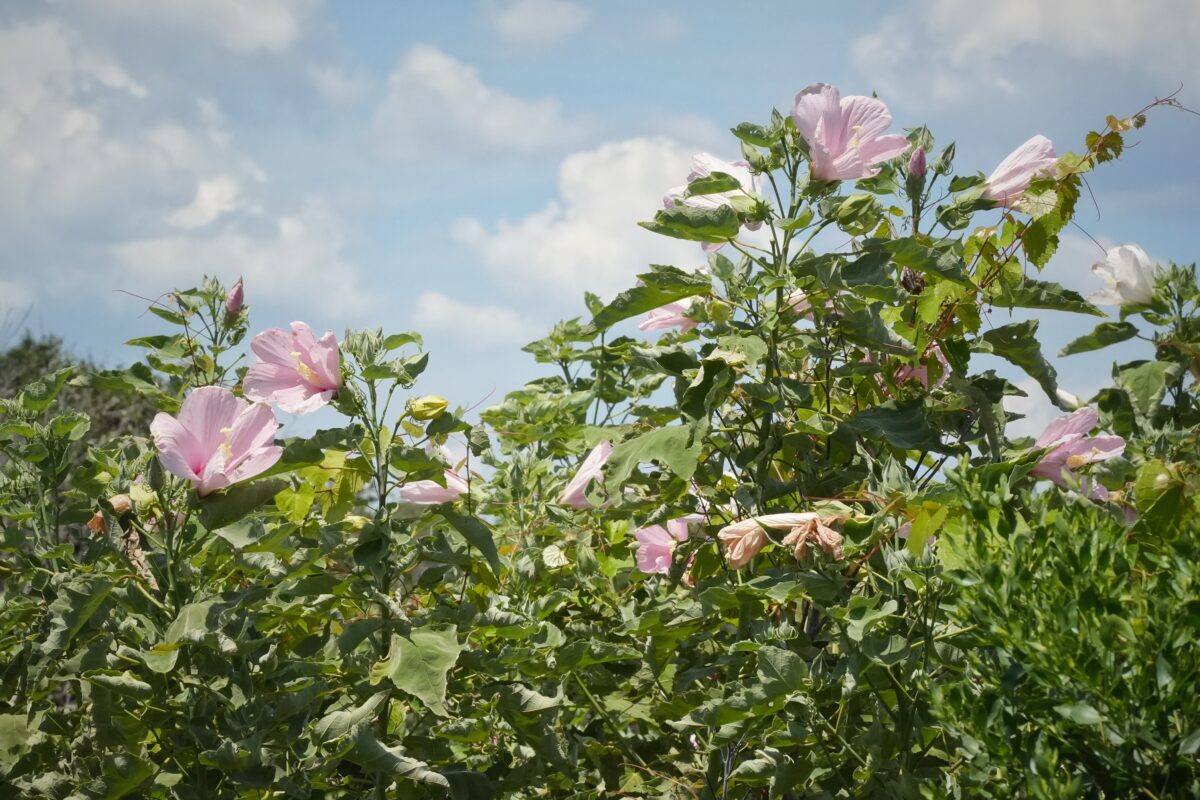
Pictured above: Scarlet hibiscus (Muenchhusia coccinea) by John Moran. Click on terms for botanical definitions. View post as a PDF.
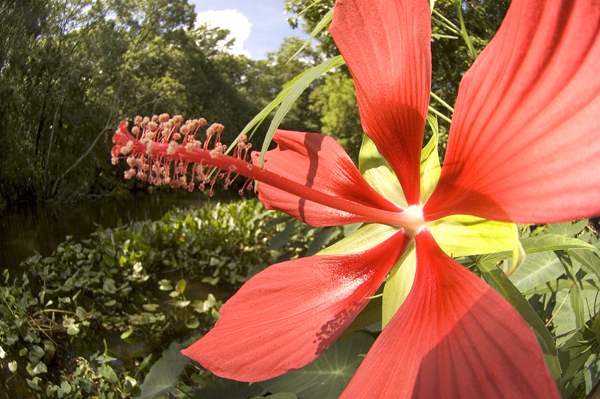
Scarlet hibiscus (Muenchhusia coccinea), also known as Scarlet rosemallow, is an herbaceous to semi-woody perennial wildflower that is common along wetland and stream edges, and in swamps and other wet, open sites. In summer, it produces large, crimson blooms that remain open for only one day. Scarlet hibiscus is a profuse bloomer, however, and will typically produce many flowers throughout the summer. Like other plants with deep red flowers, it is very attractive to hummingbirds, butterflies and other pollinators.
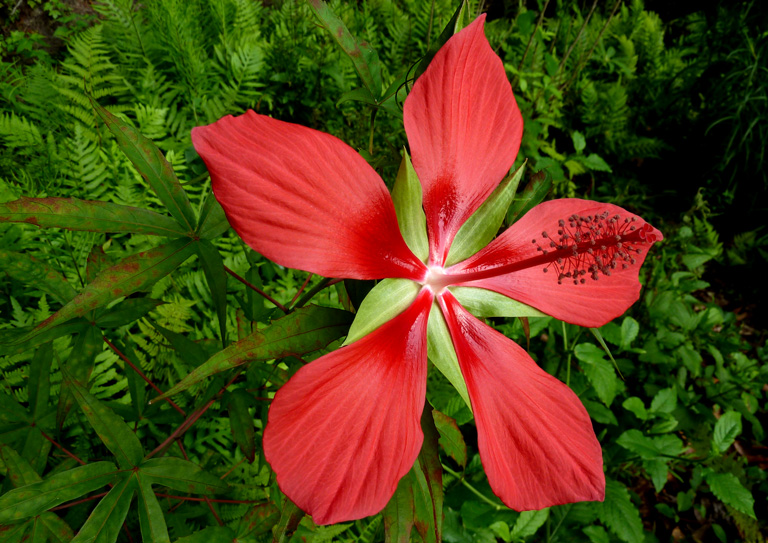
Photo by Eleanor Dietrich
Scarlet hibiscus flowers are large (4 to 8 inches in diameter) with five bright red petals, a five-lobed green calyx, and linear bracts. Flowers are born in leaf axils. Leaves are glabrous, palmate and deeply lobed with long petioles. Margins are toothed, and leaf arrangement is alternate. Stems and petioles may be reddish. Seeds are born in ovoid five-celled capsules. Each cell may contain many seeds.
The genus name Muenchhusia honors German botanist Otto von Münchhausen. The species epithet coccineus is from the Greek kókkinos, meaning “scarlet red.”
This species was previously known as Hibiscus coccineus and may still be referenced as such in online and print resources.
Family: Malvaceae (Mallow family)
Native range: Okaloosa County and eastern Panhandle, north and central peninsula, Collier and Broward counties
To see where natural populations of Scarlet hibiscus have been vouchered, visit florida.plantatlas.usf.edu.
Lifespan: Perennial
Soil: Moist to wet or inundated, rich soils; can be acclimated to well-drained soils with enough moisture
Exposure: Full sun to partial shade
Growth habit: 3–7’+ tall with 2–5’ spread
Propagation: Seeds, cuttings
Florida regions of landscape suitability: North, Central, South
Garden tips: Scarlet hibiscus is one of our showiest native wildflowers. It is a great addition to any moist or wet landscape or areas that receive plenty of moisture. It also does well in a container. It dies back in winter, producing new growth in the spring.
Scarlet hibiscus seeds are often available through the Florida Wildflower Growers Cooperative. Plants are often available at nurseries that specialize in native plants. Visit PlantRealFlorida.org to find a native nursery in your area.
Learn more about Scarlet hibiscus from the Florida Native Plant Society and the Institute for Regional Conservation.
For information on other Muenchhusia species, see these resources: