
Teabush
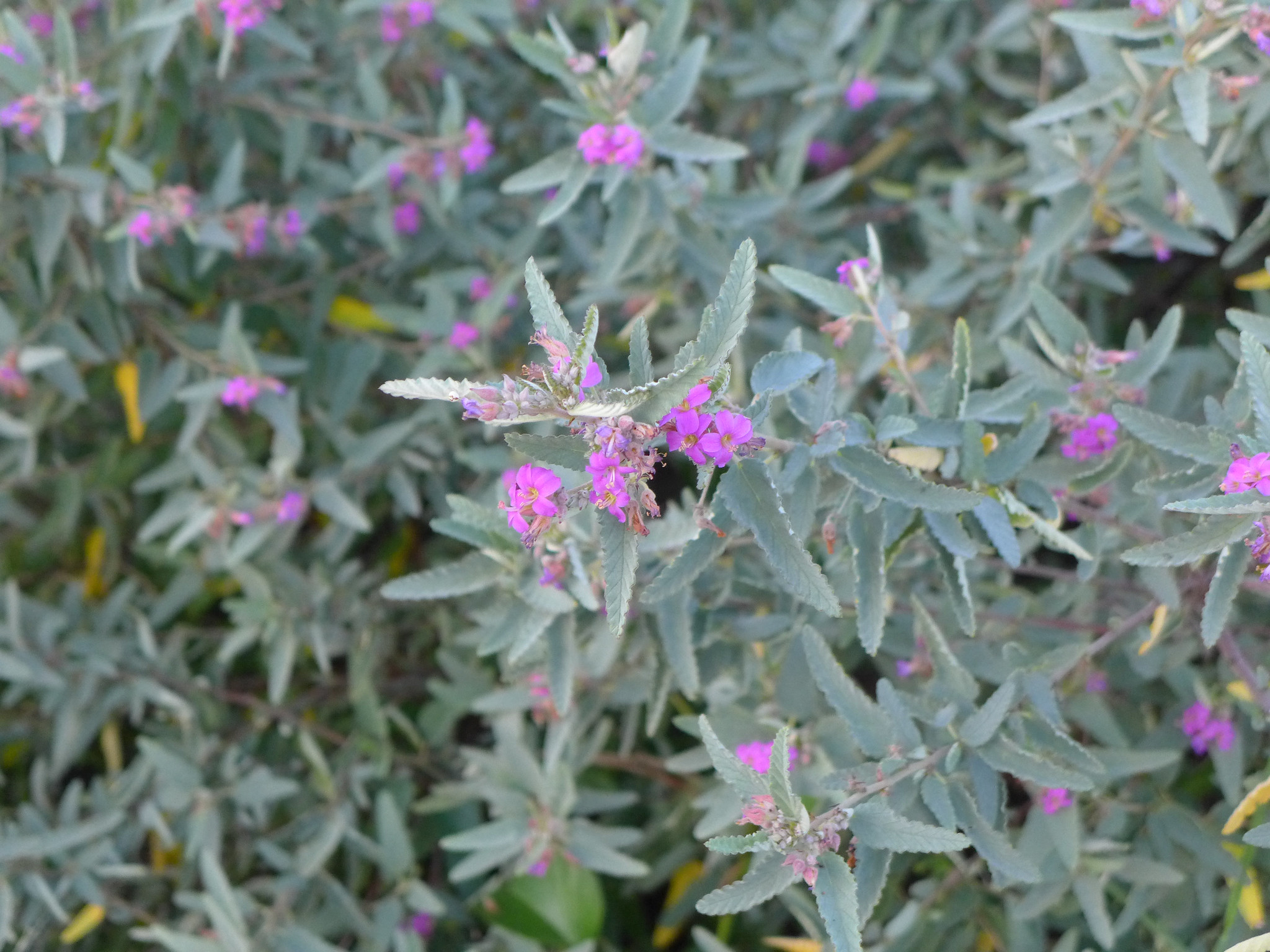
Pictured above: Teabush (Melochia tomentosa) by Scott Zona CC BY-NC 2.0. Click on terms for botanical definitions. View post as a PDF.
Also commonly known as Pyramidflower, Broomwood and Grayleaf, Teabush (Melochia tomentosa) is a popular landscape shrub to small tree in Central and South Florida. It is prized for its abundant year-round pink flowers, which attract a wide variety of pollinators. Gardeners also report the Gray hairstreak butterfly using it as a larval host. Outside of urban landscapes, it occurs in pine rocklands, xeric hammocks and disturbed areas.
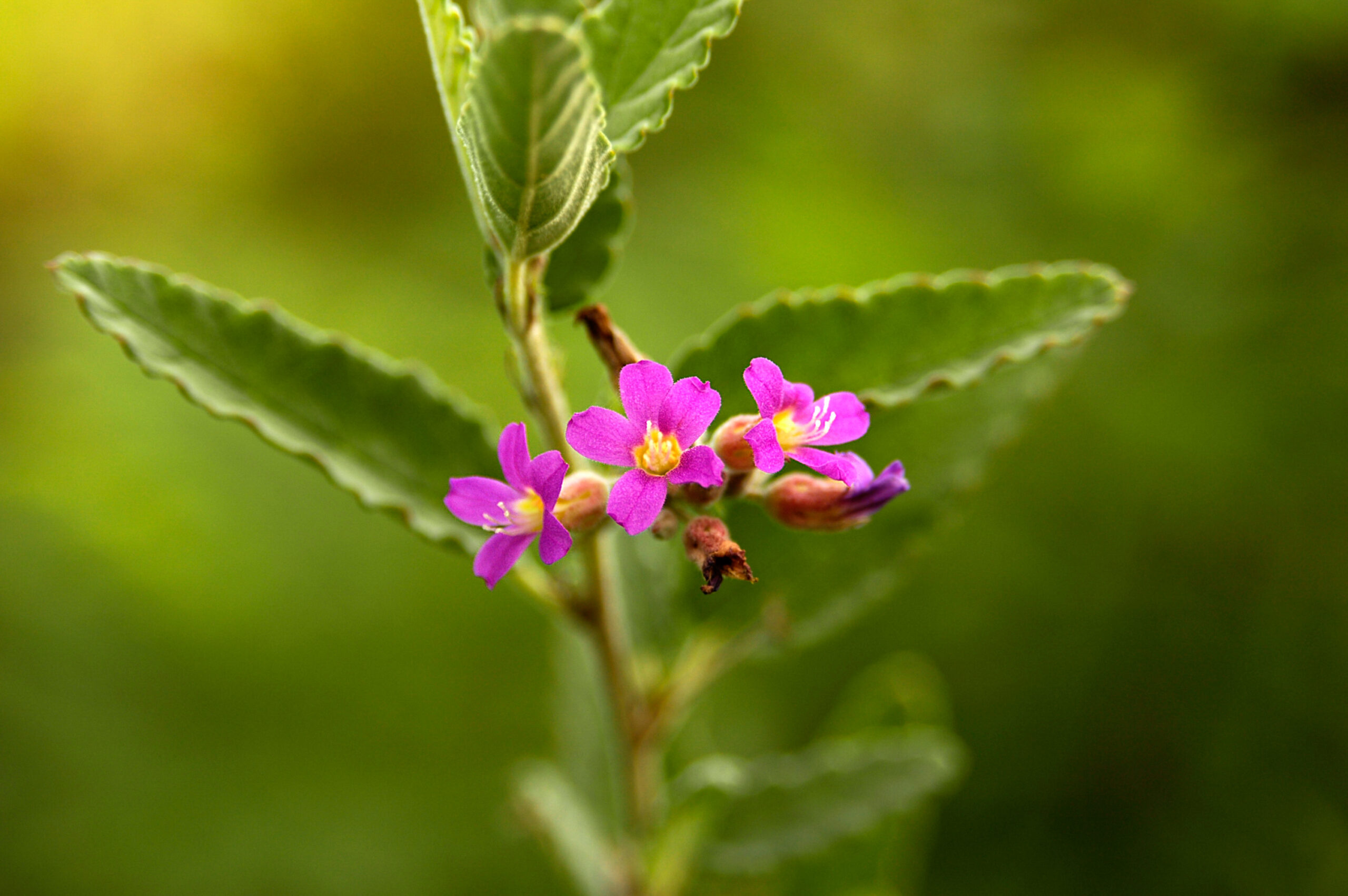
Teabush’s slender branches are tan and pubescent. Its petiolate leaves are light green and covered with short woolly hairs, giving them a grayish appearance. They are ovate to lanceolate and have serrate margins. The petite, five-petaled flowers range from deep to light pink and have white protruding stamens. Nursery stock shows notable variability in both leaf size (small to large) and branch structure. Plants with drooping branches resemble the southern Texas ecotype, while those with straighter branches likely represent Caribbean ecotypes.
The natural history of Teabush in Florida is a bit murky. The only two documented wild populations were vouchered in Miami-Dade and St. Lucie counties, although both were considered extirpated sometime after the late 1960s. A third voucher in Hillsborough County in 2012 is also notable; however, the plant was found in an area where Caribbean soil had been deposited alongside other novel Caribbean species, suggesting an incidental introduction rather than a native occurrence. Teabush currently in Florida’s native plant trade appears to have come from two main sources outside of the state: it was introduced horticulturally from Puerto Rico in 1996, and plants resembling southern Texas ecotypes are believed to have entered Florida through mail-order nurseries.
Family: Malvaceae (Mallow family)
Native range: Southeast Florida
To see where natural populations of Teabush have been vouchered, visit www.florida.plantatlas.usf.edu.
Lifespan: Perennial
Soil: Well-drained sandy or limestone soils
Exposure: Full sun
Growth habit: Up to 8–10 feet tall and equally as wide
Propagation: Seed
Florida regions of landscape suitability: Central, South
Garden tips: Teabush can be used as a specimen or accent plant and provides great value to pollinators. It is a fast-growing plant that may also readily recruit from seed, so some care may be required to prevent it from becoming overgrown.
Teabush is available from nurseries that specialize in Florida native plants. Visit www.PlantRealFlorida.org to find a nursery in your area.
Learn more about Teabush from the Florida Native Plant Society and the Institute for Regional Conservation.