Hairy laurel
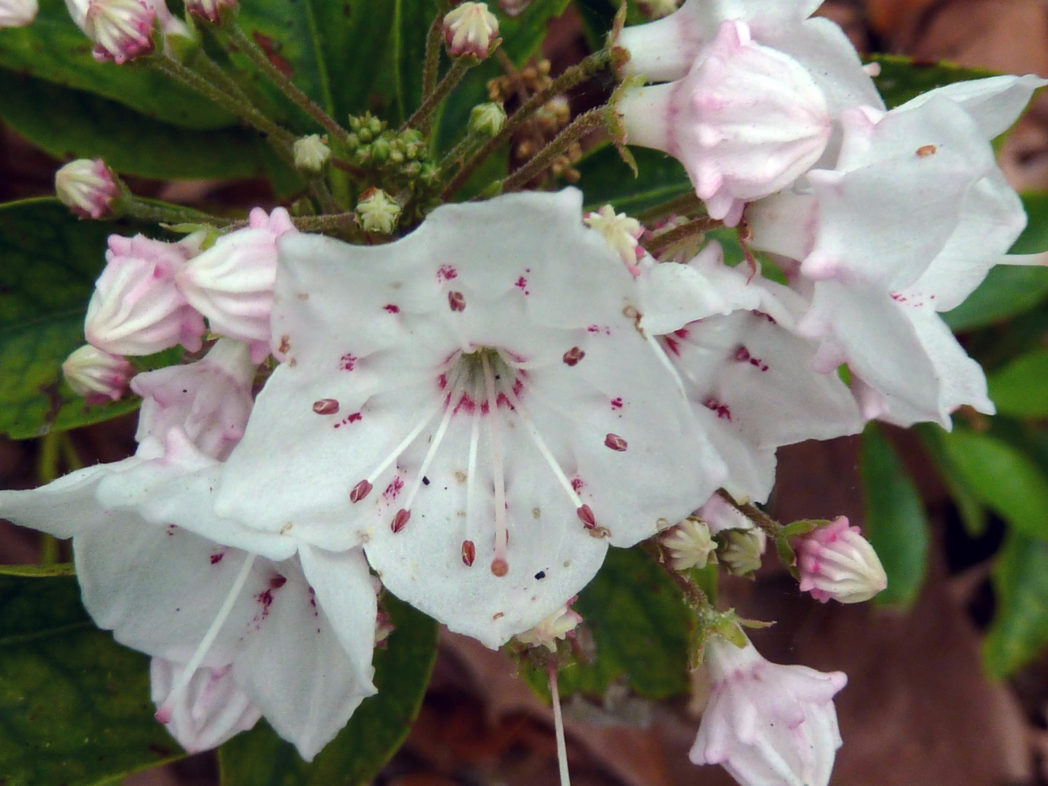
Pictured above: Hairy laurel (Kalmia hirsuta), Photo by Emily Bell. Click on terms for botanical definitions. View post as a PDF.
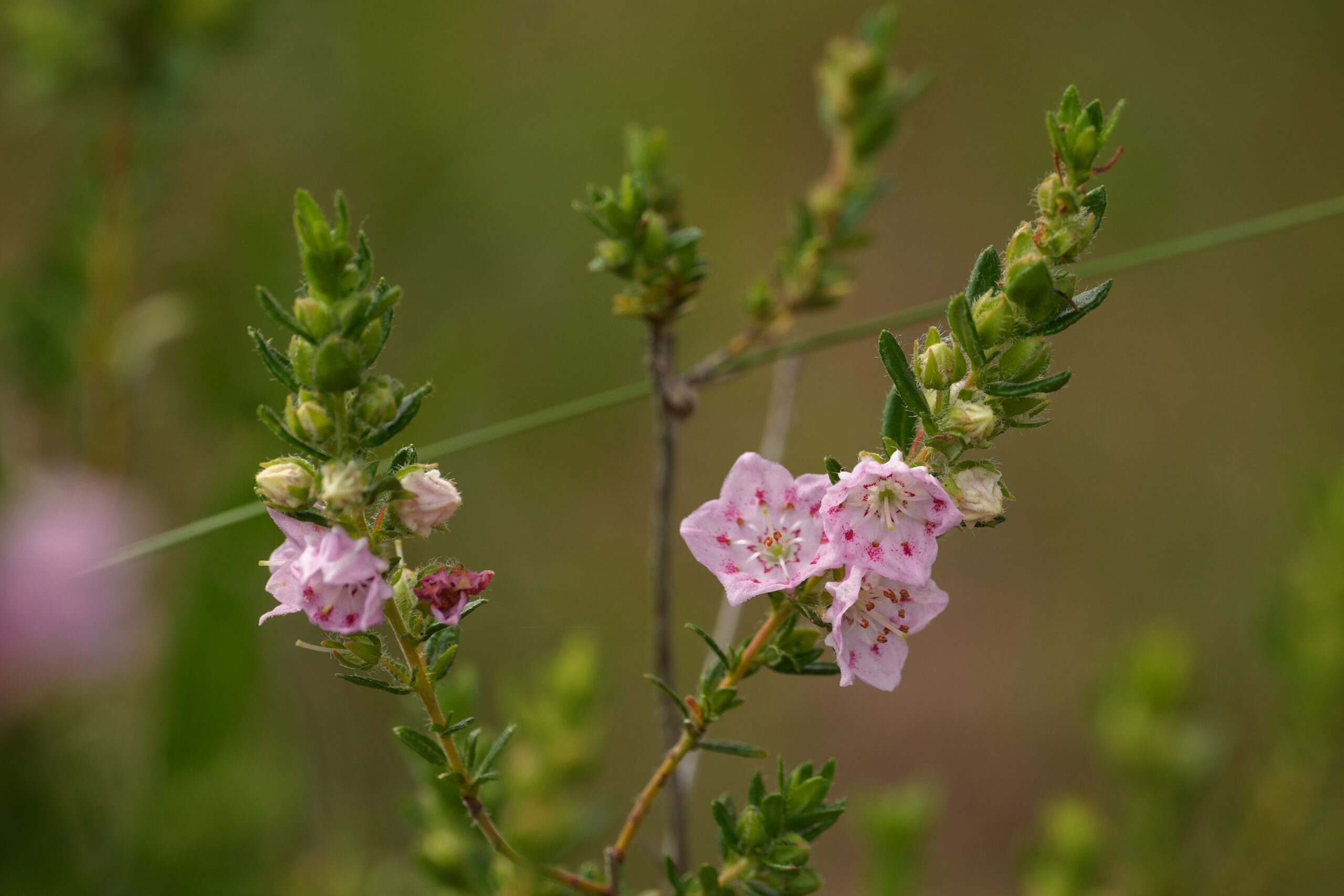
Hairy laurel (Kalmia hirsuta) is a low-growing, evergreen shrub that is easy to miss when not in bloom. But in spring and summer, it forms colonies of rose-colored flowers in moist, open habitats. Its distinctive, fragrant blooms attract a variety of pollinators, especially bees. It occurs naturally in pine flatwoods, savannas, sandhills and moist ditches in North Florida.
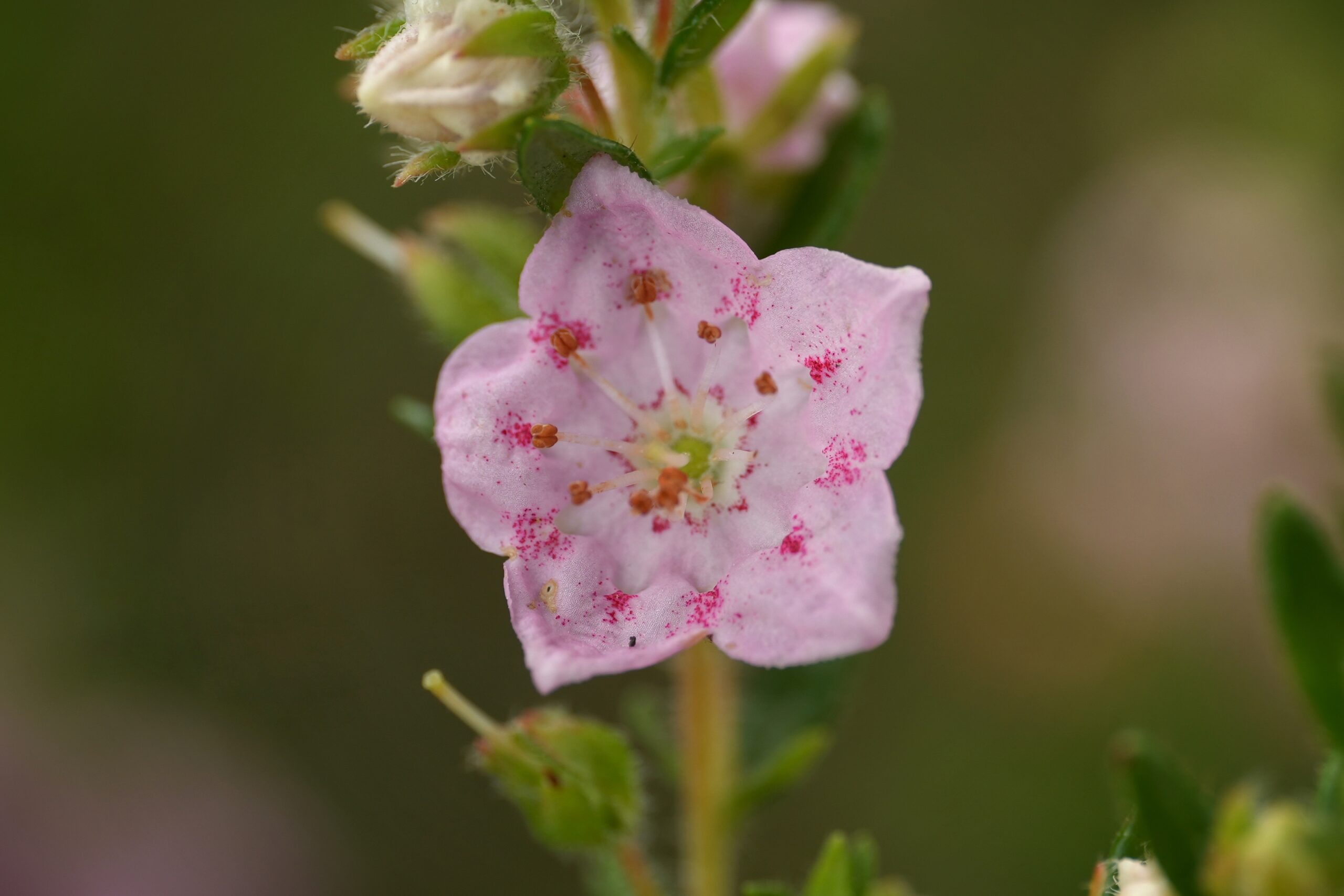
Hairy laurel’s pale to dark pink flowers are axillary and may be solitary or born in clusters of two to five. Each flower is five-petaled and cup-shaped with dark pink spots and center ring. The flower flattens into a decagonal shape as it opens, exposing the pale yellowish-green ovary. Stamens are reflexed and number 10. Anthers are held under tension within pocket-like pouches found on the petals. When an insect lands on the flower, the movement releases the tension and the pollen is catapulted from the filament onto the insect. Leaves are small (¼ to ½ long) and elliptic to ovate with slightly revolute margins. Leaf arrangement is alternate. Sepals, leaves and stems are noticeably pubescent. Fruits are rounded, glandular capsules.
The genus, Kalmia, was named by Carl Linnaeus for his student, Peter Kalm, an 18th century botanist who visited the United States. The species epithet hirsuta is from the Latin hirsutus, meaning “hairy” or “bristly.”
Family: Ericaceae (Heath or heather family)
Native range: Panhandle, north to north-central peninsula
To see where natural populations of Hairy laurel have been vouchered, visit www.florida.plantatlas.usf.edu.
Lifespan: Perennial
Soil: Moist, well-drained acidic sandy soils
Exposure: Full sun
Growth habit: 6”–2’ tall
Hairy laurel is not commercially available. Visit a natural area to see them.
For more information on other Kalmia species, see these resources: