Gallberry
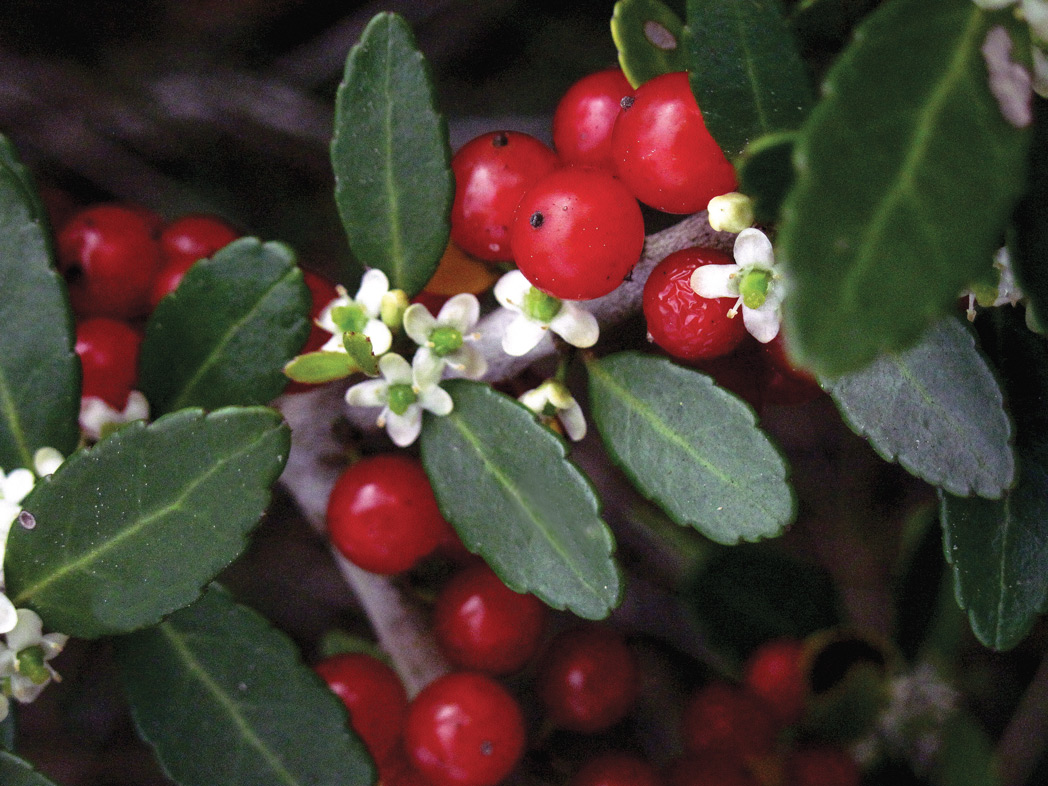
Pictured above: Gallberry (Ilex glabra) by Mary Keim. Click on terms for botanical definitions. View post as a PDF.
Gallberry (Ilex glabra) is an evergreen shrub found in flatwoods, coastal swales, bogs, sinks, moist woodlands, and bayhead edges throughout Florida. Its tiny flowers attract bees, while its pulpy berries and evergreen foliage provide food and cover for birds.
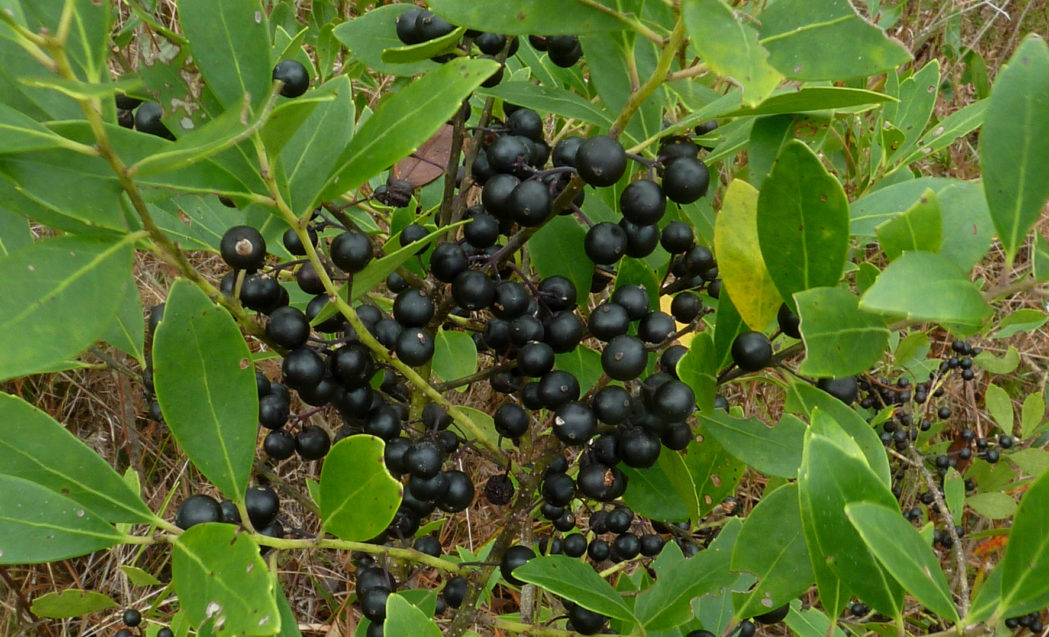
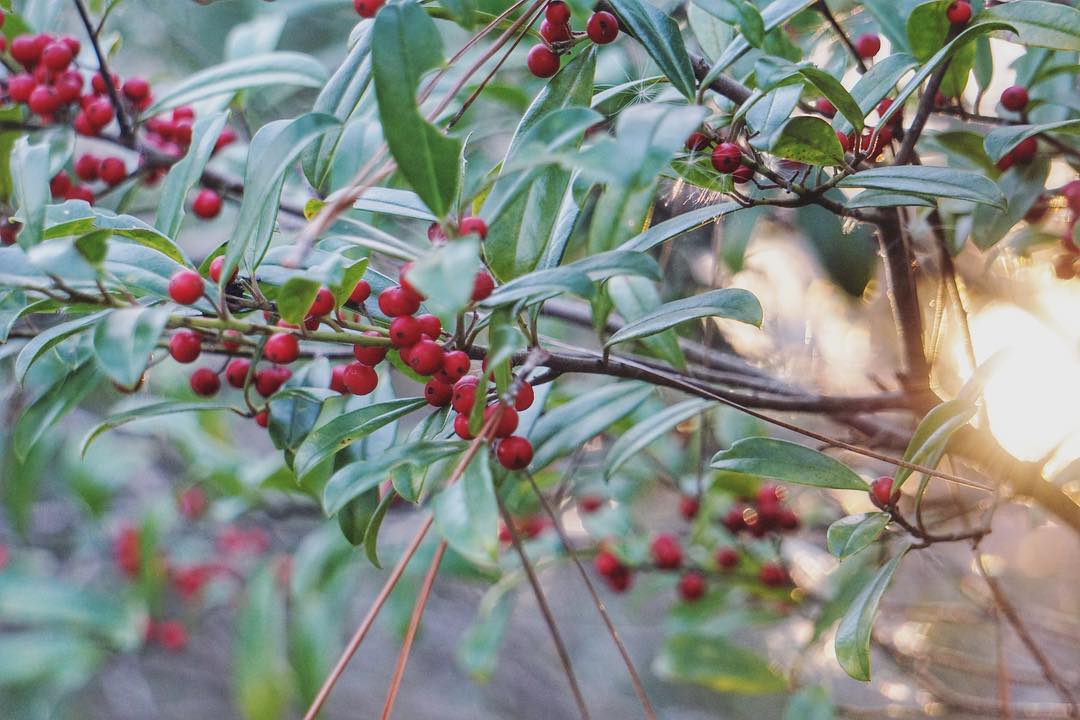
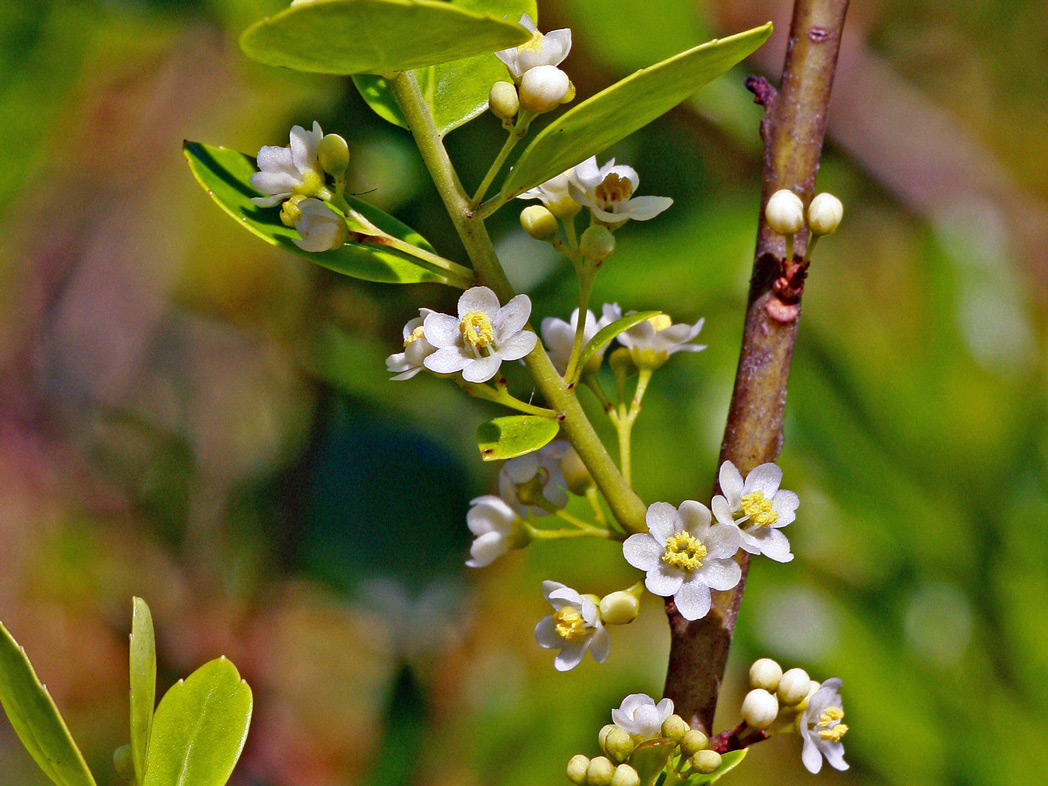
Gallberry’s flowers are greenish-white with four and six rounded petals surrounding a bright green superior ovary. They are born in leaf axils either as single flowers (female) or in cymes (male or female). Leaves are ovate to elliptic, glossy and dark green with pale green undersides. They are alternately arranged. Leaf margins are thick and may be entire, but are typically bluntly toothed with notched apices. Fruits are shiny black berries containing five to eight nutlets.
Native Americans dried, roasted and steeped the leaves to make a black tea, giving the plant another common name: Appalachian tea. (It does not contain caffeine.) Honeybees feed on the flowers and produce a unique honey that is slow to crystallize because of its high pollen and enzyme content.
Family: Aquifoliaceae (Holly family)
Native range: Throughout Florida, excluding the Keys
To see where natural populations of Gallberry have been vouchered, visit florida.plantatlas.usf.edu.
Lifespan: Perennial
Soil: Moist to dry, acidic, sandy soils
Exposure: Full sun to partial shade
Growth habit: 6–10+’ tall
Propagation: Division, seed
Florida regions of landscape suitability: North, Central, South
Garden tips: Gallberry is clonal, spreading by underground rhizomes; however, it moves slowly and is easily
controlled. It can be pruned to a desired shape, making it suitable for a screen or hedge planting. It also works well as a specimen plant or as part of a naturalistic landscape. It can tolerate short periods of drought. The plant sometimes develops leaf spot, especially during the wet season, but it is generally not a problem. Infected leaves may drop early. Gallberry is dioecious, meaning male and female flowers are born on separate plants. Plants of both sexes are required if berries are desired.
Caution: Cultivars have been developed from plants found far north of Florida. These typically do not perform well in our state and will have only one sex.
Gallberry plants are available from nurseries that specialize in Florida native plants. Visit www.PlantRealFlorida.org to find a nursery in your area.
Learn more about Gallberry from the Florida Native Plant Society and the Institute for Regional Conservation.
For information on other Ilex species, see these resources: