Bluestem pricklypoppy
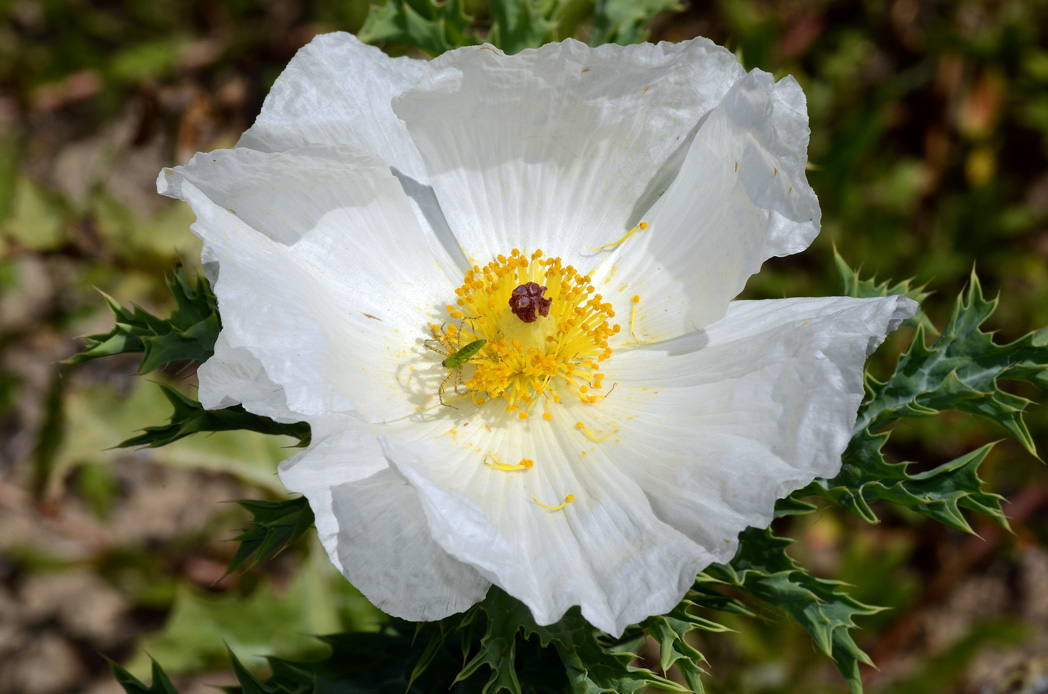
Pictured above: Bluestem pricklypoppy (Argemone albiflora) flower by Jim Duggan (CC BY-2.0). Click on terms for botanical definitions. View post as a PDF.
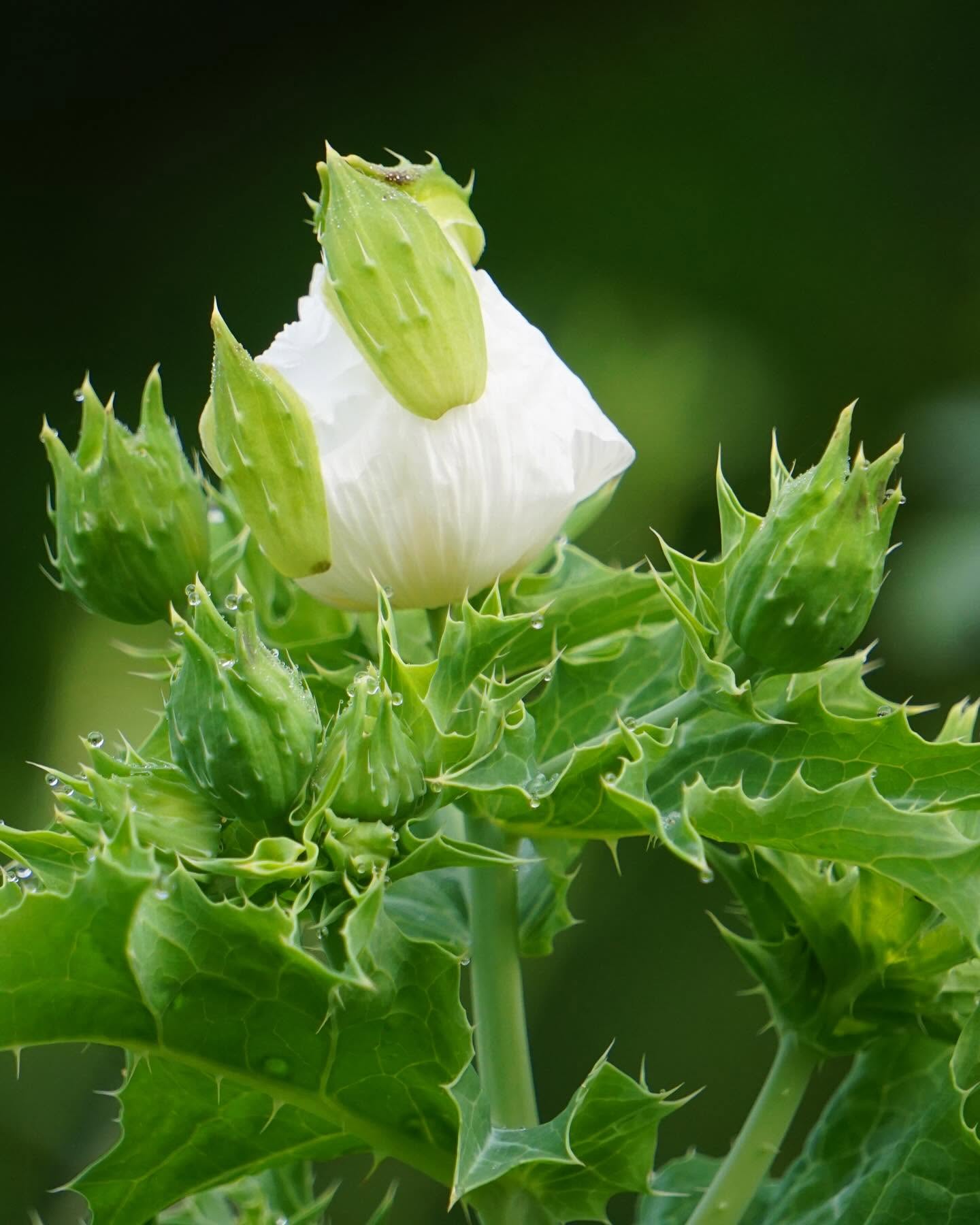
Bluestem pricklypoppy (Argemone albiflora) is a formidable flower often spotted in open, disturbed sites and along roadsides throughout much of Florida. Its large white flowers are eye-catching from a distance, but a closer look reveals this plant’s dynamic defense mechanism — sharp spines cover its leaves and stems, discouraging cattle and other hungry critters from grazing on it. The plant blooms late spring through summer and attracts a variety of pollinators, especially bees. Its oil-rich seeds are eaten by quail and doves.
Bluestem pricklypoppy’s flowers are 1–3 inches wide and cup-shaped with 4–6 white petals that often appear crumpled. Stamens are numerous with yellow filaments and yellow to reddish-orange anthers. Pistils are topped with a dark reddish-orange stigma. Flowers are subtended with bracts and may be solitary or born in loose terminal cymes. Stems are branched and arise from a basal rosette of long, deeply lobed leaves with prickly margins. The young rosette may be misidentified as a thistle (Cirsium spp.). Leaves are sessile, clasping and alternately arranged. Leaf and stem surfaces are glaucous, giving the plant a bluish hue. Fruit is a bluish-green, spine-covered capsule.
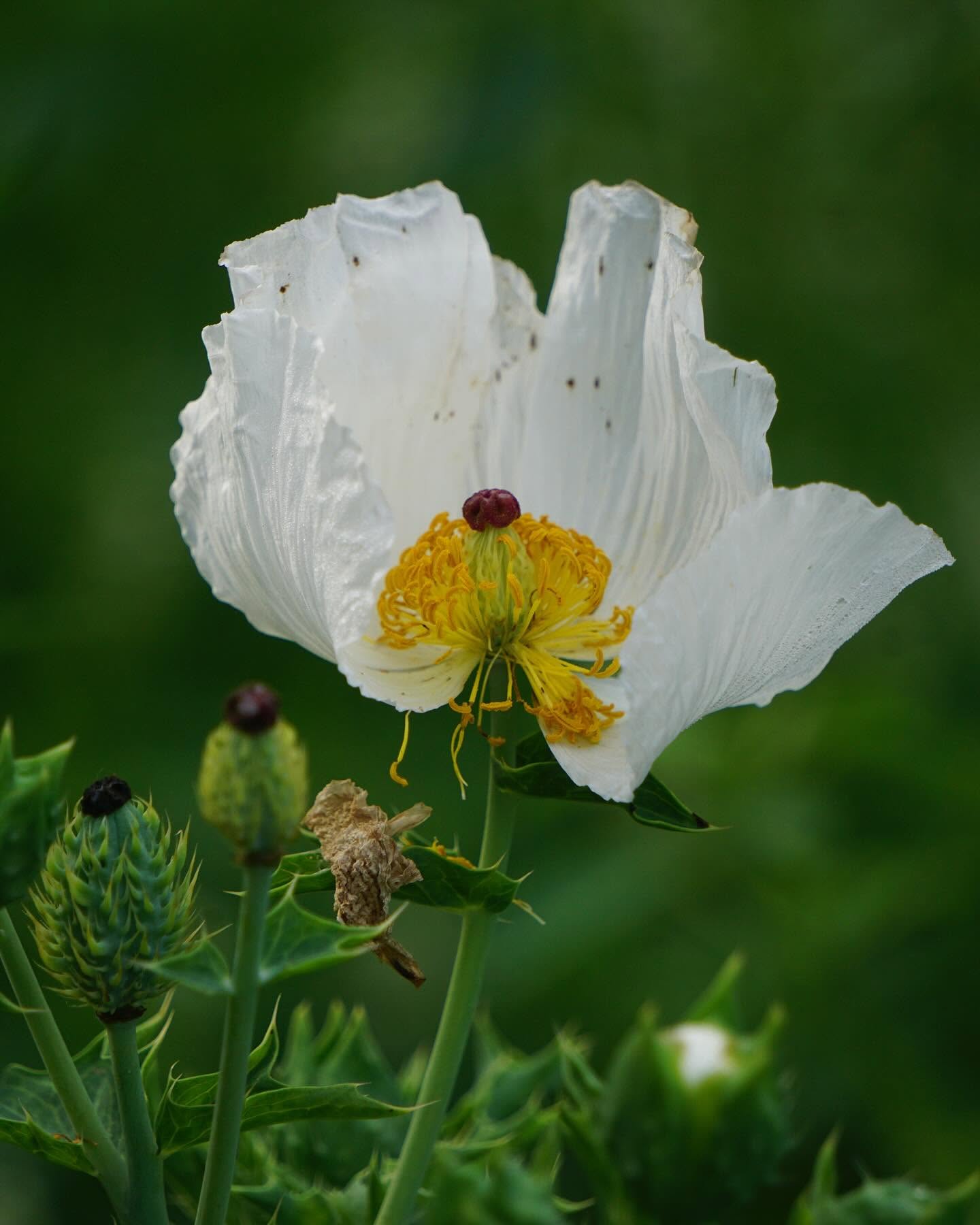
The plant exudes a toxic yellowish latex that, while poisonous if ingested, has been used medicinally by many cultures. The seeds contain oil that was used as a lubricant during World War II.
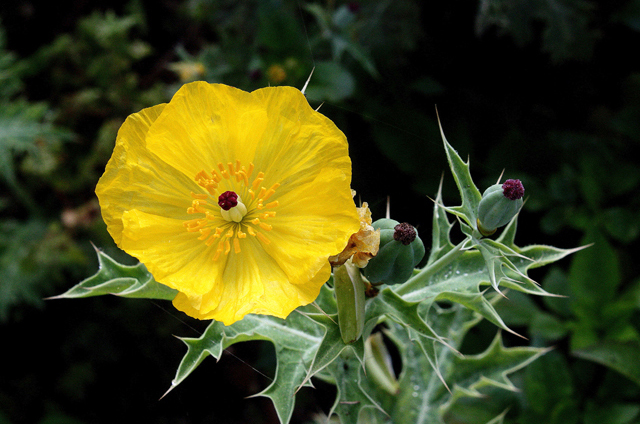
Bluestem pricklypoppy is also known as White pricklypoppy and Texas pricklypoppy. Other than its bloom color, it is almost identical to Mexican pricklypoppy (A. Mexicana), which has yellow flowers. Both occur in the same habitat.
Family: Papaveraceae (Poppy family)
Native range: Panhandle, north and central peninsula, Broward County
To see where natural populations of Mexican pricklypoppy have been vouchered, visit florida.plantatlas.usf.edu.
Lifespan: Annual or biennial
Soil: Dry, well-drained sandy soils
Exposure: Full sun to partial shade
Growth habit: 3–4’ tall
Bluestem pricklypoppy is not commercially available. Visit a natural area to see it.
Learn more about Bluestem pricklypoppy from the Florida Native Plant Society and the Institute for Regional Conservation.
For more information on other Argemone species, see these resources: