
Pineland golden trumpet
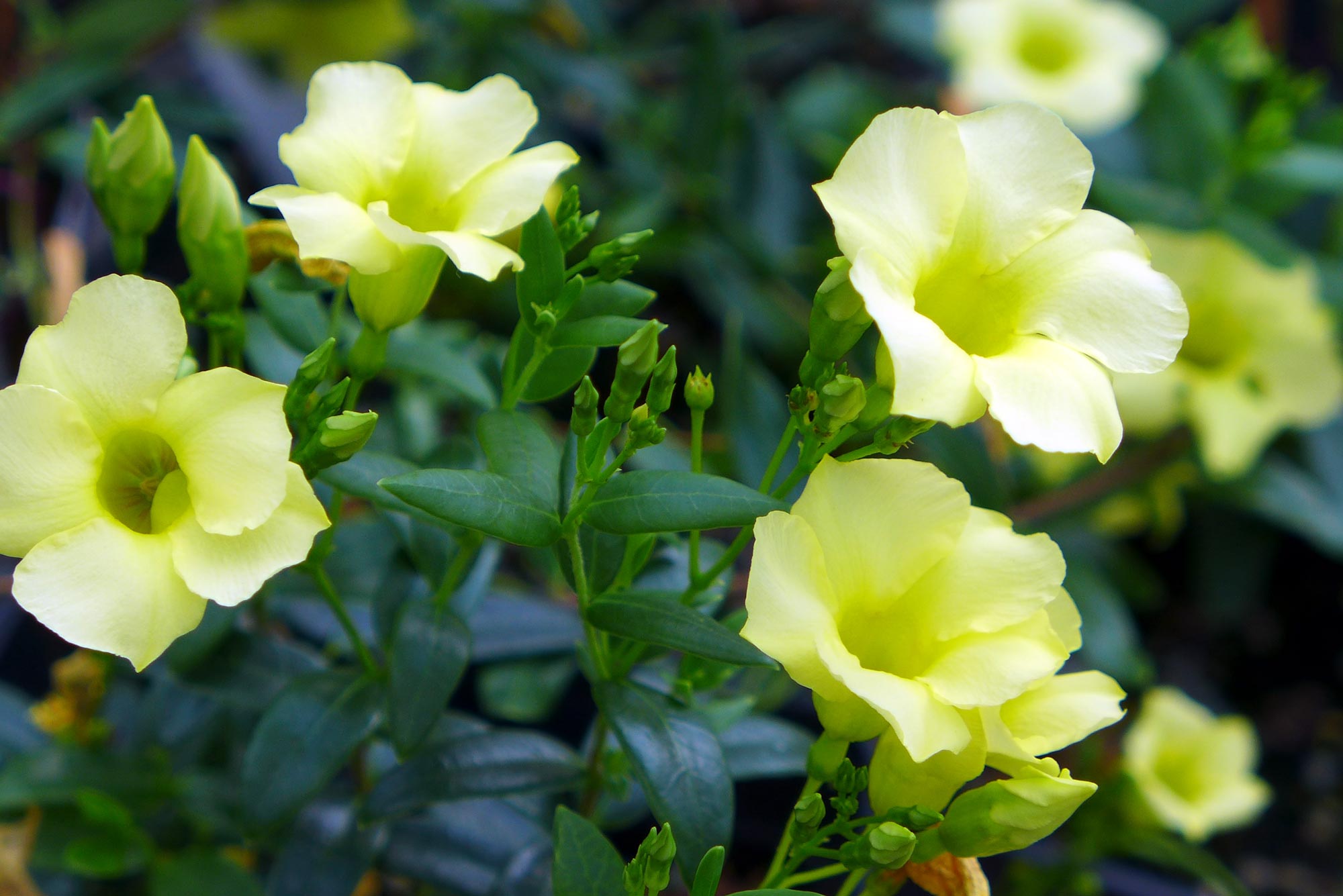
Pictured above: Pineland golden trumpet (Angadenia berteroi) by Scott Zona (CC BY-NC 2.0). Click on terms for botanical definitions. View post as a PDF.
Pineland golden trumpet (Angadenia berteroi) is an erect to vine-like wildflower found in pinelands, dry hammocks and marl prairies of Monroe and Collier counties and the Keys. It is a state-listed threatened species. Its creamy yellow flowers typically bloom in spring and summer, but may bloom throughout the year. They attract a variety of insects, especially moths, which are its primary pollinator. The plant is a larval host for the Oleander and Polka dot wasp moths.
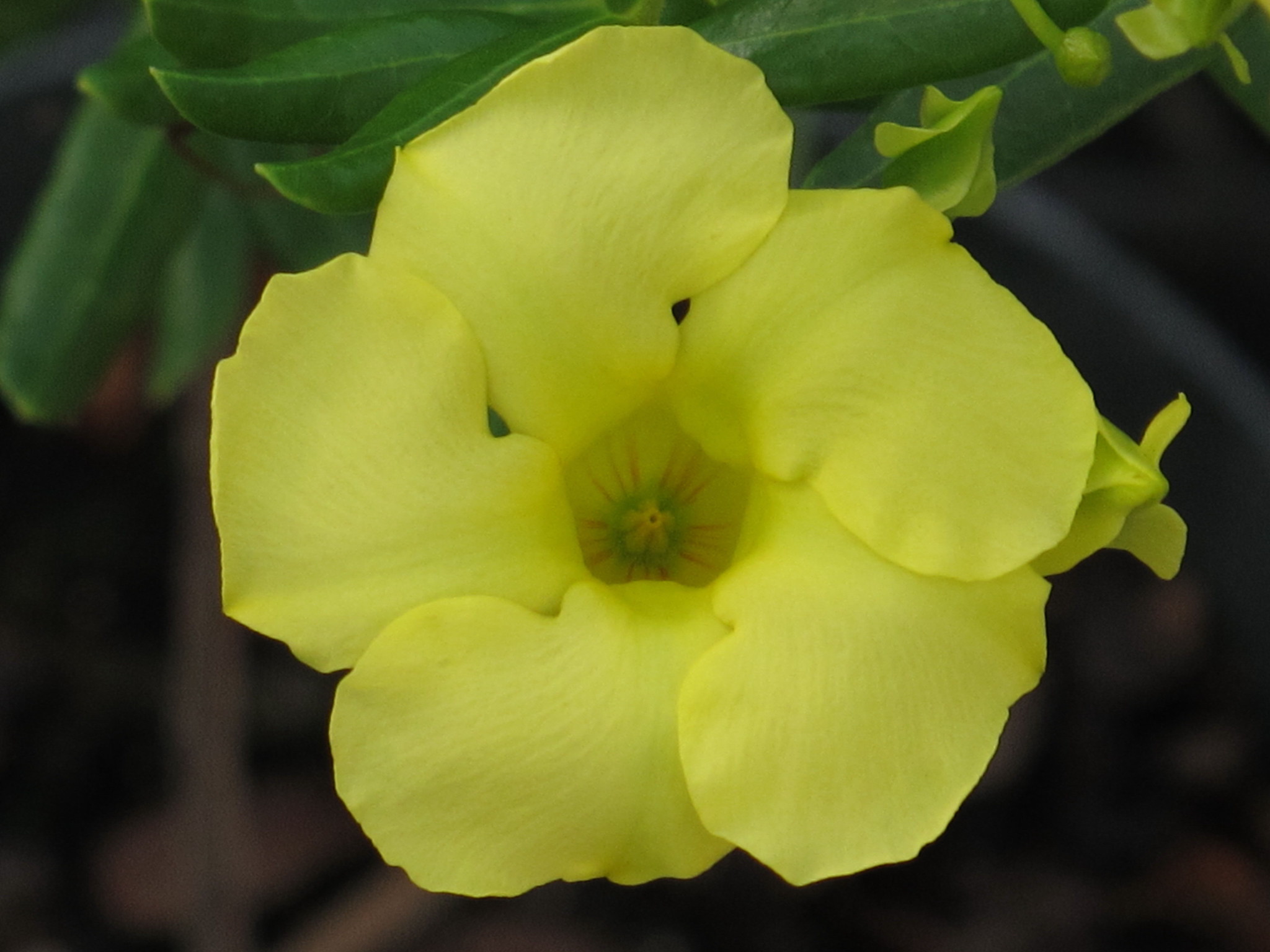
The flower is trumpet-shaped with a broad, five-lobed corolla. The lobes overlap, giving the flower a pinwheel-like appearance. Red lines mark the interior of the floral tube. Five stamens are fused to the tube and enclose the stigma to increase the likelihood of pollination. Leaves are linear to oblong, glabrous and leathery with entire, slightly revolute margins. They are oppositely arranged. Stems are smooth and produce a milky sap when broken. The fruit is a cylindrical follicle and is born in pairs. Seeds are flat, brown and bear a silky pappus that catches the wind to aid in dispersal.
Family: Apocynaceae (Dogbane family)
Native range: Miami-Dade and Collier counties, the Keys
To see where natural populations of Pineland golden trumpet have been vouchered, visit www.florida.plantatlas.usf.edu.
Lifespan: Perennial
Soil: Dry to moist, well-drained calcareous or sandy soils
Exposure: Full sun to partial shade
Growth habit: 6–24” tall, or up to 3’ long
Propagation: Seed
Florida regions of landscape suitability: South
Garden tips: Pineland golden trumpet is suitable for use in a wildflower garden. It is drought tolerant and does well in nutrient-poor soils. Care should be taken when handling the plant as the sap can cause skin and eye irritation. Plants are generally not commercially available, but some specialty growers occasionally carry it.
Learn more about Pineland golden trumpet from the Florida Native Plant Society and the Institute for Regional Conservation.