

September 16 @ 2:00 pm – 3:00 pm
Join us on Wednesday, September 16 at 2pm for our webinar “The Scrub Mints: Natural History and Evolutionary Relationships in a Clade of Narrow Endemics” presented by Director of the Fruit and Spice Park in Miami-Dade County, Dr. Andre Naranjo.
The scrub mint clade is a set of closely related plants found almost entirely in the North American Coastal Plain. Many species occur only in Florida and nearby areas, where they grow in sandy habitats like scrub and sandhills. Because most species are rare or endangered, understanding how they evolved and where they occur is important for conservation. DNA data from all 24 species were used to build a family tree showing how these plants are related. The group appears to have originated in the Florida Panhandle, especially around the Apalachicola River region, and began diversifying about 2.5 million years ago. Modeling of past and present habitats suggests these plants have long been associated with the Gulf Coast, even as climates changed. Areas with especially high numbers of unique species include the Apalachicola region and the Atlantic Coastal Ridge. Looking ahead, climate models suggest that about 63% of scrub mint species may lose suitable habitat, especially those in peninsular Florida, highlighting the need for targeted conservation efforts.
Presenter:
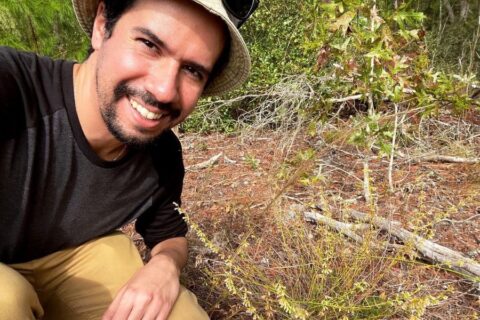
Dr. Naranjo’s research focuses on the phylogenetics, biogeography and conservation of plants in the North American Coastal Plain and Caribbean biodiversity hotspots. His work integrates evolutionary biology, ecological modeling and botanical collections to better understand the origins and preservation of tropical and subtropical plant diversity. He is also dedicated to science outreach and mentorship, engaging primary, secondary and undergraduate students to increase awareness of endangered ecosystems and species throughout South Florida and the broader Caribbean region.
This webinar will be recorded and available on our website 48 hours after the event. A link will be sent to all those who register. Only the first 500 attendees will be able to enter the webinar; if we reach capacity before you join, you can view the recording that will be emailed to you.